PHOTO
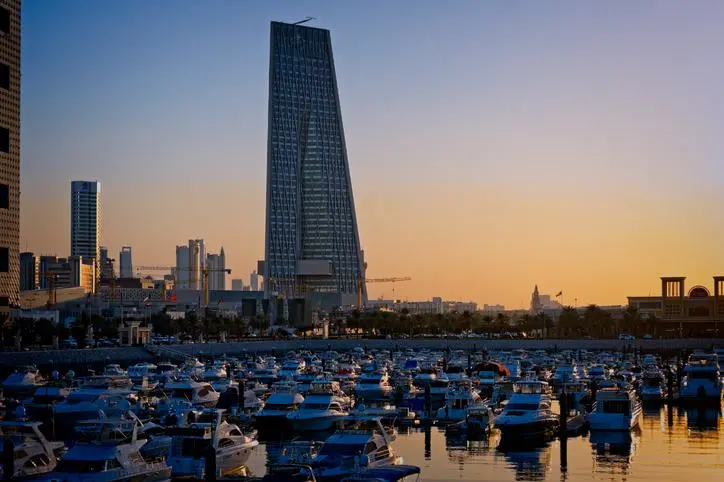
A more prolonged or severe Iran war is likely to put the operating environment for banks in Kuwait under pressure, Fitch said in a report.
“Such a scenario would reduce banks’ business opportunities, particularly as almost all Kuwaiti oil is exported through the Strait of Hormuz, while asset quality and profitability would weaken,” the rating agency said.
Kuwait is the world’s eighth biggest exporter and the tenth largest producer of oil. Shipments of crude and refined oil account from 95% of total exports
Kuwait did not export any crude oil in April, according to monitoring group TankerTrackers.
In a post on X, it noted that this marks the first time an oil producer recorded zero monthly oil exports since the end of the first Gulf war in 1991.
Some banks’ viability ratings (VRs) could be downgraded under these circumstances, though capital and liquidity support from the Central Bank of Kuwait (CBK) may reduce this risk.
However, under Fitch’s baseline assumptions, Kuwaiti banks are well-positioned to absorb the impact of the Iran conflict, and their VRs should remain stable, partly due to ordinary support from the Kuwaiti sovereign (AA-/Stable).
VRs reflect an institution’s intrinsic creditworthiness.
Fitch conducted a severe asset-quality stress test on Kuwaiti banks, which indicated that banks would remain profitable or close to break-even.
The report estimated that most banks would be able to withstand short-term liquidity stress, assuming a 10% deposit outflow, without funding support from the authorities.
The government and government-related entities could support liquidity if needed, due to extremely strong fiscal and external balance sheets, Fitch said.
The Central Bank of Kuwait temporarily relaxed its regulatory minimum capital requirements on March 26, reducing the capital conservation buffer from 2.5% to 1.5%.
The move effectively reduced banks’ regulatory minimum common equity tier 1 capital ratio to 8.5% from 9.5%, the tier 1 capital ratio to 10% from 11%, and the capital adequacy ratio to 12% from 13%.
(Editing by Seban Scaria seban.scaria@lseg.com)