Qatar Financial Centre aims to be destination of choice for asset management, reinsurance and captive insurance
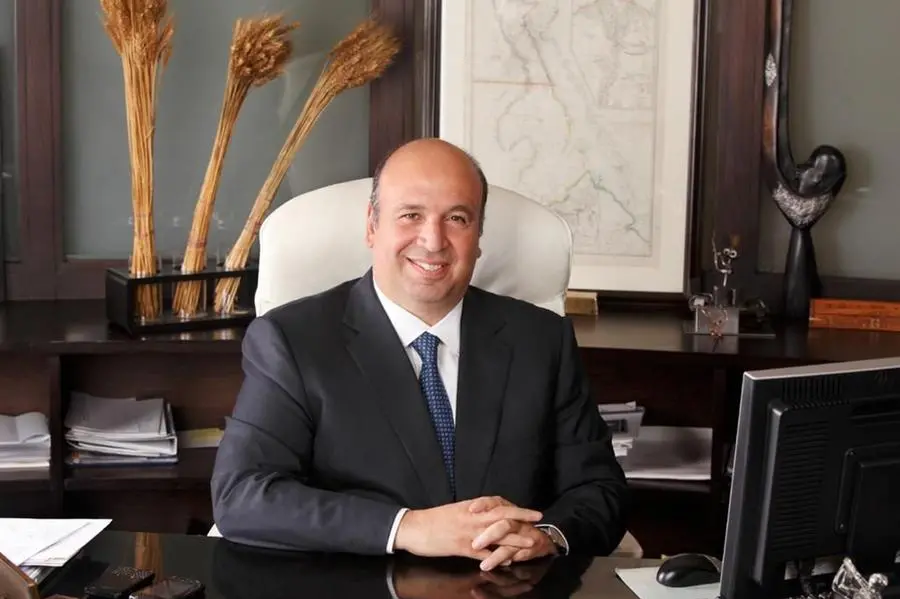
"I would hope that in five or six years, Qatar will be the leading jurisdiction of choice for international firms who want to do business in the region within those business sectors," Akshay Randeva, Director, Strategic Development of the Qatar Financial Centre Authority (QFCA) told Robin Amlôt.
The QFC differentiates itself from other financial centres in the region by its focus on the three hubs, namely asset management, reinsurance and captive insurance. Describing Qatar Financial Centre's (QFC) move to this hub strategy focusing on these three specific business sectors, Randeva said, "In each of those areas there are no established centres in this part of the world. We can add value to the country and to the region by focusing regulators, government and policymakers' attention on these specific niche sectors."
The QFC offers international and local firms an onshore trading environment with a legal structure based on English common law. It provides both Qatari and international companies the opportunity to access local and regional investment opportunities. Licensed firms can carry out their business inside or outside Qatar, in local or foreign currency. The QFC also allows 100 per cent ownership by foreign companies, and all profits may be remitted outside the country.
FIRST AMONG EQUALS?
In fact the QFC was recently named the highest ranking financial centre in the GCC. Published in September 2011, The Global Financial Centres Index 10 said, "Of the four Middle Eastern centres in the GFCI, Dubai has held the lead since the GFCI began. However, in GFCI 10, Qatar has just overtaken Dubai."
Perhaps we should digress at this point to declare an interest - the GFCI survey was sponsored by the QFC. However, there is no doubt that Dubai's reputation has suffered in recent years. The GFCI cites an unnamed private wealth manager based in Dubai as saying, "Dubai has suffered a big attack on its reputation. It has allowed Qatar to establish itself as a credible challenger in the Middle East."
It may not be unreasonable to wonder whether Qatar's move ahead of Dubai is as much, if not more a result of the latter stumbling with the bursting of its real estate bubble as it is of a great leap forward on the part of the former.
Certainly there is economic muscle in Qatar. With the world's third largest gas reserves and an estimated $16.7 trillion in monetisable oil and gas reserves, the International Monetary Fund expects Qatar's real GDP to grow by over 20 per cent this year, comfortably exceeding even the strong growth of the wider GCC region.
The GFCI reported that its pattern of assessments reveals that the Middle Eastern centres, and particularly Qatar, are well supported by North American respondents. Qatar's assessments from both Europe and Asia are below average while Dubai's assessments from Asia are significantly higher than average.
However, Randeva dismissed the suggestion that the QFC is in competition with other financial centres in the region saying, "We are definitely complementary. Take the example of the insurance industry. In Qatar you have a country that has the highest per capita GDP in the world, with a savings rate close to 40 per cent. Despite this you have an insurance density around that of Africa! Where you would expect penetration of around 6.9 per cent instead you have penetration of 0.9 per cent, so there is much scope for growth. I believe all of us can work to increase the size of the pie, maybe in 50 years we will be arguing about the size of our slices of pie! Across the region, in Bahrain, the UAE, Qatar and Saudi Arabia, the size of the insurance market has already doubled in the last five years."
Pressed on the impact of the 'Arab Spring' on the QFC Randeva said the centre had been receiving increased interest from financial companies looking to do business in the region. "We've seen a significant amount of interest from institutions around the region, whether they be from Dubai, Bahrain or other places." However, he went on to say the QFC had not issued any licences to firms relocating from other centres in the region.
RULES IN PLACE
The establishment of the QFC's three hub framework was only completed earlier this year with the publication
by the Qatar Financial Centre Regulatory Authority at the end of June, taking effect on 1 July 2011, of the Captive Insurance Business Rules 2011 and Insurance Mediation Business Rules 2011. The new insurance regime followed on from the publication in January 2011 of the new regulatory regime for asset management.
Randeva said, "So, if you put it all together, I think a lot of pieces are falling in place to create an environment that will attract businesses to Qatar and to actually be able to fulfil the potential of this area."
Looking ahead, Randeva added, "I can tell where we want to be. In the current global environment it is particularly difficult to make predictions (especially about the future!) but I do think that the focus of the QFC is to attract activity that is going to have positive consequences.
"The QFC gives access to local money. We have a responsibility to the local financial services sector. If you look at the structure and positioning, what Qatar is putting in place is the right thing to do."
Responding to suggestions that there has been criticism of the nature of the regulatory environment in Qatar, Randeva admitted, "There has been some talk of a single regulator. I think that would be the right thing to do." However he added that, "There seems to be a perception of lack of clarity, [but] I am not sure I agree that this would definitely be solved by a single regulator. What firms need in the current environment is certainty - in the business environment, in the regulatory environment. I do think Qatar can provide that certainty. The QFC also provides an extremely advantageous tax environment.
"I think the regulatory environment is reasonably simple: the QCB regulates banking and financial institutions; the QFMA securities; and the QFC has its own environment. I don't believe there is a lot of overlap. That said, I do think a single regulator would be a step in the right direction. In terms of time lines, I can't comment. I do think that the concerns of all firms whether from Qatar or in the QFC, would need to be managed. It is more important to get this right than get it done quickly."
© Banker Middle East 2011