Unlike their counterparts elsewhere in the world, Gulf airlines are taking a more measured approach to a punitive European environmental tax, though they warn of fare hikes as extra costs are built in to their budgets
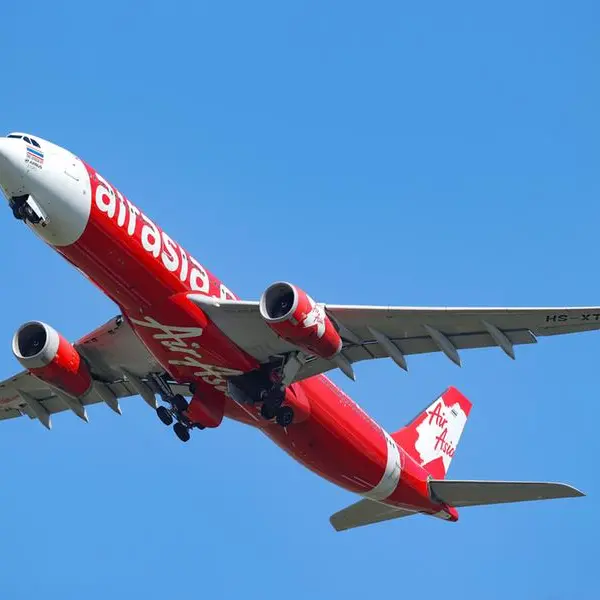
Last month, Malaysian low-cost carrier AirAsia X called time on its flagship services to Europe, under the pretext that the continent's Emissions Trading Scheme (ETS) - essentially an environmental tax - had made flying to London and Paris unprofitable.
Behind the whitewashed press release, its hand was in truth forced by the short-sightedness of a business plan conceived in 2009, when oil prices stood at just $40 per barrel. With Brent crude surging to three times that level in recent months, the viability of a low-cost, long-haul product - absent of any high-yielding corporate passengers - was well and truly blown out of the water.
But while blaming the ETS was undoubtedly a face-saving exercise, AirAsia X will have many sympathisers both within the industry and beyond. Europe's carbon trading scheme has been an unremitting source of contention for foreign governments, who say the tax violates their sovereignty and who are increasingly talking up the prospects of a trade war.
Supporters of the ETS regard it as the muscle behind European efforts to lead the way in fighting global greenhouse gases. The scheme, launched in 2005, imposes pollution caps on 11,000 utilities and manufacturers, obliging them to buy carbon permits on the free market when they exceed their quotas. By attaching a financial incentive to energy efficiency, the ETS aims to cut European Union (EU) emissions by 20 per cent against 1990 levels within the decade.
Up until last month, however, the scheme had excluded aviation. The 1997 Kyoto Protocol originally tasked the United Nation's aviation body, the International Civil Aviation Organisation (ICAO), with policing that sector. But after years of negotiations failed to deliver a global agreement, the EU decided to take matters into its own hands.
By unilaterally imposing a tax regime on foreign airlines through the ETS, Europe knows it is entering a geopolitical minefield. Whereas utility firms are neatly contained within EU borders, and unquestionably subject to EU laws, the same can hardly be said for airlines.
Despite filing tax reports in their home territories, and being governed by their own national regulators, foreign airlines today find themselves kneeling before European lawmakers. Indeed, with the ETS calculating emissions for the full duration of inbound and outbound flights, Brussels is collecting money to offset fumes chugged out over the skylines of New York and Tokyo. Chancellors and taxpayers around the world are understandably less than thrilled.
Responding to the situation, carriers in the Gulf have been more complaisant than most. Dubai-based Emirates Airline is planning to spend €40 million ($51.7 million) on permits to meet its shortfall in allowances this year, and it anticipates costs of up to €500 million by 2020. Abu-Dhabi based Etihad faces a comparable bill of €310 million. But while both airlines have publicly criticised the 'anti-competitive' scheme, neither will boycott it.
Contrast that with the stance taken by the China Air Transport Association, which has instructed its member airlines not to submit ETS payments. The Chinese government previously went even further, threatening to cancel orders for ten European-made Airbus A380s, though with delivery slots in short supply it quickly backed down.
Look westwards and anger at the EU only gets stronger. After the European Court of Justice rejected a legal challenge by trade group Airlines for America in December, the US wasted little time in wheeling out its big guns and stoking fears of a debilitative trade conflict.
In a letter leaked to The Financial Times, dated 16 December, US secretary of state Hilary Clinton advised her counterparts at the European Commission to 'strongly urge' the EU to ditch the aviation aspect of the scheme. "Absent such willingness on the part of the EU, we will be compelled to take appropriate action," she admonished.
Secretary Clinton's letter listed 42 other countries who are openly opposed to the scheme, claiming the EU was 'increasingly isolated' on the issue. It came after the US House of Representatives approved a bill making it illegal for American carriers to comply with the ETS. But the likelihood of the US Senate and president Barack Obama enshrining the bill in law seems slim, given that 2012 is an election year.
Notwithstanding the brinkmanship, even veiled threats of a trade war are enough to send a chill down the spines of EU diplomats. With India and Russia also ramping up the rhetoric, Europe is acutely aware that its debt-ridden economy risks losing trade partners.
At the same time, though, foreign sabre-rattling somewhat evokes memories of the Doomsday Machine in Dr Strangelove. In that cult movie, the world's superpowers arm themselves to the teeth with nuclear weapons in a paradoxical attempt to ensure global peace. Should any one country fire its missiles, mutual destruction of all nations is guaranteed. In today's interdependent global economy, attacking European financials would be no less suicidal.
This inconvenient reality explains the Gulf carriers' measured approach to the ETS. With Europe's highest court rejecting claims that the scheme violates international treaties, thereby upholding its legality, airlines are reluctantly focusing on pragmatic responses. Emirates, Etihad and Oman Air have all warned passengers of fare hikes to come, while US carriers have already introduced $3 surcharges on European routes.
Indeed, when factoring in the EU's heavy subsidisation of the scheme, global airlines should have little difficulty passing on costs to consumers. UK think tank Civitas may have grabbed headlines by predicting that transatlantic fares will rise €12, but its sums overlooked the 85 per cent grants currently offered by Europe.
With carbon prices of just €7 per tonne, down 50 per cent in 2011, fare hikes of €2 look far more realistic. Incredibly, one study even predicts that US carriers will book windfall profits of $2.6 billion by 2020, should they pass all ETS charges onto passengers while pocketing the subsidy.
Though there is no consensus on the true cost of the scheme - another study foretold US losses of $3.1 billion - it is clear that the ETS is here to stay. The 2012 aviation carbon cap has been set at 215 million tonnes, and with just €1.29 billion of permits being allocated to cover €1.52 billion of costs, most airlines are already reaching for their cheque books. They know failure to do so will only lead to fines of €100 per tonne.
Europe's solution to climate change was never going to be popular among foreign governments. But with the rest of the world dragging its feet over a global solution, the EU can hardly be criticised for taking the initiative. When the ICAO delivers meaningful, binding resolutions on worldwide emissions, then Brussels should be less inclined to dictate policy to its partners.
© The Gulf 2012