Interview with Dr. Humayon Dar
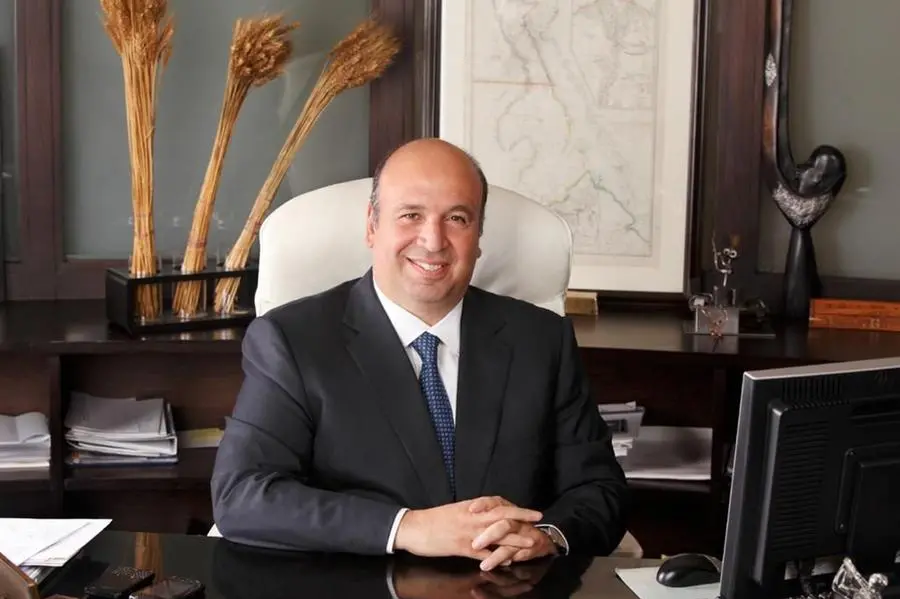
Dr. Humayon Dar is the CEO of BMB Islamic, which was created recently when the Shariah consulting and product design team of Dar Al Istithmar (a majority-held subsidiary of Deutsche Bank) was absorbed by the BMB Group to create BMB a full service, Islamic-focused product design and placement institution. BMB Islamic's areas of focus include organizational development as well as support in the structuring and introduction of commercially viable, Shariah-compliant products. Dar Al Istithmar's team won the Euromoney Award for Best Islamic Advisory Assurance Service in 2006 and Best Islamic Advisory Service in 2007.
Dr. Dar is a world-known Islamic economist and Shariah advisor specialising in Islamic financial innovation. Prior to founding BMB Islamic, he served as managing director and CEO of Dar Al Istithmar. He has written numerous articles on Islamic banking and finance and is involved in a number of industry-building initiatives and academic ventures in the industry.
He is serving as Honorary Senior Visiting Fellow at Cass Business School, where he is responsible for developing curricula for the newly established Executive MBA in Islamic Finance. Dr. Dar holds degrees from International Islamic University Islamabad and the University of Cambridge. Business Islamica questioned him recently on his new position and his thoughts on the direction of Islamic finance.
Can you tell us about BMB Islamic and its mission and services?
Before I answer this question, I must say a few words about Dar Al Istithmar, a company I developed as a new model of doing Shariah structuring business which was recognised by the industry as the only way to go in future in seeking credible and authentic Shariah advice in structuring Islamic financial products. The problem with Dar Al Istithmar was that it was part of a banking group, which many of our potential clients frowned upon because of obvious concerns over confidentiality and potential conflict of interests. Because I wanted to develop Shariah structuring as an independent service available to everyone in the industry, a need was felt to do business outside a banking organisation. I found BMB Group to be the perfect outfit for our Shariah structuring business. Under BMB Islamic, we offer Shariah solutions in a standardised form. Our business is about combining skills and resources of conventional finance with credibility and authenticity of Shariah in the most efficient and cost-effective way to develop Islamic financial solutions with a view to producing standardised Islamic products. Thus, BMB Islamic primarily "sells" standardised Shariah solutions, although in some cases we tailor-make some solutions for the clients looking for a unique solution. A Western bank wishing to offer Islamic products can use our services to structure its own range of Islamic financial products.
What is your role on the new team and what do you hope to accomplish with BMB Islamic?
As CEO of BMB Islamic, I manage our in-house Shariah structuring team and our Shariah Supervisory Board, which comprises seven members, including myself as a technical sepcialist. Managing Shariah advisory is perhaps most crucial to developing and offering Islamic financial products. Most institutions offering Islamic financial services struggle to perform this function. BMB Islamic offers such institutions external access to Shariah advisory with the help of arguably the most respected Shariah structuring team in the world. My vision is to make BMB Islamic a global leader in Islamic financial innovation, coming up not just with vague solutions (in the form of Shariah advisory), but concrete, tangible and readily usable Islamic financial products. For example, we do not just want to advise on how to develop an Islamic futures contract; rather, we would actually develop an Islamic futures contract in partnership with an exchange, brokerage house or any other relevant institution to be available for trading in the market. With the emphasis on product development and practical solutions, we are attempting to broaden the horizon of the Islamic financial industry. Our aim is to create a global Islamic institution integrated with and working in conventional financial markets while maintaining its true Islamic identity.
We hear the word "innovation" quite a bit in discussions involving Islamic finance. What does the concept mean to you?
When people talk about innovation in Islamic finance, they mean different things. A conservative group refers to developing Islamic financial solutions distinctly different from conventional products, while others refer to replicating risk-return profiles of conventional products in a Shariah-compliant way. This latter concept is what I believe is more relevant at this stage in development of Islamic finance. People come to me to seek Shariah guidance on developing an Islamic CDO, an Islamic CTA, Islamic futures contracts and so on. These guys look for Shariah-compliant solutions for conventional products, and innovation so far has meant helping devise such structures. To me, this is a crucial task. It helps in putting more items on the menus of providers of Islamic financial services.
What would you say is the state of innovation in Islamic finance and what is needed to go further?
As I said earlier, Islamic financial innovation at this point in time is primarily about developing Shariah-compliant structures for conventional products. There is a lot happening in the name of innovation in Islamic finance. I know of examples where people developed theoretical Islamic structures and got approval from Shariah scholars, but couldn't produce legal documents supporting such structures and thus were not able to execute such contracts in conformity with Shariah requirements. Still they managed to raise millions of dollars of investments in the name of innovation in Islamic finance. So what is needed is simple: come up with genuinely new Islamic products which have not only correct structures but have also been implemented and executed properly. Therefore, it is very important that any Islamic product must undergo an independent external Shariah audit before going out in the market. This will ensure that only genuine innovation gets market recognition.
In your opinion, what is the key to success in Islamic product development?
It is important that Shariah advisory plays a central role in Islamic product development. Financial structuring and Shariah advisory should go hand in hand we call it Shariah structuring to ensure authenticity of Islamic products from a Shariah viewpoint. At present, Shariah advisory is playing only a marginal role in product development, resulting in sub-standard (from a Shariah viewpoint) legal documentation, poor implementation and sometimes improper marketing of such products. At BMB Islamic, we put Shariah advisory central to product development - law firms, financial institutions, compliance and tax personnel play support roles. In this way, we ensure that we manufacture only the best Shariah-compliant products.
What about those potential customers who are sceptical about the Shariah compliance of modern Islamic finance? What might it take to win them over?
There are three types of sceptics: (1) confused because of ideological differences; (2) genuinely confused; and (3) confused because of lack of knowledge. The first type is the most difficult one - because they believe in a complete systemic change. Most of them view Islamic banking and finance as a replacement for conventional financial system. You go to them selling an Islamic financial product, and they will start criticising the concept of interest-based money. You tell them that you are not there to talk about creation of money and the interest rate mechanism, but they will insist that Islamic banks, being part of conventional financial markets, are actually helping the interest-based economic system. They will simply refuse to buy your product but will keep on paying for their ordinary sales using Bank of England notes and coins. This is why I call them confused. The second category is those who do not like certain practices like Tawarruq and its use in Islamic banking and finance. These guys get confused because they don't find any real difference between an Islamic financial product and its conventional counterpart. I sympathise with them. The third category is those who tend to be sceptical because of their limited knowledge of Islamic banking and finance. Such people can be won by educating them on Islamic banking and finance. The second category, on the other hand, will be interested only in genuinely Shariah-compliant products. The first category is awaiting Imam Mehdi and Jesus to reform the whole world to their satisfaction. Only then will they be interested in Islamic banking and finance.
What would you say are the biggest challenges right now in Islamic finance?
Although many observers suggest that standardisation of contracts is probably the biggest challenge facing Islamic finance industry, I think quality control should be No. 1 on the priority list of the advocates, practitioners and other stakeholders in Islamic finance. While assuring quality control through regulation is one way of addressing this problem, there is a need for market-driven institutions to assume the role of quality controller. The Islamic Financial Services Board is working in the right direction to come up with a regulatory framework for the Islamic financial services industry. Other initiatives such as the International Islamic Credit Rating Agency can also play a role in assuring quality in Islamic offerings. We at BMB Islamic are proposing to set up an Islamic Quality Assurance Council to create a self-sustainable mechanism to this effect. Liquidity management is another challenge faced by Islamic banks. Until a product is available which offers daily liquidity for cash management, Islamic banks will be at a disadvantage.
What would you say is the greatest opportunity right now in Islamic finance?
The environment for further developments in Islamic finance has never been more favourable. The Muslim countries are fast opening up to the idea of allowing Islamic banks to operate alongside conventional banks. Even countries like Syria and Libya which hindered development of Islamic banking for fear of promotion of Islamism, have now started allowing Islamic banks to operate. The UK authorities are competing with other centres of excellence for Islamic finance. Now there are three Islamic banks (one retail and two investment) operating in the country. Singapore recently had its first fully-fledged Islamic bank. All this offers Islamic banking and finance an opportunity to become a truly global phenomenon, offering services to all faith-based and secular communities on the firm grounds of prohibition of interest and fairness as ingrained in the prohibition of Gharar and unethical devouring of others' property / wealth. An industry based on such principles can become a preferred choice of all humanity if it can show that this is what it believes in and this is what it actually practises.
What trends do you think we will see in Islamic finance in the near future?
Three distinct trends will emerge very soon in Islamic finance: (1) Islamic banking and finance will have to show more commitment to social responsibility in order to sustain themselves; (2) Internationalisation of Islamic finance will allow mega-transnational Islamic banks to operate on a global level; and (3) Western institutions will start buying fully-fledged Islamic banks to capture a growing market for Islamic financial services. I shall not be surprised when a bank like Merrill Lynch (or any other Western bank) bids for a bank like Dubai Islamic Bank!
How do you see the industry developing over the long term?
Given the emphasis on social responsibility in conventional Islamic finance, and growing integration of Islamic finance into the mainstream, a day will come when Islamic finance would cease to exist and so would be the case with conventional finance. There will be only one financial system, which will be free from exploitation, charging and paying of interest and unethical devouring of others' property. When this happens, there will be no distinction between Islamic and conventional banking. Bankers will become angels. It looks like creating fiction, but then, all of us read fiction before actually observing it in real life!!!
© Business Islamica 2007