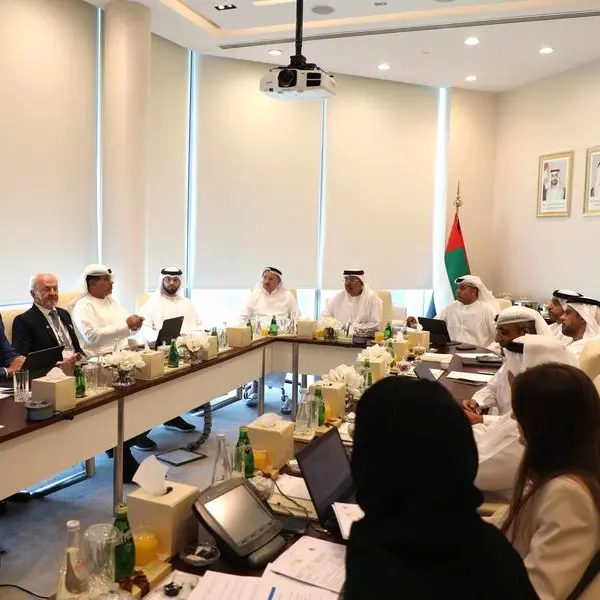
Business in Abu Dhabi is booming, driving the fortunes of the Omeir bin Youssef Group, which has holdings in multiple sectors including tourism and automobiles. Emirates Business spoke to Khalifa bin Omeir bin Youssef (pictured above), CEO of the group, about his take on the recent growth and his criticisms of the handling of amendments to the trade agency law.
Abu Dhabi has experienced a boom, especially in real estate, tourism and travel. How has this growth impacted the Omeir bin Youssef Group?
Omeir bin Youssef Group is the biggest agency specialised in travel and tourism in Abu Dhabi and Al Ain. Definitely, the group benefits a lot from Abu Dhabi's comprehensive boom. Without the wisdom of the emirate's government in the management of the economic boom, these continual successes would not have been possible. I think real estate and tourism have had a mutual impact.
Tourism is divided into two categories: incoming tourism and outgoing tourism. Incoming tourism depends on infrastructure, airports, transport means, flight companies movement, shopping malls, hotels, properties, etc. While the outgoing tourism is directly affected by the individual's income, because when the individual's income is high, he will have the chance to increase his travel inside the UAE and outside. Individuals in the UAE, in general, and Abu Dhabi, in particular, enjoy high levels of income. So, Abu Dhabi has become a destination for many airlines to start flights to and from the emirate.
Our group has drawn up a lot of development plans to meet big demand for travel movement. We are concentrating on the development of services, training of staff and expansion in the UAE. We have launched expansion plans from Abu Dhabi due to big demand in our OmeirTravels Agency brand.
What do you think of Abu Dhabi Tourism Authority's efforts to promote tourism? How popular has Abu Dhabi proven to be as a tourist destination?
The Abu Dhabi Tourism Authority started its work three years ago. It succeeded in putting Abu Dhabi on the map of tourist destinations that are globally favoured. However, we have started to call for an increase of available hotel rooms to accommodate rising demand by international tourism companies. The number of tourists coming to Abu Dhabi is rising continually and the occupancy rate in most hotels is close to 100 per cent throughout the year. The success of tourist destinations depends on many factors, such as the level of services, price levels of hotels, cultural and entertainment venues, etc. Abu Dhabi, of course, is one of the top tourist destinations, as it has characteristics that attract high-income tourists.
Regarding the demand by foreigners to come to Abu Dhabi, it is definitely on the rise. We are urgently in need of more hotel rooms to be able to open other markets for incoming tourism. We see currently a boom in the field of outgoing tourism. While incoming tourism needs some time to be developed. What we receive from the Abu Dhabi Tourism Authority is an incentive to start the development of sections of incoming tourism through OmeirTravels Agency.
OmeirTravels Agency was the first agency in Abu Dhabi to receive ISO certification. It is also the only agency that provides services 24 hours a day throughout the week.
Our staff has, of course, played an important role. The training centre at OmeirTravels Agency played a big role in the development and training of employees. We have felt the effect of that on more than 400 employees working in OmeirTravels Agency in more than 53 branches in Abu Dhabi and Al Ain and our two branches in Dubai that were recently opened.
These two branches in Dubai are the first of our steps for expansion into the remaining emirates, GCC countries and the world.
We have 52 years of travel and tourism experience. Our group started working in 1956 and we have attempted to always provide new services for our clients. Our latest service we plan to launch soon is the provision of tourism visas for travellers coming from the UAE to save our clients time and effort.
Plane ticket prices saw an unprecedented increase in 2008. How do you explain this?
The price of flights has increased due to the falling dollar against other foreign currencies. The dirham was passively affected by that. I think the suggestion of pegging the dirham to a basket of currencies is one of the radical solutions to raise the value of the dirham against other currencies.
Your group is a licensed dealer for Peugeot. What do you think of having more than one dealer for a particular brand? And what is your market share?
The UAE car market is growing. As for the presence of more than one dealer for one brand of cars, we have a Peugeot dealer in Abu Dhabi and there is a second one in Dubai and the northern emirates, which creates a sort of competition in the services extended to the customer. We are now building a big maintenance and replacement parts centre to attract more customers.
This is in addition to new services. We also have two showrooms for new cars as well as two service centres in Abu Dhabi and Al Ain. Our group accounts for 40 per cent of the total Peugeot sales in the country and Peugeot represents 3.5 per cent of the UAE car market.
More than a year ago, the Ministry of Economy amended the trading agency law to reactivate trading markets in the country. Has this affected nationals?
The amendments approved under Law No13 of 2006 stipulated that the agreement between the manufacturer and dealer will be considered null and void when it expires unless the two parties agree to renew it within one year before the expiry. And when applied on the ground, the dealership has become more beneficial to the manufacturer rather than to the dealer. The upper hand was given to the manufacturer in renewing the licence.
Regrettably, manufacturers have exploited the amendment and not renewed the licence without giving reasons. And the ministry has stopped intervening, which caused great harm to some national dealers.
What is the real size of monopolies in the country's markets? How do you evaluate the government's position towards the phenomenon?
The UAE is far from having monopolies, especially in the car or travel markets. The role of the dealer is very important for the manufacturer in the first place. And if there had been no dealer for a certain commodity or service, the manufacturer would need a huge number of employees and dealers and would take big risks in financial relations, finance and credit. This is in addition to big efforts of development, marketing and sales. International companies once again tend to appoint dealers in various countries of the world to increase their share of the world market. It would be illogical for the change to take place in a sudden and non-calculated manner. And I am not for the continuation of any dealership that has no commitments towards the manufacturer. A manufacturer should have the same level of protection as the dealer.
What should the government do to support national traders and businessmen? Should it encourage them to invest their money inside the country?
What is needed is to explain the government's future plans and the justification for decisions and laws. I agree that priority should be given to investment inside the country since it is very important. But foreign investment is also necessary as it is an important element in strengthening and supporting the national economy.
Profile: Khalifa bin Omeir bin Youssef, CEO, Omeir bin Youssef Group
Khalifa bin Omeir bin Youssef was born in 1974. He studied in British schools and graduated from Boston University in the US with a degree in international business management. He began his career as a financial manager at the group, which is owned by his father. A year ago he was named group CEO.
Since taking the helm, the group has increased the number of client airlines to 19. He invested in the group's holdings in the automobile sector after the group won the Peugeot agency in 1998.
By Abdel Hai Mohamed
© Emirates Business 24/7 2008