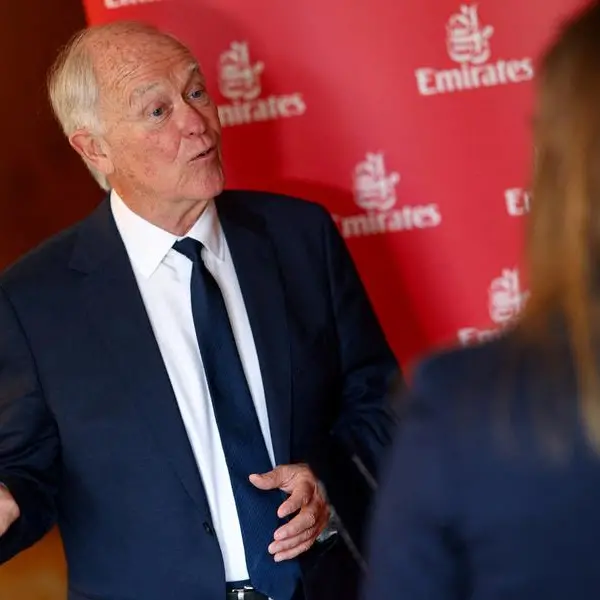
Recent upheaval in the Arab world is having a decisive and lasting effect on investment trends, and to fully capitalise Shari'a-compliant product providers must adapt to the rapid pace of change, says Ammar Shata, chief executive of Saudi investment house Alkhabeer Capital
For many economies around the world, including in the Middle East, the impact of political developments in the Arab World over the last 18 months has ranged from unsettling to downright damaging.
Regional banks have also had to grapple with the changing political and economic landscape and market volatility, which has forced many institutions to revise their strategies. "We are in an era where market trends are changing rapidly. Shari'a-compliant product providers are faced with the challenge of structuring complex products within a short time frame, to capture an opportunity before it is too late," Shata tells The Gulf.
He says investors now demand Shari'a-compliant products that can perform in a highly volatile environment, but which ultimately carry less risk. "Since 2008 demand for investment vehicles which invest in a blind pool of asset classes such as private equity and real estate has significantly declined," he explains. Now, investors want the underlying investment to be identified. "For many managers this makes it extremely difficult to raise new AUMs [assets under management]," he explains.
"From a regulatory perspective, investor preference is towards investment vehicles that are regulated locally i e domestic funds, rather than offshore funds," he adds. Shata believes the current risk aversion is likely to be long-term. "Extremely loose monetary policy by the US led to the creation of asymmetric asset bubbles in third world countries. These increased income disparities, in consort with political suppression, led to the Arab Spring," he says. And income disparity persists worldwide, he adds: "Let's call it the curse of capitalism!" he exclaims.
This means clients are seeking to protect capital rather than generate growth, and diversify their products geographically, Shata adds. Capital flows have also been affected by last year's Arab Spring effects. "The political uprising has led to a flow of capital towards apolitical societies. Return optimisation has been put aside," he explains, noting a preference for liquid rather than physical assets. "Liquid assets provide easy exit and entry and the risk-adverse mindset prefers that to avoid any unforeseen political upheaval, since these assets at least provide an escape route," he says.
Despite the rapid pace of change and associated uncertainty AKC, established in 2008 and which describes itself as a boutique Sharia-compliant investment house specialising in private equity, real estate and capital markets, is at least operating in the black.
In 2011 its revenues and profits rose 18 per cent and 74 per cent respectively from the previous year. Assisted by what Shata calls "robust investment returns", profit hit SR19.1 million ($5.09 million), up from SR11 million in 2010. Net profit margin was 30 per cent, compared to 20 per cent in 2010.
Assets under management, meanwhile, surged 169 per cent to SR1.4 billion as the bank launched new funds across a range of different asset classes. The value of its strategic investments, which focused on real estate, capital markets, asset-backed securities and unlisted equities, also grew 71 per cent to SR559.5 million, according to a financial statement from the bank.
AKC's client base ranges from mass affluent (defined as holding SR10 million in assets) and high net worth individuals (SR200 million in assets) and up to ultra high net worth and family offices. The latter, Shata explains, are second or third-generation conglomerates which are becoming more institutional in their approach.
"They are building in-house teams and local expertise to consolidate their operations and diversify geographically and among different asset classes," he says. Saudi Arabia's female population, which Shata believes holds almost a third of the kingdom's wealth, is also an underserved potential market, he adds.
A familiar character in Saudi financial circles, Shata was behind the kingdom's first asset-backed securities fund, its first multi-million Saudi riyal real estate investment vehicle, and its first Islamic credit card.
He is particularly optimistic about equity markets in his home country this year, driven by the performance of banks, as well as the real estate, cement and retail sectors. He thinks banks will benefit from improved business activity thanks to heavy government spending and a significant decline in non-performing loans and provisions, adding that the local banks' lack of international exposure insulates profits from global volatility.
The real estate sector, meanwhile, should benefit from a revival of incomplete projects as the government builds new residential units to make up an almost 1.4 million unit shortfall, he reckons.
"In terms of asset class allocation in Saudi Arabia we would still prefer equities, mainly because of the higher dividend yield (3.5 per cent) and cheaper valuations," Shata says.
"The saturated status of the real estate sector and global volatility will leave very few options to the local investor and equity investment will increase as we move ahead in 2012," he predicts. Regionally, among the more attractive equity choices are Dubai's real estate sector where "prices and rentals are extremely attractive and renewed regional demand is likely to drive prices higher"; Oman's hospitality sector and Qatar's banking sector.
Shata also believes the regional sukuk market will see significant inflows "as expected excess capital creation in Europe and US will lead to inflows in these instruments and yields will rationalise to the downside. "Globally, we will prefer equities in the medium-term while expected excess capital creation in Europe and US is likely to boost real estate prices in the long-term. By Q3 2012 Europe is also expected to be stabilised.
"Monetary easing by the emerging markets is almost a certain eventuality which means short-term volatility is expected to increase pushing liquid asset classes higher," Shata says.
In an outlook summary published in early 2012, AKC forecasted that bargain hunting in equities would generate the best return for investors, depending on their risk appetite. Shata says the forecast has thus far been justified.
"Our forecast is corroborated by the 22 per cent return in Saudi equities and almost 15 per cent [return] globally," Shata responds, even though he thinks May and June 2012 will be challenging "as the corporate results season is far away and the negative European economic situation and China's Q2 2012 slowdown is likely to weigh down on equities.
"We believe Chinese growth may start returning by Q3 2012 as monetary easing takes effect. Moreover, there will be clarity on the status of Euro after the Greek election. Furthermore, the US Federal Reserve is expected to announce a third round of Quantitative Easing if the current slack continues in the US economy.
"All these expected events suggest that equities towards the second half of 2012 will pick up again. Moreover, 2013 is likely to be a macro-economically stable year as significant political transitions across the globe would have happened and politicians will be better placed to address economic issues. Thus, bargain hunting still remains the theme in equities," he says.
Closer to home, the turbulence of the Saudi Stock Exchange (Tadawul), and more specifically its main market index, the TASI, has brought the issue of inward foreign investment more sharply into focus. At a meeting with executives from listed companies in April Abdulrahman al Tuwaijri, the chairman of the kingdom's Capital Market Authority (CMA), suggested any opening up of the market to foreign investment would be done gradually, a strategy Shata agrees with.
"Overall we believe that [opening the TASI] is a very positive move which will lead to its inclusion in key global equity indices, increase liquidity, market depth and breadth. But it will also enhance volatility, so should be pursued gradually. We fully agree with his [Al Tuwaijri's] views as the strong fundamentals of the Saudi equity market will attract a lot of capital and may lead to the creation of multiple bubbles in the market," he says.
Shata says he believes this money is expected to come from those investing in liquid assets as a temporary parking place to diversify geographical risk, and who may exit quite sharply. "Such a move could render Saudi retail investors severely affected and the CMA will do its best to avoid such a situation," he concludes.
© The Gulf 2012