Sunday, Dec 11, 2011
Gulf News
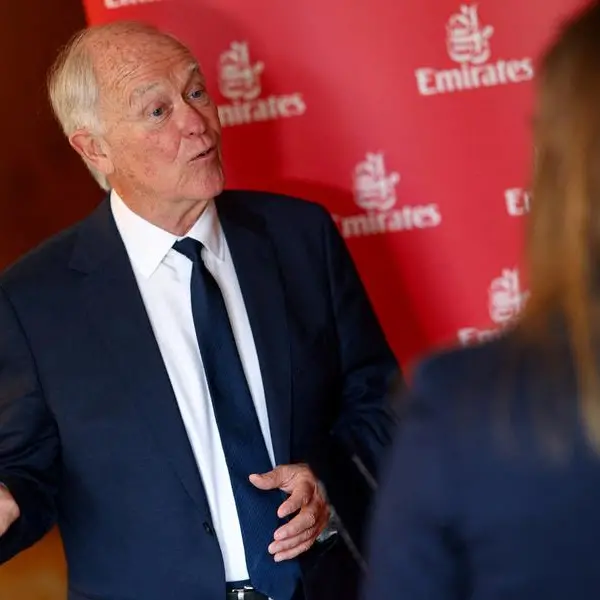
Dubai If you have the questions then Colm McLoughlin has all the answers.
McLoughlin, Executive Vice-Chairman of Dubai Duty Free (DDF), moved to Dubai in 1983 and is the man credited with setting up its operations from modest beginnings to making the company an absolute colossus in the world of airport retail, with billion dollar turnovers year upon year.
Instrumental in making the DDF one of the few brands that has been synonymous with the Dubai success story through the decades, McLoughlin has been witness to every little detail that has contributed towards this transformation.
A man with an attention to detail McLouglin can work his way back into time, stopping to remember every little element present through that route.
As Dubai Duty Free prepares to celebrate the 20th anniversary of the DDF Tennis Championships early next year, McLoughlin once again steps back into the years that have passed, with the familiar ease of a slick navigator, to retrace the steps that were taken towards establishing one of the most successful sporting events in the Middle East.
GULF NEWS: Let me take you back to 1993. Dubai Duty Free is settling into a cycle of growth after having started as a modest operation. It is spreading its wings in the world of airport retail. By this time you have already started sponsoring quite a few events. So what made you opt for a tennis tournament?
COLM MCLOUGHLIN: Very early on we identified sport as a nice thing to be involved in. Our idea was that our support towards sport, whatever sport it may be, could help in developing that sport locally. Then we had an idea of doing a tennis exhibition and the more we talked about it we realised that something permanent could be done. This is when we decided to talk to the ATP. We decided to buy a week on the Tour and I remember going to their offices in Sydney to fix it all up that time. That was the beginning of it all. We built a temporary stadium which seated about 3,000 people in 1993. I remember Karel Novacek won that tournament and he was ranked No 8 in the world at that time. We thought that this was the best we could do at the time (laughs heartily).
So the reasoning was to promote sport and ensure that whatever it was you are doing would have an impact locally… at the grass roots level?
We did need it and we were hoping it would have an impact locally and it has done. Today it’s fair for us to claim that we have trained thousands of ball boys and ball girls locally over the years, given the longevity of the whole thing. Clark Francis trained them then and still does. We have umpires and tournament referees. Hany Khafief who started with us is now an official certified tournament referee and we did hope that it would build up an interest in tennis and it did.
Of course the event has been growing more and more every year and because we stuck with it, it now means that we have a proper tennis stadium that has developed and there is a proper tennis school there and we think it has worked out pretty well.
When you started there was no permanent structure in terms of area… then the Aviation Club came up in 1975. Is it fair to say that every move that you planned thereafter was with keeping the future in mind?
It was. The Aviation Club came up in 1991. We used the grounds of the Aviation Club to conduct our tennis. We had tennis courts there. But what we didn’t realise was that we had to turn them around before we had our first tournament. The courts were facing the wrong way. Courts should face east-west, but they were north-south. Then each year we built a temporary scaffolding stadium until 16 years ago when we built our own proper stadium.
Was the construction of the Irish Village also linked to the overall tennis game plan, or did you apply a separate thought process to that?
It certainly complements it, but it was thought afterwards. We had this notion in our heads that Dubai could do with a popular Irish bar because they’ve been popular all over the world. Suddenly when we built our stadium we looked at the plans and thought that this was an ideal location. We got permission from Shaikh Ahmad Bin Saeed Al Maktoum, President of Dubai Civil Aviation Authority, and Chairman and CEO of Emirates Group, and we opened it a year after the stadium was built.
When we built the Irish Village we had it designed in Ireland. We had the first build done in Ireland.
We bought out a lorry load of Irish flagstones, and we bought all the furnishings and the bric-a-brac in Ireland as well. Of course we have since expanded it, but it has been very successful.
I remember very early on it was named by Newsweek as one of the Top Meeting Places in the World. I was surprised about that because on the overall it is quite small.
So 20 years down the line what memories do you take away, even though it’s not over yet. An idea has now grown into an event of mammoth proportions.
There are many highlights. The players, the ATP and several other bodies have voted the DDF Tennis Championships as being the tournament of the year many times.
It was also voted by the ATP as being the tournament with the best media relations in the world. I think overall the men’s and women’s events have won 22-23 awards during their history.
There is the highlight for us down the years as having almost every single No 1 in the world being at the tennis at one stage or another.
Roger Federer is a four time winner. Nadal, Courier and Ivanisevic have all been here. Fabrice Santoro played 18 straight tournaments. Thomas Muster was World No 1 when he came here as were Edberg, Courier and Becker. Those are the highlights.
Apart from that is the fact that we were one of the few tournaments in the world that introduced equal prize money for the men’s and women’s events.
Each tournament has a prize fund of $2.5 million (Dh9 million) and this was because we upgraded the tournaments along the way. Another highlight is that we keep noticing that we meet people every year in and out — they keep coming to Dubai specifically for the tennis. It’s a very nice feeling when that happens.
It is a highlight for us to know that we have one of the most secure tournaments in the world.
We have the Dubai Police who arrange the security for us. We arranged for Captain Eisa to study security arrangements at the Australian and US Open tournaments and we feel secure thanks to his efforts.
We think it’s a highlight that a number of the officials who became involved are now recognised umpires and referees.
Last year we had maybe 100,000 visit the tournament. It’s seen in dozens of countries around the world.
We are told by the people who assess those kind of things that the media coverage of the DDF Tennis Championships was worth $130 million in the promotion of Dubai. This resonates with one of our briefings given to us right at the beginning when DDF was formed, that part of our duty was to help promote Dubai. His Highness Shaikh Mohammad Bin Rashid Al Maktoum, Vice-President and Prime Minister of the UAE and Ruler of Dubai, made that quite clear to us. At the time there was no Nakheel, Emaar, Emirates airline. There was a two-lane Abu Dhabi road, no Metro, no Palm island and no Burj Khalifa. So we were one of the few, along with Godolphin, who were promoting Dubai. Now, of course, there are all the others. It’s all part and parcel of the overall corporate mix of Dubai. The place has grown dramatically.
There has been so much to take away for you through the years. What has been the source of most satisfaction from watching this tournament evolve?
It’s first and foremost the big picture. But it’s very gratifying that the tournament itself has become so big in the world of tennis.
That it is one of the biggest sporting events in the Middle East.
That some of the people who were right there at the beginning are still part of our lives — Colm McLoughlin, George Horan and Bharat Godkhindi.
For 20 years we have had Salah Tahlak and they are all part of our own team. We do all this ourselves — the in-house, the marketing, the ticketing and the ushering. That’s very gratifying and it’s also part and parcel of the excitement of the growth of DDF.
This is going off the track a bit, but I was sitting in a barber’s shop at Brighton in England and there was a man [who] sat there and when I got up he said to me: “I’ve seen you on the television at the tennis in Dubai.”
I went to Cochin [Kochi] in India with my good friend Ramesh Prabhakar and a man came up to me and said “You are Colm McLoughlin? I interviewed you in relation to the tennis in Dubai. Welcome to India. I am from the Times of India.” So the tennis has a lot of nice memories. It has brought the world closer to Dubai.
With every learning curve one learns from experiences — good and bad, success and failure. What’s your take on that?
First of all there were several mistakes. We don’t often admit them, but there were several. But we sit down after it’s all over and we list and assess each tournament. We criticise ourselves and try not to repeat them later. We have had the support of many sponsors and we have also learnt from them. So it is difficult to pinpoint something that we made an awful hash of, but we did make several mistakes along the way.
And in our 20th year, in February 2012, we are going to make more mistakes. But we will improve upon them the year after that (laughs).
In terms of tournaments, Dubai went and changed the game in 2001. You announced the ladies event and suddenly the ball park became bigger. What was the reasoning behind that move?
We felt it would make us a little bit more complete in terms of the Championships. We had people coming up to us and asking when we were going to bring [in] a women’s event. At the time Martina Hingis was a superstar and we were able to bring her and she won the first tournament. But the main reason was to make the whole event a little more complete — it just made sense to do it.
Then the announcement for equal prize was made. Another path-breaking move…
Two things happened. One is we felt that it was correct to do this. Both tournaments had a best of three sets, so it was equal.
The WTA boss at the time was Larry Scott and he was doing good things for the women’s game as well as promoting the concept of equal pay. We had an agreement with the WTA at the time to be an international sponsor. Part of the discussion was that we would be one of the first tournaments to announce equal pay and we said to the WTA we want their support on this in terms of promotion. We wanted their players to announce this at press conferences. It was all part of the mutual agreement.
We always had this ambition of being the first to do things: that DDF was the first to do this or that — first to have an environment policy, a health policy, first to have our own foundations working successfully etc. So we wanted to be one of the first to announce equal prize money.
There is also an event in Qatar. Abu Dhabi could be working its way towards a men’s event. Is that all good in the overall scheme of things? Will they all feed off each other?
I do think it’s good and we have been saying this even about our Duty Free since the beginning. The Duty Free operations in the Middle East have improved, the airports have improved. And we have found that to be good for the industry. Suppliers are taking notice. Regional offices are opening in the Middle East and many of them in Dubai. We think the same about the tennis exhibitions and tournaments. The more there are the better it is and this would mean an increased viewership in TV audiences in the Middle East. We have worked closely with the tournament director in Doha. We have visited the tournament there as their guests so, in short, I think it is all good for tennis.
The Aviation Club is undergoing a fresh set of developments. Obviously not everything is tennis related, but are you striving towards a scenario of self-sufficiency?
Yes, we are. We have almost completed our own hotel there. It’s a five-star 293 bedroom hotel. We have signed an agreement with the Jumeirah Group to manage it for us. It is called the Jumeirah Creekside Hotel because most of it looks out on the Creek Golf Club.
We are not certain of the finish days but it will be very soon. When it is finished the whole site will be totally self-contained. We have detailed plans of how we will enlarge the stadium and increase the seating capacity — now that’s not imminent, but we have plans.
The players and the ATP Tour have showered awards on the event — is that an incentive to go bigger in the future? Like, for instance, increase [in] prize money?
In the case of the men’s event the next level up is the Masters. So you can’t just do that. There are only so many events like that in the world. To move up there we have to purchase another tournament which may not be the sensible thing for us to do at this point. We need a bigger stadium capacity and people here love the whole atmosphere of the place there. We see our tournament very much as a fun thing, to be surrounded by self-containing atmospheres. It’s good for families as well. So, it’s not one of our roaring ambitions to do something bigger.
The prize money that we offer now is over and beyond the required amount for both tournaments anyway, but that doesn’t mean that it might not increase. To upgrade to a bigger tournament is a fairly long-term thing. In any case our events guarantee the top players in the world and we get plenty of exposure from, TV and media around the world.
So will the celebrations for the 20th year be a big noise, or will you celebrate it as a quiet endorsement of the fact that you have arrived?
Well no, we wouldn’t be complacent. We are going to make a bit of noise of course. We are going to promote the fact that we are 20 years and tag it on to the fact that DDF is 28 years. We will definitely do the whole thing in a very corporate manner and have balloons and fireworks and whatever else you do to celebrate something like this (laughs mischievously).
By Robin Chatterjee?Senior Associate Editor
Gulf News 2011. All rights reserved.