Tuesday, Jan 27, 2009
Gulf News
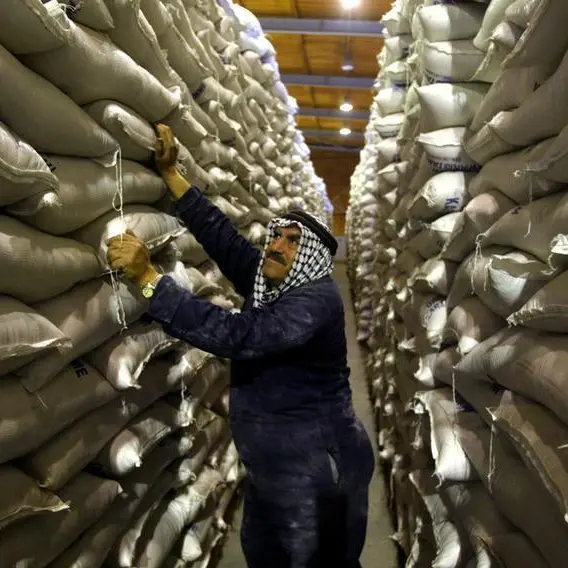
The global economic crisis is expected to continue hammering all types of workforces in 2009: from blue-collar labour to white-collar professionals in industrialised nations and, to a lesser extent, in booming economies like the Arab Gulf countries.
While blue-collar workers seem to bear the brunt of the crisis, skilled staff will also be affected.
However, because of their flexibility, skilled labour have the ability to adjust to the changing situation. Options remain open to them from changing professions, working fewer hours for less money, or going on leave without pay and hoping to return to work when the time is ripe.
According to International Labor Organization (ILO) predictions, more cuts in jobs and wages of nearly 1.5 billion workers worldwide are expected in 2009. Moreover, slow or negative economic growth coupled with high prices are eroding wages of low-wage workers, and middle classes will also be "seriously affected".
Arab countries, both labour exporters and importers, are not an exception.
Already some big companies in the Gulf Cooperation Council countries have announced job cuts and hundreds of employees were laid off and sent back home.
ILO estimates that "theoretically" a further reduction of labour force between 10 and 15 per cent is expected in the coming few months. However, the region will remain one of the most attractive destinations for experienced, professional and skilled people from around the world.
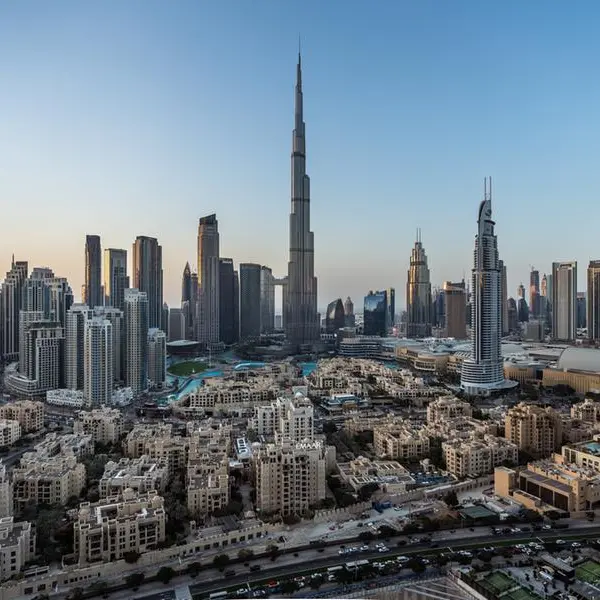
Job losses will not be equal among all economic sectors. Some fields will be a haven for job security in comparison to "red line" areas. The same goes for countries around the world. For example, vibrant cities like Dubai won't be affected as bad as Western cities.
However, it is very difficult to define the nature or scope of the labour force reduction because this depends on the duration of the crisis.
Sectors that are likely to suffer worst from the crisis, says Maurizio Bussi, Beirut-based Deputy Regional Director at the ILO, are construction and real estate, banking and insurance, and tourism.
"There is a freeze or a very limited growth of new employment opportunities in various sectors," Bussi said. "They are not as dynamic as they were," he added.
But "what is relatively easier for the white-collar [workers is] their coping mechanism, their savings, their professional network", he said. It would be easier for skilled labour to adapt in case the crisis continues in the months to come. "They can re-train themselves, change professions or occupations," he told Gulf News.
"It can be looked at as an opportunity not just as a crisis situation," he said.
However, not all returning to their countries are doing so as a result of the financial crisis.
"Some of them because of the completion of the cycle of employment, and they are returning to start their own business in their countries," Bussi said.
What might have appeared to be brain drain when they left their countries has the potential of turning into brain gain when they return.
"Because these people would be returning to their countries, normally highly-skilled, highly-professional, they can be re-integrated in the national economy here, so it is not entirely negative as it looks." Bussi said.
However, the ability of homelands to absorb all the returning professionals depends on their numbers and the "saturation point of the labour market" back home. Meanwhile, the financial slowdown has not resulted in a reverse migration of professionals from the UAE.
"It is too early to say that there is a reverse migration of the highly-skilled workforce," said Heather Le Rest, Recruitment Manager at Kershaw Leonard, one of the prominent recruitment companies in Dubai.
"We have seen a small proportion of candidates having to look at opportunities outside the UAE as the cost of living are still high and the growth opportunities have slowed down," she added.
"Candidates coming from Europe seem more resistant to return [home] as they feel their chances of finding suitable work to be very difficult," said Le Rest. "The UAE still appeals to the international candidates," she added.
The financial aspect is not the sole factor behind the movement of labour, Bussi said, whether because of the global crisis or reduction of compensation packages.
"Money is a factor, but it is not the only factor," he said.
"Job [seekers] are moving any way, and they know where there are incentives there are either financially or other types of incentives [such as] interesting projects, a multi-cultural environment, a combination of the two, [or] better weather&," he said.
And therefore the Arab Gulf countries, even beyond traditionally-attractive destinations such as Dubai and Abu Dhabi, have not lost their distinctive appeal for professionals.
For instance, "There are certainly some good opportunities for many professionals in the Saudi market," said Scott Latham, Regional Director, Professional Services at Manpower, a Dubai-based recruitment company with 11 offices across the Gulf region.
"Qatar is still a high growth market, and there are still a lot of opportunities there" in finance, construction and engineering sectors, he added. "Bahrain [is] certainly for professional services, banking and finance."
Therefore, as job seekers explore opportunities in the GCC, the coming few months may bring further changes to the global job market.
Gulf News 2009. All rights reserved.