Bank deposit ratings across the GCC reflect the high prospect of government support. Robin Amlôt investigates...
Assuming that governments within the GCC (with the exception of Bahrain) maintain their strong fiscal positions, and in view of their track record in providing support, and the absence of regulatory initiatives to enforce burden sharing with senior creditors, Moody's expects a high level of potential support for bank deposit and issuer ratings to remain in place for the foreseeable future.
The ratings agency recently issued a Special Comment entitled Understanding Government Support Assumptions in GCC Bank Ratings outlining its reasons for incorporating an average four notch uplift against local banks' standalone credit profiles - uplift levels that are among the highest of Moody's-rated banking systems.
BANKING OUTLOOK
Pockets of asset quality stress remain in Dubai and Bahrain. Any resurgence of large scale protests would likely be detrimental to the already fragile market confidence and negatively impact Bahrain's economy and banking system. Bahrain's position as a stable financial hub continues to suffer and the overall operating environment and confidence are expected to remain poor. The government's stimulus capacity remains severely limited, although the wider GCC is a secondary source of support. Banks remain cautious with relatively good liquidity and capital levels.
Lack of transparency regarding restructured loans in Kuwait creates downside risk to asset quality counterbalanced by supportive operating environment, strong capitalisation buffers and solid liquidity profiles drive the stable outlook. Kuwait has a low probability of civil unrest but domestic politics will constrain public spending and hence credit growth. Uncertainties regarding the amount of legacy restructured loans continue dampen system asset quality performance.
Oman's supportive macroeconomic conditions are expected to boost credit growth to around 15-17 per cent in nominal terms. Social measures already announced will likely boost retail demand and lending. NPLs are expected to be stable at around 2.5-3 per cent of total loans.
Saudi Arabia's banks continue to benefit from the prevalence of non-interest bearing deposits and strong operational efficiency will continue to support high profitability in a very solid banking system. Transparency and overstretched contracting and construction sectors remain a concern. With the exception of Bahrain, the socioeconomic environment (high youth unemployment, affordable housing shortage) is more pressing than that of other GCC states.
Qatar's high public spending levels will continue to fuel high growth in lending and revenues. NPLs remain 'artificially' low and capitalisation high which will support the overall sector's financial stability. Local banks will continue to benefit substantially from government business although long term tail risks are increasing.
Asset quality challenges especially for Dubai-based banks and low problem loan coverage levels (the lowest in the GCC) will continue to subdue profitability and drive the negative banking system outlook in the UAE. The UAE's banking system will continue to show divergence with Abu Dhabi banks benefiting more from higher public sector spending and confidence while Dubai banks' prospects in spite of improved core sectors (especially sectors like trade, transport and tourism) remain overshadowed by commercial real estate and legacy asset
quality challenges.
High oil prices and continued government expenditure fuels bank lending growth in KSA, Oman and Qatar. Additionally, strong capitalisation and asset quality drive the stable outlook on these systems. However, structural weaknesses, including limited transparency, relatively weak corporate governance practices and undiversified operating environment, continue to persist. Mixed pockets of asset quality stress remain but in most cases GCC banks continue to maintain solid capital and liquidity buffers with growth supported by government loans and deposits.
ECONOMIC PROSPECTS
In 2013, growth is likely to taper off in the GCC and remain weak in oil-importing MENA. High oil prices and expansionary fiscal policies will not provide as much of a boost to GCC growth, which Moody's estimates will slow to around 3.5 per cent in 2013 from 5.7 per cent in 2012. Moody's baseline scenario assumes that oil prices will average $112 per barrel in 2013, in line with the average 2012 oil price. In contrast, the average growth rate among non-oil-importing MENA countries will be around 2.6 per cent in 2013, slightly up from 2.2 per cent in 2012.
Fiscal breakeven oil prices continue to rise in the GCC, but government finances remain strong. Nonetheless, Moody's expects these governments to continue to record large fiscal and current account surpluses - with the exception of Bahrain which has a fiscal deficit - but there is additional scope for ramped-up expenditure before fiscal fundamentals are undermined.
Governments' capacity to support banks remains strong, indicated by the high ratings of the five largest GCC economies, driven primarily by strong fiscal positions, high levels of sovereign resources and relatively low levels of government debt to GDP. Further, compared to more mature systems, the GCC banking systems are relatively small, ranging from around 67 per cent of GDP for Oman to 133 per cent for the UAE; by way of contrast, the UK banking system is equivalent to 539 per cent of GDP.
GCC Sovereign Ratings
Bahrain Baa1
Kuwait Aa2
Oman A1
Qatar Aa2
Saudi Arabia Aa3
UAE Aa2
Source: Moody's Investors Service
Willingness to intervene to support distressed banks is evidenced by a consistent record of such intervention over several decades, not just in the recent turmoil of the financial crisis and the Arab Spring. Within the GCC, Bahrain remains a notable exception in terms of capacity and, to some extent, willingness to intervene. All distress situations faced in the region by deposit-taking institutions in the last 50 years have resulted in no losses to depositors and creditors. The only regional defaults in recent history have been recorded in Bahrain's investment banking sector.
Although none of the GCC systems have so far established a codified support framework, it is inevitable that the 'moral hazard' created by a high support regime may encourage a more aggressive risk appetite, posing challenges for local regulators and resulting in risk management issues for the banks themselves.
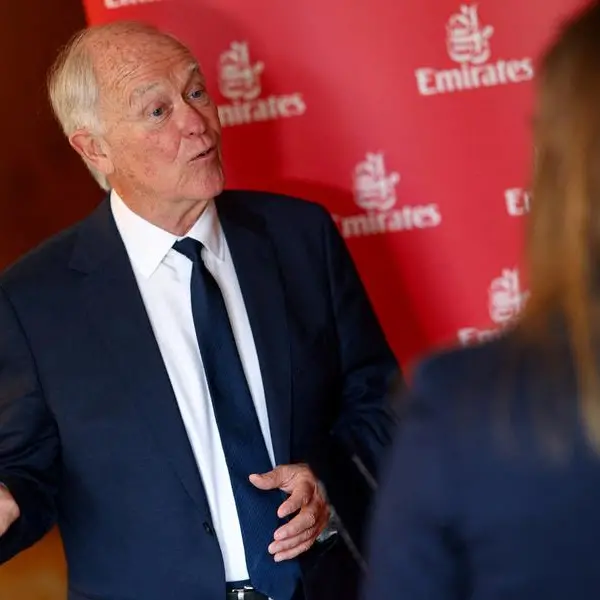
Khalid Howladar of Moody's Investors Service commented, "In more mature jurisdictions there are very strong, clear ideas on corporate governance, what is good and what is bad... but ultimately who is having the bigger banking crisis? [In the GCC] the regulations are simplistic by comparison. There are conflicts of interest and governance issues. You have a situation where the government runs the regulator, runs the country, has stakes in the banks and is both the biggest borrower and the biggest depositor."
FUTURE EXPECTATIONS
The drivers to provide support are likely to remain in place as a result of five key factors:
n The integrated 'policy' role of banks in economic development; banks have helped finance government related entities and, significantly, in recent years have helped refinance them on non-commercial terms, establishing a symbiotic credit ecosystem.
n Limited debt capital markets and the dominance of banks in both public and private sector finance; the IMF has noted that capital markets account for only around four per cent of funding within MENA economies against 60 per cent provided by banks (the balance coming from equity and private debt).
n High concentration within the national banking sectors; in all of the GCC banking systems, the four largest banks account for between 50-75 per cent of assets and liabilities, creating a structure that maintains a high incentive for the governments of the region to provide support.
n High levels of state ownership in local banks; ownership levels across the GCC range as high as 75 per cent with the largest banks in each system typically being around 50 per cent owned by the state or associated entities.
"Governments here can afford to have this kind of a system. Take, for example, Qatar, where the problem loans situation could have been much, much worse. The Qatari Government had the financial firepower to step in and purchase the banks' real estate and equities portfolios. As an underwriter or risk manager in Doha at the back of your mind is a certain level of comfort," said Howladar. "Similarly, in Abu Dhabi, the banks were broadly no more prudent than banks in Dubai in terms of concentration risk. It was just that the Dubai Government was not able to bail out its government-related entities whereas Abu Dhabi was. Going forward there is likely to be a bit more prudence and a bit less moral hazard in Dubai.
"The risk appetite of banks is probably larger because of this moral hazard. This is not going to change in the near term because governments remain in a strong financial position. From another angle should they change? The system is working for them. They are supporting their populations and if their citizenry is happy, if everybody is happy who are we to throw stones?"
© Banker Middle East 2013