More than 500 Arabic-language academic journals are published in the Middle East. Although each one carries a price tag, publishers have never believed that they can be sold. That perception is now changing.
Al Manhal, a Dubai-based start-up, is disseminating Arabic academic journals to a larger audience, assisting publishers to make money -- not just once by selling the hard copy, but every time they are accessed online using Al Manhals' platform.
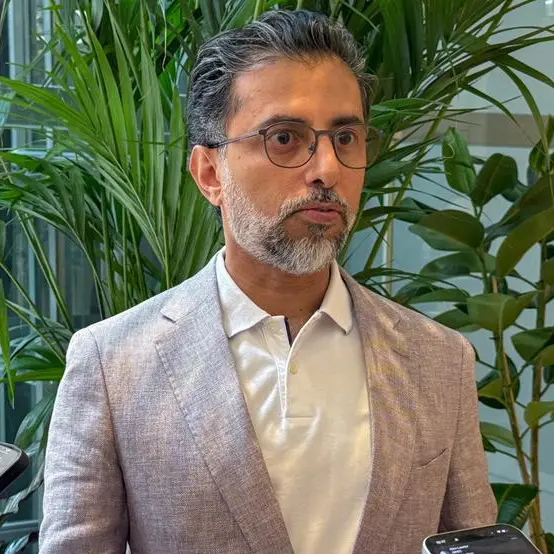
"We have upwards of 400 to 500 journals coming out of the Middle East, but not one is sold. One of the reasons is there haven't been efficient and cost-effective ways to distribute these journals. Besides, the publishers themselves have never believed they could sell them," Mohamad Al Baghdadi, Al Manhal's chief executive and a serial entrepreneur, told Zawya.
A global trend that is fast catching on in the Middle East -- library budgets quickly transitioning from print to electronic as e-information is considered more efficient and effective for researchers and academics.
"The only publishers providing electronic content are the Western publishers. This means the Arabic book and journal publishers are losing their market. And that is not because the Western products are either of high quality or more relevant. In fact, it's just the contrary, as here there is no other option available."
Al Baghdadi terms this as a "potential crisis" for the upcoming generation of Arabic learners.
"Our mother tongue is Arabic... we are taught in Arabic. But when a native Arabic speaker goes into the library and finds the majority of books and journals in English -- this is a crisis. You are forcing the student to learn in a foreign language and so he or she is at a disadvantage when compared to peers outside the Middle East, who actually are learning in their mother tongue."
Likewise, the Arabic publishing industry suffers because its customers spend their money on the Western electronic products. And to fill the void, Al Manhal -- the region's first e-book aggregator with a full text searchable platform -- was launched.
"We are distributing electronic books and journals on a full text searchable database platform, which ensures copyright protection with easy access and usage for the consumer."
Al Manhal is utilizing the same platform used by Ebrary, a US-based online digital library where Al Baghdadi worked for over 10 years. The Dubai-based company has an operations center in Jordan, where it employs 35 people, and a branch office in Cairo.
To date, it has signed with more than 80 book publishers from the Middle East and offers 4,000 academic books and journals. On the client list are University of Qatar, University of Bahrain and the World Islamic Science & Education University, Jordan.
Al Manhal has signed exclusive agreements with the Jordanian ministry of higher education, Egypt's ministry of higher education and with many other universities for sourcing their journals. It has contracts for over 200 journals with plans to release the first 80 by the end of the second quarter of 2012.
"So now students and faculty have access to more books every week at no extra cost to the library," Al Baghdadi said.
"And we pay the author and the publisher based on usage of their books. So, earlier, the publisher had to sell a book to make money; now, every single time a user looks at one page or even one word, the publisher is paid - it is fully transparent, and reliable."
Breaking Even
Al Baghdadi believes his company can break even by the end of 2012, provided they are able to achieve their targets.
"We expect to break even by year-end if we can finish our pipeline of projects and forecasts. But, I am not counting on it. This is my third start-up and I know things do not turn out as planned. I am planning on it, but I am not counting on it."
Al Manhal was initially part-funded by a Saudi-based group and Wolters Kluwer, a global publisher of medical, nursing and allied health information resources. The company is now seeking a second round of funding.
"We expect to have the money by mid-year. My objective is to get 'local smart money'... I want to get local strategic investors who can add value and are really interested in what we do."
Though officially set up at the end of 2009, the e-aggregator delayed commercial launch as it faced delays in developing a full text searchable platform.
"There have been a number of attempts and there are competitors in the market place who have alternative products of Arabic content online, but we are the only full text searchable one in the database environment," Al Baghdadi said.
Originality Matters
Another challenge is the state of the content coming from regional publishers and the arduous task of preserving the document's look and feel online.
"We simply request PDF files from our providers which we convert to the format we need for our platform. But when we convert, we give a lot of importance to the integrity and typography of the original document because there are copyright issues there. It is not my right to change the feel and look of the book.
"When converting a file, we make it exactly as the original. And that takes a lot of time and slows down things."
The Arab world, historically, hasn't got the same respect for copyright protection, reckons Al Baghdadi. He, however, is fast to add that things are no longer the same. However, ensuring copyright protection is a challenge.
"It is changing now. What it means is that we have to ensure that the people that we work with are the holders of the copyrights and electronic copyrights. Often, they don't have it and so we have to go back to get the rights."
© Zawya 2012