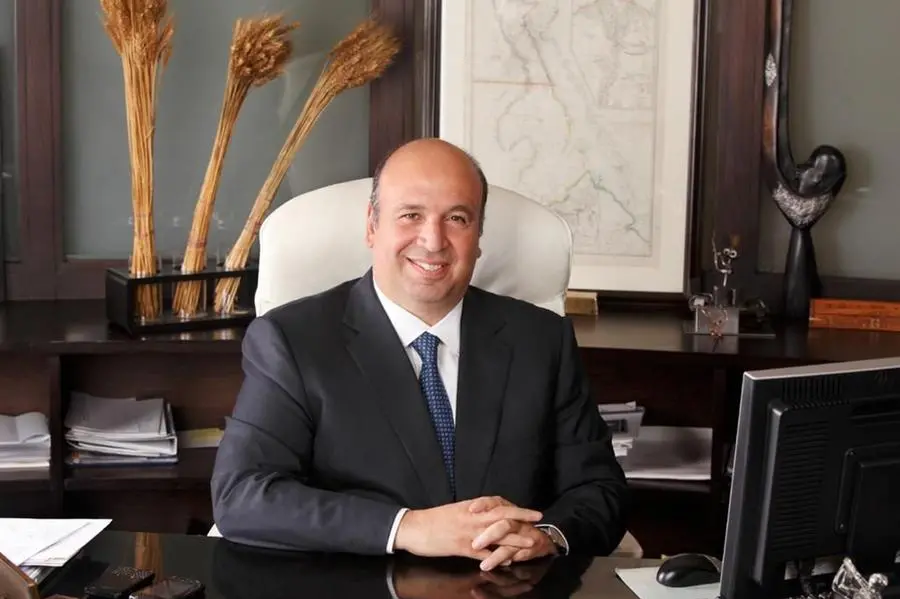
Bahrain Petroleum Company deputy chief executive for Refining and Marketing, Ebrahim Talib, says the Company has been entrusted with one of the country's biggest ever investments, and is now preparing to deliver it
There is a famous photograph of Bahrain's oil Refinery, taken in 1938, showing security guards on camel back at the gates of the facility.
An evocative illustration of the tiny country's oil industry heritage - it was the first nation in the Gulf to find oil in 1932 - and its impact on the country's socio-economic development since, it also a reminder that as one of the region's oldest refineries it faces mounting challenges in a modern, cut-throat business world.
Engaged in oil refining and distribution of petroleum products and natural gas, as well as oil exploration and prospecting, drilling, production, and sales and exports of crude oil, Bahrain Petroleum Company (Bapco) is affectionately known locally as 'As Sharika', an Arabic term meaning simply 'The Company', homage to the place it has in the hearts of many Bahrainis, particularly the older generation.
And yet in 2011 the cherished national institution endured one of its most difficult years. As social unrest in the kingdom reached its zenith in February and March, some of the Company's staff were accused of violating their employment terms in support of anti-government protests. The Company and its workforce came under intense scrutiny, with almost 300 sacked but reportedly later reinstated.
"We had a due process to investigate employee violations which treated them with utmost respect," Ebrahim Talib, Bapco's deputy chief executive for Refining and Marketing, tells The Gulf, adding that the Company's professional approach to the criticism and allegations leveled at it minimised any wider impact.
A career chemical engineer and Bapco scholar who has risen through the ranks, the personable Talib was appointed to his current position earlier this year. He is part of the executive management team tasked with delivering on a $6.5 billion overhaul of Bahrain's refining sector.
The Refinery began operations in 1936, and has since been periodically upgraded with new units. But its constrained output which includes low value, low demand products could put it at a competitive disadvantage in future.
The Company is currently reviewing strategic options for the Refinery Master Plan, which should see the completion by 2018 of a 'super refinery'. It will, says Bapco, be more energy efficient, more environmentally-compliant, with better economies of scale and producing in-demand 'middle distillates' - refinery speak for products such as diesel and kerosene.
"This results in the biggest margin improvement," Talib notes, referring to the move up the value chain.
A viability study, as well as due diligence and financial support studies, have been completed, and a study is currently underway to define the Refinery's final configuration and size of the various process units. Once this is complete, a detailed review of Bapco's wharf, tankage and utilities systems will be carried out.
Talib admits the viability of Bapco's energy conservation initiatives as part of the Plan depends heavily upon the price of natural gas.
"When [the gas price] was 70 cents per million BTU, any investment to improve gas utilisation was not viable because savings were negligible. We worked with Noga [the state National Oil & Gas Authority] to increase gas prices, which are now $2.25 per million BTU, making the investment more attractive.
"The government realises the importance of gas as a natural and strategic resource, and hence we are taking the necessary measures to improve our energy efficiency," he explains.
While the project scope may seem ambitious - particularly given the combination of high oil prices and subdued global product demand - Talib is cautiously optimistic about long-term profitability of the business.
"The emerging markets are Asia and the Middle East, and refining and distribution in these regions will continue to be required and remain profitable, in our view," he says.
"However, the big unknown is the world economy. [Refinery] expansion needs to match world [product] demand, otherwise an oversupply situation can result in a refined product price collapse even if crude oil supply is tight," he warns.
He reckons there is scope for expansion for refiners in the Middle East.
"We have a competitive advantage as we are closer to both the crude supply and customers. We are also able to sustain lower operating costs. Also, oil product demand is expected to increase, as alternative energy sources have not significantly altered the energy balance."
Talib explains that all funding options for the massive project are currently on the table: "Whatever is in the best interests for the kingdom will be the way forward - this includes the possibility of a joint venture to reduce the risk."
Progress on the Master Plan cannot come too soon for Bapco. Currently, the Refinery's official crude oil processing capacity is about 235,000 barrels per day (b/d), with the vast bulk of supplies coming from an offshore field shared with Saudi Arabia through a 1940s vintage pipeline whose capacity is similarly restricted to match Refinery requirements. A $350 million replacement pipeline, which will be able to pump up to 350,000 b/d of Arabian Light crude to the Refinery, is set for completion by 2015.
Efforts are also underway to boost oil (and gas) production from Bahrain's own fields, the new Refinery's consumption of which would be prioritised over Saudi-sourced crude.
"The current and short term increase of Bahrain crude oil production from [joint venture] Tatweer we have no problem processing in the Refinery," says Talib.
"We shall process the maximum available Bahrain crude, and reduce our purchases of Arab Light from Saudi Aramco, to match Refinery capacity. The heavier crudes that Tatweer is exploring and trying to exploit shall also be accommodated in the new Refinery. We do not expect such crudes to be commercially available before the Refinery modernisation is completed," Talib clarifies.
The Company will hope the global business environment improves by then. With refining margins squeezed by soaring oil prices and sluggish refined product demand, maintaining the competitiveness of its assets is vital, and a Productivity Improvement Programme is currently being implemented essentially to reduce operating costs and energy use even before the modernisation is complete.
Bapco is also looking at diversifying its business, with a strategic move into alternative energy on the cards as the cost of energy in Bahrain rises.
"The world is changing, and we need to change with it," says Talib.
Bapco recently built what is believed to be the Arab world's first sustainable energy laboratory, which utilises solar, wind and hydrogen power to run fuel cell generators and generate electricity. According to Talib, initial results are positive. "Current results show that daily average renewable energy reaches around 100kW per hour, which could lead to 36,500 kW per hour annually. The generated clean power will cut 30 tonnes of carbon dioxide per year from the atmosphere and reduce Bapco's carbon footprint," the deputy chief executive claims.
Bapco is also part of a group of local companies in a strategic tie-up with American firm PetroSolar, currently studying a project to install a solar and smart grid in Bahrain.
"Solar technology is advancing to the point where these concepts are now becoming a reality," Talib asserts.
Talib is quick to point out that delivering on Bapco's future strategic objectives will depend on more than just shiny new process units and solar panels.
"Employees are our biggest and most valuable asset," he says. "And we will continue to invest heavily in their personal and professional development as we believe it results in a more skilled and motivated workforce," he says.
He is well aware that executing a complex $6.5 billion project requires specialist skills, and that finding the right people for the job in a region where close to $200 billion is going to be spent on refinery and petrochemical expansions and revamps over the next few year is not easy.
"It will become more difficult to get skilled people for project executions or to operate plants," he confirms.
However he points out that in the last five years Bapco has executed $1.1 billion-worth of projects, and has brought onstream three major projects without incident or injury, many of which have been completed by its own people.
"We are starting to advertise for 160 'strategic graduate reserves' as a first batch, who will be trained years in advance of the new units coming online," he explains.
Talib appears enthused rather than daunted by the scale of the task ahead, and expresses confidence that the due processes and procedures that have been the Company's hallmark for decades will serve it well over the busy years ahead.
"The Board of Directors and leadership has been very supportive in approving the different stages of the Refinery Master Plan. Nobody will entrust you with more than $6 billion unless you are an excellent performer," he concludes.
© The Gulf 2012