Kazakhstan has enjoyed a good run over the past few years, but the country will have to get used to a lower growth rate, according to an economist who recently visited the country.
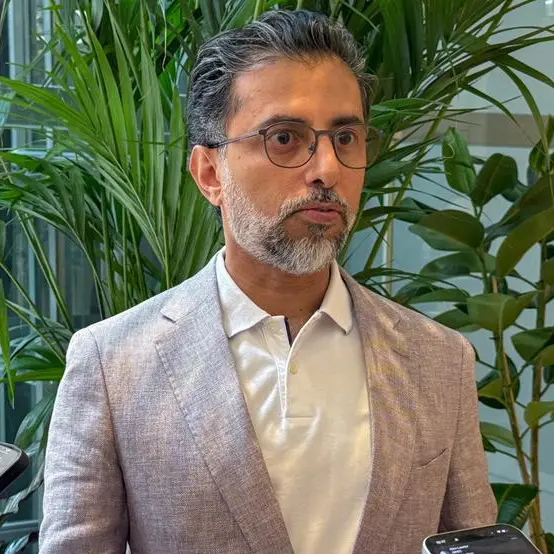
"We headed to Kazakhstan with a positive view already in place," said Charles Roberton, chief economist at Renaissance Securities, noting that he, however, left the capital Almaty with a less rosy view.
"Until 2007, Kazakhstan was booming like the Baltic states, the US or periphery Europe, with double-or triple-digit bank lending and property price rises. But when the bust came, Kazakh banks defaulted on the (largely foreign-owned) bonds that fuelled this boom. Total debt levels today are again very low in Kazakhstan, and so there is plenty of room for a milder re-run of the boom."
Industrial output hit a 10-year low last year, while other economic indicators also showed signs of weakening as well. Economic growth slowed from 7.5% in 2011 to 5% last year.
"Growth is expected to recover slowly, to 5.2% in 2013 and 5.6% in 2014, as continued government investment spending boosts domestic demand," according to the Asian Development Bank.
Other problems have also contributed to the slowdown.
"The pension fund situation might also be more complicated than it appears," Renaissance's Robertson said. "The government has declared it will collect the funds of the 11 private pension companies and have them run by the central bank. We had assumed this was aimed at forcing the funds to invest in government projects, but one person we spoke to suggested it was the problem of poorly performing illiquid pension fund assets that has encouraged this move."
However, the economist believes Kazakh demographics are so good that the country has decades of pension contributions to help rectify the problem and build up larger funds.
Government-led spending will ensure that the economy continues to hum, but the country also needs to move away from the ebbs and flow of commodity prices. Kazakhstan is set to emerge as a major oil producer, but the government is also looking to diversify its economy.
The recent high-profile British trade delegation, led by prime minister David Cameron should send the message to investors that Kazakhstan is open for business.
BRITISH OVERTURES
On July 1, Kazakh president Nursultan Nazarbayev signed a strategic partnership with UK's Cameron, as Kazakhstan hopes to emerge as a foreign investment magnet.
Apart from cooperating in regional security, companies from both countries signed deals worth USD 1.1 billion.
"Britain is already the second largest investor in Kazakhstan, with companies like Shell and BG Group playing a leading role in the development of your energy sector," Cameron said in a speech alongside the Kazakh president.
"But I believe we can go further, broadening the scope of investment and trade between our two countries to new sectors, like education, healthcare, retail and financial services. That is why I brought a leading and diverse business delegation with me, to see the opportunities on offer and to link them up with their Kazakh counterparts."
Some of the agreements include UK's Dando Drilling International signing a deal with the Kazakhstan government to set up a USD 33 million local production and assembly of mineral exploration, water well and geotechnical drilling rigs program.
UK Export Finance signed a deal with United Chemical Company of Kazakhstan to collaborate on the possibility of offering export credit loans to assist the financing of an USD 4 billion Integrated Petrochemical Complex and Infrastructure Project in Kazakhstan.
"UKEF will consider providing a guarantee for export credit loans of up to USD 800 million to support British companies bidding for contracts on the projects," said the UK Trade & Investment office. "One such company is Petrofac, which is part of an international consortium bidding for the engineering, procurement and construction (EPC) contract for a polyethylene production unit.
Meanwhile, SUN Gold Ltd., which already has a joint venture investment in the Yubileinoye gold mine, is expected to raise the value of the project to USD 400 million with production set to start by the end of 2015.
ECONOMIC MODERATION
Kazakhstan will need more such trade delegations to keep the economic engine humming, but a growth spurt is unlikely in the foreseeable future.
For now it is the government that is loosening the purse strings, especially as the country prepares for Expo 2017.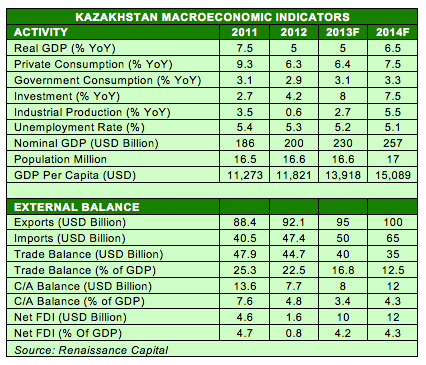
The government is also looking to invest USD 20 billion in the agriculture sector over the next seven years to facilitate private sector investment, while it is also initiating a new law on public-private partnerships to finance and implement large social and infrastructure programs.
Combined with a reserve fund of nearly USD 75 billion, the economic prospects remain moderately upbeat.
"While we have not returned believing Kazakhstan is an imminent boom story, we stand by our initial view that this is a country with good prospects for asset price growth," said Renaissance's Mr. Robertson.
"The debt ratios are healthy, the real estate market is returning to life and the outlook is relatively benign.... But we currently assume that rapid growth in credit and asset prices will only follow more success in cleaning up NPLs in the banking system, and when there is growth in deposits to fund further lending."
© alifarabia.com 2013