Banks and governments make a lot of noise about supporting the SME sector, but why is there so little action to back up all the words? In the second part of a focus on the small and medium enterprise (SME) segment, Sanjiv Anand offers some no-nonsense, grasp-the-nettle solutions in an uncertain economic world
If SMEs make up such a huge part of any economy, then why are banks so wary of the segment? One reason might be the uncertainty of being labeled as reckless by lending in an environment which is far from safe. Fear of sovereign debt contagion hitting European and US banks and then washing up on Middle Eastern shores could be one reason for caution.
Another might be a simple lack of understanding of the fine fundamentals of what should be, for most banks in the Middle East, a bread-and-butter product. In some countries, SMEs have, in frustration, turned away from banks and have begun to look for alternative sources of funding to plug gaps in finance and services that banks are unable or unwilling to provide.
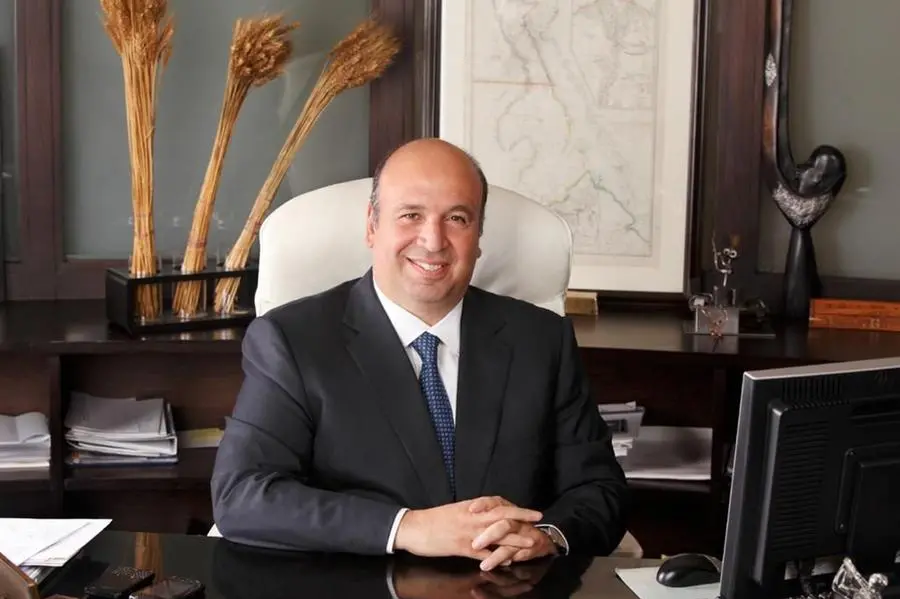
Cedar Management Consulting International is led by Managing Director Sanjiv Anand. Cedar has a network of offices in 15 countries, 500 consultants and over 800 clients. Since 1985, its team has been assisting clients in the areas of strategy, process, strategic HR, and IT. As a general management consulting firm, it is able to assist clients across these areas in an integrated fashion - from formulation to execution. Its heritage includes being part of the former Renaissance Worldwide, whose leadership included the creators of the Balanced Scorecard. It has been advising banks in the GCC since 1999.
Is there something of a scattergun approach by banks which offer SME services?
The historical model operating in the UAE is to approach the SME from an asset perspective, but there are also a lot of relationships which can be liability-driven.
Those groups are going to need great levels of service on the four or five critical products they really need. They don't have to buy everything. If you look globally, the top two lending products for SMEs are loans and lines of credit. The top two deposit products globally for SMEs are current accounts and savings accounts. If you look at ancillary services that you can make money in, it is payment of taxes, insurance, payment of wages, supplier payments, transfers and debit cards.
What I am saying is there are literally eight products and services which will dominate 90 per cent of SME volume, so you need to set the best turnaround time on those eight.
The second issue is that the model has been limited to attempting to do asset-based relationships on quasi-corporate risk assessments.
The third aspect is the way that these guys have been looking at credit risk. There is global data which shows that the default risk for debt or equity in an SME is about the same.
This means that if I am a private equity or venture capital investor, and you are the promoter of an SME business, and I am giving you equity money to invest in your company, and I am a bank giving you debt, the likelihood of a default is the same on both.
What needs to happen then?
If you ask private equity guys how they assess a business before they make an investment in it, apart from looking at the financial statements, what dominates the assessment with any good private equity is they will say, 'We always back a good promoter.' Sixty per cent of the assessment is in the quality of the promoter, that they can look the guy in the eye and believe that he is the right person to do business with.
What needs to change is in the way we are currently assessing SME credit. We are assessing them on the basis of current financial statements - it's all suspect. What we should be doing is having RMs (relationship managers) who have something of a quasi-private equity mindset.
Why would banks want to start promoting themselves as SME lenders when there is so much uncertainty in the markets?
That's an interesting question and I will answer it in two ways. Firstly, for certain banks, especially mid-sized banks, they have no choice. They don't have a big enough book to play the corporate or government game and they want to be a little bit more sophisticated than a
retail bank.
Retail risk is also high on the asset side, so for some banks there is no choice but to play the SME segment incredibly well. It could be their bread and butter. This goes back to my fundamental assessment of risk.
Go back to the fact that 80 per cent of employment is by SMEs. Even if you take US unemployment numbers at the moment, which is (for argument's sake) 10 per cent. If 80 per cent of the people were employed by SMEs in the UAE and you had even a 10 per cent rate of unemployment, you still have 70 per cent of the population employed by SMEs. Technically speaking, many businesses are still running, in some shape or form.
If you want to play the zero risk game, you shouldn't be a banker in any case. You are going to have to take risk, but the question is, do you understand the risk you are taking?
The second aspect is the segmentation and specialisation, because we are using some very broad terms as regards SMEs. Banks are out there talking about doing an SME play, but you can't do an SME play. You need to decide whether you are going to do an 'S' or an 'M' and within the 'S' or the 'M', you have to decide whether you are going to do manufacturing, or trading or services, because for example, there are 62,000-plus medium-sized enterprises and over 200,000 small enterprises in the UAE.
Breaking down the 62,000-plus medium-sized enterprises, there may be 11 per cent which are involved in manufacturing. What I am saying is that you need specialisation. Maybe a bank can focus within the SME market on mid-sized manufacturing and build expertise around that. If you build sectoral expertise, your risk will be mitigated.
Is there a perception amongst banks that the SME business is labour-intensive?
There is a perception amongst banks that the SME business is labour-intensive from three standpoints. There is the selling, or the acquisition of the SME relationship and the maintenance of that relationship, because of the transaction intensity.
There is also intensity in credit, because a bank will do credit approvals and ongoing credit and volume.
My point on this is that on the selling side, if you segment properly, then you don't need that many feet on the street, because you employ a 'cluster opportunities' approach. In the UAE we are operating, to a certain extent, in a city-state. We are not driving 500 miles to a manufacturing sector; pretty much everything is within a couple of hours' drive. If a bank is targeting industrial SMEs, it is going to have to go to those areas and operate from there. It is about focus on segments whereby a bank will address some of those feet-on-the-street concerns.
How can banks capitalise on that kind of local presence?
There are influencers to SMEs. For example, auditors. Every company above a certain size needs to have audited accounts, meaning that it is helpful to build relationships with those influencers. They are going to be a channel. For every auditor who handles 50 SMEs, a bank will see that as a funnel.
On the transaction side, if you put a lot of attention and detail into an internet solution, most of the time it will work and push the volume there.The customers which still want to do paper transactions will provide a fee opportunity, provided your turnaround time is great. If you tell an SME that it will take less than four hours to provide an LC, you can be sure that he is going to put another $100 on the table, which will more than pay for the VIP services you are providing him with to make it happen.
For the rest of it? I think the high intensity transaction models nowadays are catered for as part of the functionality of the core banking systems which most banks have.
Why aren't banks able to cross something of a cultural divide?
There is an issue on understanding how to optimise service expectation in terms of personalisation, in a region which expects higher levels of personalisation.
Firstly, clients to not expects extremely high levels of personalisation or customer excellence in all processes or interactions. They expect great levels of customer service/personalisation in no more than 10 per cent-20 per cent of the interactions. Now for those 20 per cent of interactions, it's quite possible in the Middle East context to have a more personalised level of interaction due to the lower cost of personalised support. In addition to personalising interaction for more processes, there is a good opportunity to make the processes less complicated while at the same time manage risk. For example, most SME accounts will have no more than 10-12 key supplier or customer related transactions. Why not simply transaction processes keeping this in mind. Also most of these transactions will not be of very large amounts. If in the US, a bank can move $100,000 simply on the basis of a fax and ask two basic security questions over the phone, I am sure there are ways of simplifying processes while at the same time manage risk.
The bottom line on this issue is personalise as much as feasible and simplify processes to ensure extremely high levels of SME satisfaction, a critical aspect of being successful in the Middle East SME space.
Sanjiv Anand, an NYU Stern and Harvard Alumni, is Managing Director of Cedar Management Consulting International. The first part of this interview was published in the October edition of Banker Middle East. Sanjiv can be reached at Sanjiv.Anand@cedar-consulting.com
© Banker Middle East 2011