Iraq's northern Kurdistan province was supposed to be a symbol of a more prosperous future for the country. But political instability and economic inertia are dashing hopes that its capital Irbil will ever emulate the confident swagger of the Gulf's nouveau riche cities
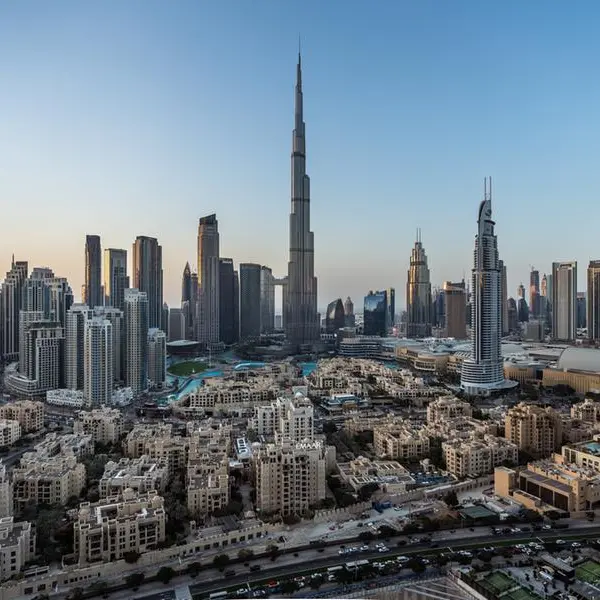
The next Dubai" has become a tired trope for war-torn regions of the Middle East. From Beirut - where Dubai is accused of "stealing" Lebanon's banking business - to the newly "free" Libya to Iraq, everyone wants to emulate the Gulf emirate's boom.
Sadly, Libya's conflict appears far from resolution. Despite Colonel Gaddafi's death, no clear path forward has emerged for the country's economic recovery, and who the players in it will be, even though the potential of the oil-rich country is patently obvious.
The National Transitional Council (NTC), the revolutionary governing body, has at this point has issued so many demonstrably false statements that western governments must be beginning to wonder what they have got themselves into. Democracy has once more been confused with mob rule, and the new boss might just be the same as the old boss. It seems that the new rulers, backed by some of the same business families whose properties were confiscated by Gaddafi's government, will certainly be more open economically, but a "free market" does not ensure peace nor a commitment to human rights. Sorry, Thomas Friedman.
As wealth and investment have poured into Irbil, a city of some 1.3 million people in northern Iraq, $400 per night hotels and a mall sporting European and American brands have sprung up, even as Kurdistan remains a locus of refugees fleeing other parts of Iraq.
Some Kurds also accuse their own government of forcing them to remain displaced in order to change demographics ahead of the next round of Iraqi elections. Security in Kurdistan, far better than in the rest of Iraq, is provided by a police state and repressive ruling parties. Gasoline in Irbil costs as much as it does in New York, but salaries have not risen to meet inflation. The gap between rich and poor in the city, and in the rest of Iraq, is likely widening.
When people in Irbil told me they hope it will be the next Dubai, it was tough to keep a straight face. Iraq and Kurdistan remain a kleptocracy. The free market, far from bringing peace, has been accompanied by a civil war and an initial lack of tariffs that helped destroy various sectors of the Iraqi economy.
Does anyone remember US viceroy Paul Bremer's "Iraq is open for business" press conference in May 2003? At the time, I was the only journalist who had the temerity to ask what gave the US the right, as an occupying force, to change the economic structures of the country they had invaded. All available international law suggested such a thing was illegal. Bremer gave a token answer to my token question, both of us knowing whatever was said at that press conference would not make much difference anyway.
A country that once produced all its own cement is still importing massive quantities of it as it attempts to address a housing shortage that existed before the invasion. The Iraqi agricultural sector, still the country's largest employer despite being badly damaged by Saddam Hussein, has suffered further as farmers have been unable to compete with cheaper imports. There are already thousands of economic refugees in Iraq, a trend that is only likely to get worse.
Iraqi Kurdistan is landlocked, and none of the surrounding countries need it to move goods to one another. If it can fulfill the promise of its apparent oil wealth, there's still no reason to think it would become a banking centre. Like the rest of Iraq, its balance of trade is hugely tipped toward imports. Most of the foreign investment remains from the Kurdish diaspora, rather than from real foreign investment, as foreigners brave enough to invest money in the area have found that it can easily disappear without recourse.
There is perhaps instability brewing in Kurdistan. Elections for the province's regional government are scheduled for next March, and for the first time since it became an autonomous entity, the two entrenched ruling parties, the Patriotic Union of Kurdistan (PUK) and the Kurdistan Democratic Party (KDP), face a serious challenge.
Those parties built their bases as the leaders of the armed resistance against Saddam Hussein that helped free Iraqi Kurdistan in 1991 with the help of the US military. But in 2006, disaffected former PUK and KDP officials formed the Gorran (Change) Movement, and in 2009, they nearly took away the PUK and KDP majority in the Kurdish parliament. The PUK and KDP are notoriously corrupt, but have long drawn on their legacy of fighting for Kurdish rights to justify their violent repression of any opposition. Until Gorran, the region's Islamic parties had represented the only viable opposition.
Gorran also now has representation in the Iraqi parliament, where it has begun to make alliances with Arab parties, to further undermine the ruling parties, even as the ruling Kurdish parties are increasingly at odds with the Iraqi prime minister over issues of disputed territory. This is reminiscent of Saddam's time, when the PUK and KDP fought a bloody civil war from 1994 to 1998, with the KDP backed by Saddam and the PUK backed by Iran.
The promise of Kurdistan could quickly devolve into bloodshed, as has happened in other places rocked by political changes that have swept the region this year. Noschiwan Mustafa, Gorran's founder, was a former PUK pesh merga (Kurdish militia) leader who participated in the civil war and is no stranger to the tactics he now decries.
Meanwhile, the rest of Iraq remains perceptibly on edge. Political gridlock is still the order of the day, and the only thing on which the Iraqi parliament appears unified is that US troops should go.
There are small moves toward reconciliation, but they do not come from the ruling parties. Civil society is bravely attempting to re-emerge, but the facts on the ground remain that Tayyera Sadri, always the political movement with the largest actual base, is no longer the opposition but to all intents and purposes the ruling party.
Virtually nothing can happen in the Iraqi parliament without their support, and they do not brook dissent. Millions of refugees have yet to return home, and the electricity is only on for 12 hours a day during times of lowest demand, and less in the scorching summer months when demand increases.
If nothing else, the electricity situation is far better in Kurdistan, which has at least built its own power generating plants, and Irbil has almost round the clock supply. But it has a long, long way to go before it can be remotely considered 'the next Dubai'.
© The Gulf 2011