Deutsche Bank is bullish about next year, i.e. if Europe does not capitulate, the United States does not return to its poor growth and Asia does not suffer a hard landing.
In the eyes of Deutsche Bank analysts, Europe holds the key to global growth. Admittedly, this is slightly myopic thinking given that the world does not revolve around the EU. We have already seen the United States and Asia chug along even as Greece, Portugal, Spain and Italy imploded one after the other. Perhaps that's a natural home bias of all OECD banks.
"In our view 2012 will see the turning point in the European sovereign crisis. Recent events have seen dramatic political shifts in the peripheral euro zone nations, especially Greece and Italy, which should boost reform and, ultimately, ensure that the region emerges stronger and more stable," notes the bank.
Overall, the bank expects growth in 2012 to hold up reasonably well. If the threat of a systemic event in Europe fades in the early part of next year, as we expect, 2012 could offer significant upside potential for risk assets.
"2012 will not be an easy year for investors but it will not be a re-run of 2011: fundamentals will play a more important part in asset valuation, and there will be more opportunities to out perform," says Rich Herman, Global Head of Institutional Client Group.
GO FOR GOLD & OPEC'S DILEMMA
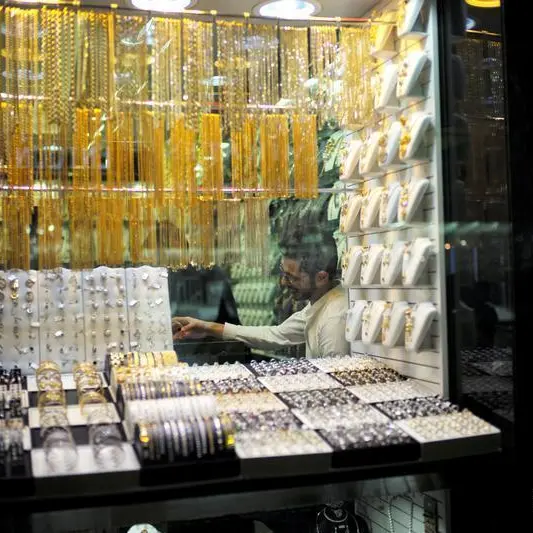
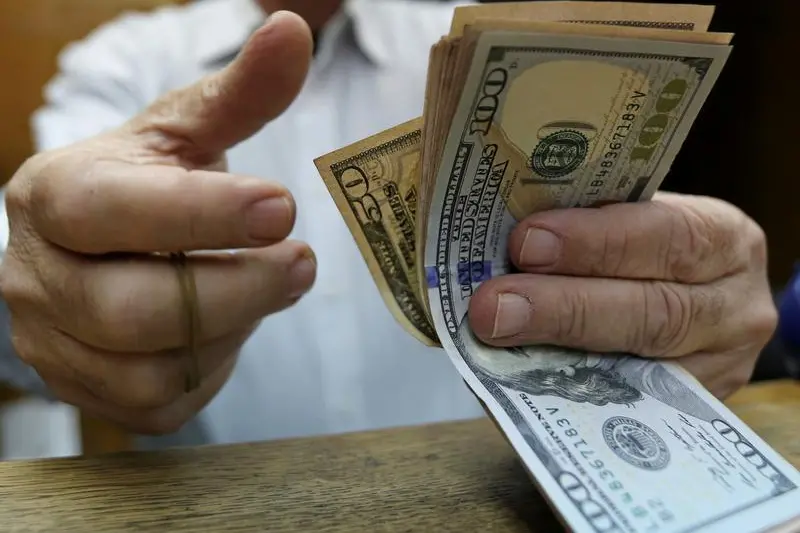
While the bank remains circumspect about global growth and even most of the commodities, it remains bullish on gold.
The banks says an environment where real interest rates are negative and the U.S. equity risk premium is high makes for a sustained strong private and public sector demand for gold.
"Indeed given investor appetite to protect against tail events such as the break-up of the eurozone, we view an overshooting in the gold price as a high probability event," says Michael Lewis, global head of commodities research at DB. "According to the measures we employ, gold would need to move above USD2,170/oz for prices to be considered extreme and for the market to start displaying bubble characteristics."
Overall, commodities have been in a supercycle for the past ten years and it is unclear that this cycle can continue. Indeed, since the global financial crisis has seen tremendous volatility, which have been especially severe on energy and industrial metal prices.
Energy prices are closely tied to global growth and if world economy slides sharply in 2012, then OPEC will be looking to balance the need for lower oil prices to support world growth against the ability of high oil prices to finance domestic social programmes.
"Break-even oil prices for both external and fiscal accounts across the Middle East and North Africa have risen substantially over the last few years. For the GCC nations as a whole, we estimate break-even oil prices stand at around USD86.5/barrel (Brent equivalent) and indicate a level at which OPEC might start to consider production cuts to defend the oil price.
"We find that OPEC has a successful track record in defending oil prices via production cuts although not when world growth is below 3% as the cartel is unable to cut production as fast as world oil demand growth is slowing."
The bank outlines 10 key risks global investors much watch out for:
KEY RISKS
1 Greece euro exit
The unthinkable is very thinkable now as Greece does not appear to have the structural strength to remain in the euro. There is a chance of a probable collapse of the Greek banking sector, at a cost of 30% of Greece GDP. A return to the drachma is not inconceivable, although the bank does not think it will occur.
2. Italian and Spanish funding crises
Together, Italy and Spain are too big to fail, too large to bail. The eurozone's third and fourth largest economies have a combined EUR 2.7 trillion debt outstanding (>30% of eurozone's total).
Both are liquidity problems, not solvency problems. A crisis of confidence and deep recession are the catalysts for this risk.
3. US downgrade and/or double dip recession
The first quarter 2011 showed how quickly large unexpected shocks can translate to the real economy: GDP growth slowed to 0.8% after political change in the Middle East and the earthquake in Japan.
4. China hard landing
For China, 5% to 6% growth would seem like a recession. China growth could be stimulated quickly but the global capital markets would be left exposed to sudden sharp declines in commodity prices and global equities. But the declines may be short lived. With USD3.2 trillion of FX reserves, China has the power to stop the slide quickly.
5. France loses AAA rating
Quite possible, in our view, given badly delayed fiscal austerity in advance of the Presidential election. With France trading at a 20 year wide to Germany, the downgrade risk may already be priced in.
6. Aggressive, sustained European bank de-leveraging
The question is not if European banks will deleverage aggressively in 2012, but by how much. Current estimates suggest as much as USD2 trillion within 18 months. Strong headwinds include a sovereign crisis, a recession, closed funding markets and Basel 3. If the negative feedback loop to the real economy is not broken, look for funding and capital markets to be the channels for global contagion.
7. Liquidity crunch in commodity trade finance
Commodity trade finance is highly concentrated across five European banks, three of them French. In aggregate, they provide an estimated 75% of the financing for the big Swissbased commodity trading houses.
8. Declining universe of safe haven assets
The old adage - 'find safety in numbers' - did not find consistently reliable friends in gold, the Swiss franc and yen in 2011.In the peak volatility of August-September, US Treasuries and Bunds proved more reliable safe haven assets. However, the rising debt obligations of both economies (albeit for different reasons) may warrant more prudent diversification strategies, as well as protection against inflation and higher rates.
9. Ballooning U.S. pension fund deficits
When it comes to US pension fund deficits, rounding errors can be measured in trillions. For US corporates, funding gaps range from USD400 - 500 billion, while comparable US public sector deficits are estimated at USD3 - 4 trillion depending on discount rate assumptions.
10. Better than expected economic growth
A large degree of downside risk is being priced into markets; investors are primarily focusing on further de-risking of debt exposures. However, such an
environment introduces another risk from the potential for upside surprises: if Europe stabilises, both global growth and risk asset prices could exceed expectations.
© alifarabia.com 2011