LONDON, Jul 27, 2012 (AFP) - Oil and metals prices mostly fell this week despite rallies caused by reassurances about securing the euro's future and positive Chinese data, analysts said.
News Friday that US growth slowed to 1.5 percent in the second quarter added to the downbeat sentiment.
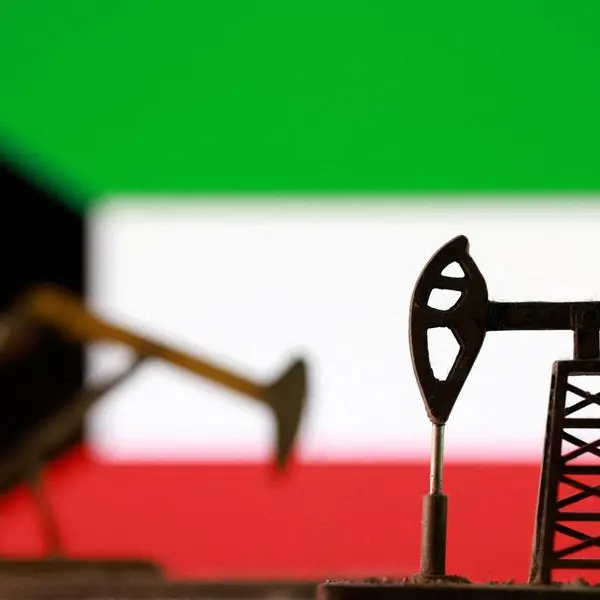
OIL: World oil prices eased despite rising for much of the week, as concerns over the eurozone debt crisis offset Middle East supply concerns and positive economic data out of raw materials-hungry China.
European Central Bank president Mario Draghi on Thursday pledged to "do whatever it takes" to preserve the European single currency -- providing some support to crude futures.
"Price increases on the oil market are being triggered at present largely by external factors such as... (Draghi-like) statements or supply-side risks," said Commerzbank analyst Carsten Fritsch.
Draghi's rousing vow of support for the euro issued inspired risk-averse oil traders to re-enter the market.
Dutch bank ABN Amro said tensions in the crude-producing Middle East "could remain the most important driver for oil prices" in the third quarter.
"We expect volatility to remain high but prices to trade within small ranges," it said in a report.
Oil prices have risen for much of the week, also on hopes of central bank stimulus that helped to offset data showing an increase in US crude stockpiles.
Crude futures have also won support this week on encouraging Chinese manufacturing data. But they plunged by more than $3.50 on Monday on the eurozone debt woes.
Banking giant HSBC on Tuesday said its Purchasing Managers' Index (PMI) for China -- which measures manufacturing activity -- hit a five-month peak of 49.5 this month, well up from the 48.2 recorded in June.
HSBC said government measures to boost growth in the world's second-biggest economy, including interest rate cuts, were working.
A PMI reading above 50 indicates expansion and while the data remained negative, the improvement on the month provided some hope that the Chinese manufacturing sector was heading in the right direction.
Oil prices had hit two-month highs the previous week as traders worried that rising tensions in the crude-rich Middle East -- particularly in Iran and Syria -- would hamper supplies.
By late Friday on London's Intercontinental Exchange, Brent North Sea crude for delivery in September dipped to $105.94 from $105.98 a week earlier.
On the New York Mercantile Exchange, West Texas Intermediate (WTI) or light sweet crude for September stood at $89.90 a barrel compared with $90.91 for the August contract a week earlier.
PRECIOUS METALS: Gold prices climbed as the metal profited from its status as a safe haven in times of economic unrest, while platinum and palladium hit the lowest levels since late 2011.
"Given the extent of the ongoing debt crisis in the eurozone, (gold) bullion remains the best hedge against sovereign default risks. Increased buying is to be expected," said Andrey Kryuchenkov, analyst at financial group VTB Capital.
By late Friday on the London Bullion Market, gold rose to $1,618.25 an ounce from $1,576.25 a week earlier.
Silver climbed to $27.73 an ounce from $27.07.
On the London Platinum and Palladium Market, platinum gained to $1,410 an ounce from $1,408.
Palladium dipped to $574 an ounce from $577 an ounce.
BASE METALS: Base metals prices on the London Metal Exchange (LME) fell across the board as traders banked profits after gains won on the back of Draghi's comments and positive Chinese data.
"Despite the initial rally the metals pared their gains... as profit taking emerged," said James Moore at metals analyst group FastMarkets.
LME meanwhile announced this week that its shareholders voted overwhelmingly in favour of its proposed takeover by the Hong Kong stock exchange.
The Hong Kong Exchanges and Clearing (HKEx) last month agreed to buy the 135-year-old LME for 1.39 billion (US $2.15 billion, 1.77 billion euros).
The HKEx takeover offer for Europe's last open outcry exchange will be financed with cash and 1.1 billion in bank loans. The deal values the LME at 107.60 per share.
The LME is the world's largest exchange trading non-ferrous metals, including copper and aluminum, while HKEx is the biggest exchange operator by market value.
By late Friday on the London Metal Exchange, copper for delivery in three months dipped to $7,537 a tonne from $7,603 a week earlier.
Three-month aluminium slipped to $1,888 a tonne from $1,912.
Three-month lead edged down to $1,900 a tonne from $1,901.
Three-month tin declined to $18,035 a tonne from $19,050.
Three-month nickel slipped to $15,930 a tonne from $15,953.
Three-month zinc dropped to $1,840 a tonne from $1,852.
COFFEE: Coffee prices were mixed, with Arabica dropping on tighter supply expectations amid drier weather in Brazil, while Robusta rose as a weaker dollar made the commodity cheaper for buyers holding rival currencies, boosting demand.
By Friday on NYBOT-ICE, Arabica for delivery in September fell to 175.15 US cents a pound from 186.75 cents a week earlier.
On LIFFE, Robusta for September increased to $2,239 a tonne from $2,180.
COCOA: Prices rose for a second week running on tight supplies in top producer Ivory Coast, which accounts for about 35 percent of global output of the commodity that is used mostly to make chocolate.
By Friday on LIFFE, London's futures exchange, cocoa for delivery in September climbed to 1,587 a tonne from 1,547 a week earlier.
In New York on the NYBOT-ICE, cocoa for September gained to $2,320 a tonne compared with $2,241.
SUGAR: Sugar futures retreated on expectations of high supplies in Brazil and India after a recent run higher for prices.
"Rain in India alleviated stress on sugar crops that were suffering from a surprisingly dry monsoon season. The improved crop conditions weighed on values," said the Public Ledger specialised commodities publication.
By Friday on LIFFE, the price of a tonne of white sugar for delivery in October stood at $609.07 compared with $636.30 for the August contract a week earlier.
On NYBOT-ICE, the price of unrefined sugar for October dropped to 22.31 US cents a pound from 23.20 cents the previous week.
RUBBER: Prices slipped amid concerns over the eurozone debt crisis and falls to oil prices, pushing up demand for synthetic rubber which is made using crude.
By Friday, the Malaysian Rubber Board's benchmark SMR20 fell to 282.90 US cents a kilo from 292.25 cents the previous week.
burs-bcp/gk