Comic timing is everything. Thus, when the head of the European Central Bank said that the worst of the Eurozone debt crisis was behind us, it didn't take long for bond yields to start rising again. Spain and Italy have seen their 10-year bond yields (the price at which they borrow for 10-years) rise 60 and 30 basis points respectively in recent weeks.
Central bankers and politicians have a fairly good track record of declaring victory too early only to have to back-track later on. Remember when Bernanke mentioned the "green shoots" of recovery in 2010 only to have to resort to more QE later that year?
Bernanke is not making that mistake again in 2012. Instead, rather than show any sign of optimism on the back of the pick-up in US economic data he is being overly pessimistic by saying that economic risks remain high, the jobless rate could reverse some of its recent gains and that the central bank needs to continue to provide monetary accommodation to ensure a smooth recovery going forward.
Not so the Europeans, not only has Draghi declared victory on the crisis, but his fellow Italian, Prime Minister Monti, expressed similar sentiments on a recent trip to Japan. He went even further than Draghi and said that the Eurozone crisis is almost over. In the same speech Monti said that Europe needs to have a "higher firewall", something that is far from guaranteed and mired in German opposition and he was sure that Italian labour market reforms will get passed by the Parliament.
Perhaps Monti didn't realise what is glaringly obvious to everyone else: he is contradicting himself completely. There are two things needed to bring the sovereign debt crisis to an end. Firstly, it is an enhanced, super-duper rescue fund to convince investors that if another country gets into financial trouble in the currency bloc there is a cushion of money readily available to break their fall. Some people believe this needs to be many trillions of euro due to the extent of debts in Greece, Spain and Italy - the world's third largest debtor. However, plans to increase the rescue fund that are currently being discussed only want to increase the fund to EUR 900 billion, however that includes the bailouts already given to Greece, Ireland and Portugal, which reduces the fund to EUR 700 billion.
And there's no guarantee that the EUR 700 billion will be committed with some of the most financially stable countries in the currency bloc like Finland, against having to pay for more bailouts. At this juncture there isn't even a short-term solution in place to solve the crisis.
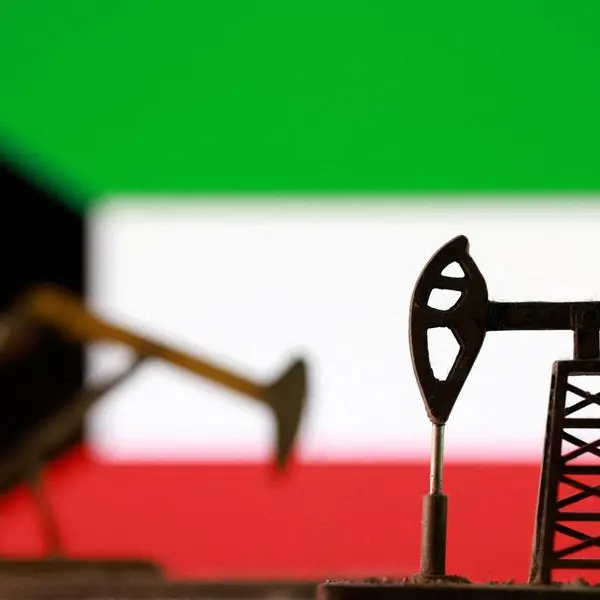
Structural economic reform is the second part of the solution. This is also proving to be much harder to implement than some originally thought. European economies need to become more competitive, wages need to fall and public services need to be scaled back to wean Eurozone economies off unsustainable budget deficits and reliance on public debt to fund welfare states. Europe doesn't have huge oil revenues coming in like parts of the Middle East, likewise, apart from Germany, it's not a big exporter.
We have seen how hard these reforms can be to implement. Crippling national strikes have brought Greece and Portugal to a halt in recent months, the new Prime Minister of Spain gets his first taste of a national strike on the day before he presents his country's Budget. The risk is that politicians need to win over an electorate and so will go easy on fiscal reforms which could spark fear in bond markets and another wave of the sovereign debt crisis further down the line.
Thus, it was with some relief that former ECB board member Lorenzo Bini Smaghi (also an Italian) spoke some sense and said that the crisis is still very much alive during a recent interview with CNBC.
So why would Monti be so upbeat? It's no surprise that Monti spoke these comments in Japan and China, they have the cash surpluses in the form of FX reserves that could be invested in Europe's bond markets to try and ease sovereign strains in the long-term. To entice that investment Monti has to talk up the progress made in Europe.
It's likely that a mission is probably on its way to the Middle East now to see if there is any interest in European investments, especially now that the IMF seems less willing to throw money at supporting the currency bloc. However, the sovereign crisis is going to take many years to work through, and we need to see reforms working before anyone, even Monti, can declare that the Eurozone crisis is close to being over. The only thing we know with any certainty is that we are not even close to the finish line yet.
Disclaimer: The information and opinions in this report are for general information use only and are not intended as an offer or solicitation with respect to the purchase or sale of any currency or CFD contract. All opinions and information contained in this report are subject to change without notice. This report has been prepared without regard to the specific investment objectives, financial situation and needs of any particular recipient. Any references to historical price movements or levels is informational based on our analysis and we do not represent or warranty that any such movements or levels are likely to reoccur in the future. While the information contained herein was obtained from sources believed to be reliable, author does not guarantee its accuracy or completeness, nor does author assume any liability for any direct, indirect or consequential loss that may result from the reliance by any person upon any such information or opinions.
Foreign Exchange and other leveraged products involves significant risk of loss and is not suitable for all investors. Increasing leverage increases risk. Spot Gold and Silver contracts are not subject to regulation under the U.S. Commodity Exchange Act. Contracts for Difference (CFDs) are not available for US residents. Before deciding to trade forex, you should carefully consider your financial objectives, level of experience and risk appetite. Any opinions, news, research, analyses, prices or other information contained herein is intended as general information about the subject matter covered and is provided with the understanding that FOREX.com is not rendering investment, legal, or tax advice. You should consult with appropriate counsel or other advisors on all investment, legal, or tax matters. FOREX.com is regulated by the Commodity Futures Trading Commission (CFTC) in the US, by the Financial Services Authority (FSA) in the UK, the Australian Securities and Investment Commission (ASIC) in Australia, and the Financial Services Agency (FSA) in Japan.
© Forex.com 2012