Friday, Dec 02, 2011
Gulf News
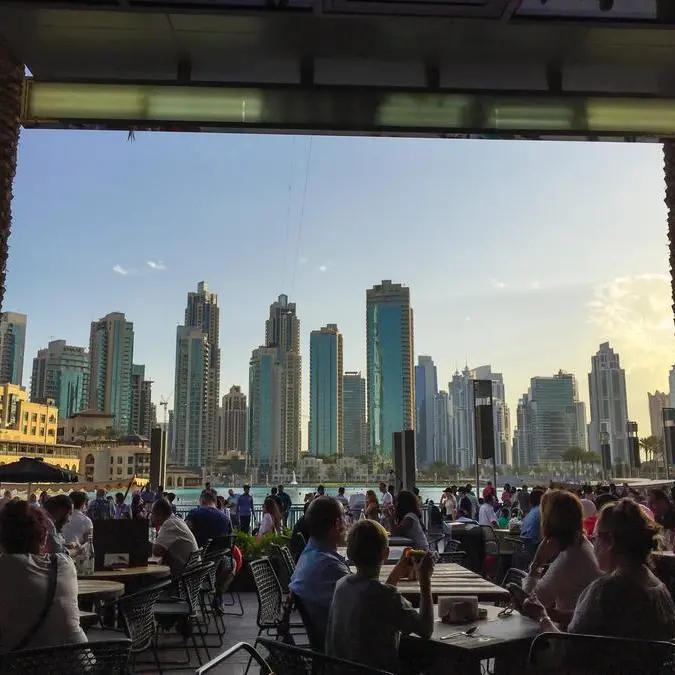
Dubai From the Clock Tower in Deira to the 828-metre-tall Burj Khalifa — the world’s highest man-made structure; from the simple Abu Dhabi corniche to the extended modern skyline of a capital city; the economic progress of the UAE in the past four decades is everywhere to be seen.
“The UAE has seen phenomenal growth over the past 40 years. The country has been transformed from one of the least developed in the world into one with an income comparable to that of most industrialised nations,” Hamad Bu Amim, Director-General of the Dubai Chamber of Commerce and Industry, told Gulf News.
Despite the global slowdown and European debt crisis, the economic development of the UAE has continued.
Strong demand
“The UAE economy is recovering in an increasingly uncertain regional environment. Benefiting from high oil prices and strong demand from traditional trading partners, non-hydrocarbon GDP growth is projected to accelerate from 2.1 per cent in 2010 to 3.3 per cent in 2011,” the International Monetary Fund said in its latest assessment of UAE economy.
From 1971 — when the then leaders of the UAE joined hands to build a common future — it took the country just under 40 years to become the world’s 19th biggest trading economy, as reflected in the latest World Trade Organisation (WTO) data and the 30th most developed country according to the United Nation’s Human Development Report released in November 2011.
On a scale of 0 to 1.000, the UAE scored 0.846 in the UN Human Development Index (HDI) this year — much higher than the world average of 0.682 and the Arab world’s average of 0.641, and catching up with the Very High Human Development score of 0.889.
The country is in the world’s top category of nations — Very High Human Development achievers.
“What the UAE has created over the years is very unique and something to be extremely proud of. I have heard many growth stories but nothing beats the success story of the UAE. Be it the infrastructure or the business environment or the fact that it is home to different nationalities, I think the UAE has carved a niche for itself and I am confident that this story is just going to get better,” Rohit Walia, board member of Alpen Capital (ME) Ltd Executive Vice-Chairman and CEO of Sarasin-Alpen, told Gulf News.
Forty years is a short period in a country’s history. Most nations spend their formative few decades in growing pains — debating growth paths, engage in conflicting ideas and mismanagement that results in loss of lives and wealth — among other man-made disasters. However, the people of the UAE have been very fortunate. They did not have to suffer any of those.
Key elements
“The UAE has transformed itself from being highly dependent on oil and gas to being a well-diversified economy, with a burgeoning services sector, industry, with higher value-added in petrochemicals, tourism and financial services are completing the picture of a balanced economy,” Dr Nasser Saidi, Chief Economist of Dubai International Financial Centre (DIFC), said to Gulf News.
“The UAE has been a major economic and social development success story with high growth of per capita income and major improvements across all socio-economic indicators,” Dr Saidi said.
With gross domestic products currently crossing Dh1 trillion, UAE nationals are one of the world’s wealthiest people with per capita GDP of over $50,000 (Dh183,500).
Nael Shehadeh, Associate Researcher at Gulf Research Centre Foundation, said: “Some key elements responsible for the economic success [of the UAE] were strong governance, open trade environment and efficient protection of private property rights.
By Saifur Rahman ?Business Editor
Gulf News 2011. All rights reserved.