PHOTO
The Iran war is seeping into the cosmetics supply chain, pushing up the cost of everything from plastic jars and lipstick tubes to transport, and reminding the beauty industry that even a tub of face cream depends on fragile global trade routes.
Cost pressures were a recurring theme last week at one of the sector's largest trade fairs in the northern Italian city of Bologna, as executives watched Iran's blockade of the vital Strait of Hormuz shipping route approach a fifth week.
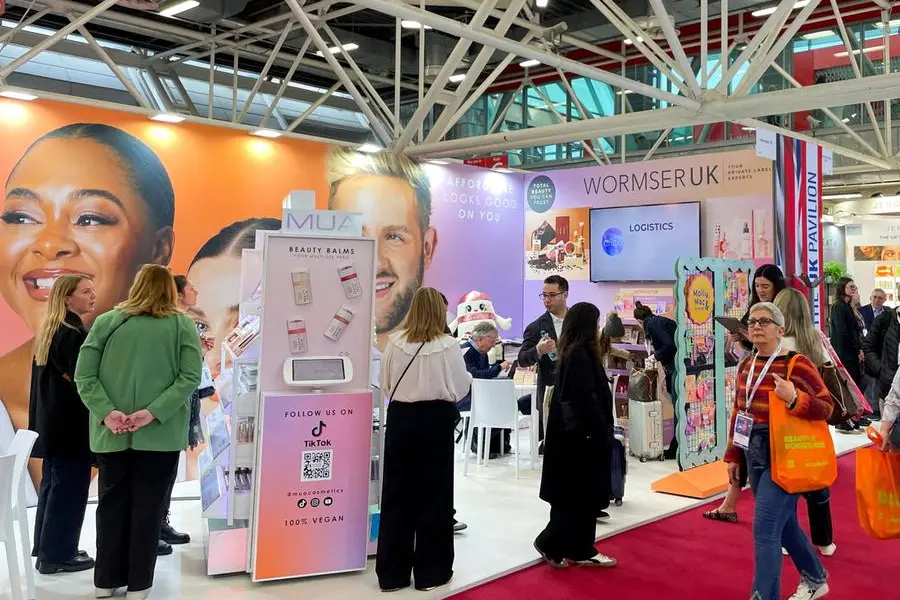
The Cosmoprof fair drew 3,100 exhibitors from 68 countries and 255,000 visitors from 150 nations, ranging from companies seeking packaging solutions to retailers scouting new products.
Cosmetics companies are primarily worried about higher raw material and transport costs due to rising oil prices and disrupted shipping, five industry executives told Reuters.
"We are beginning to see cost increases driven by energy price inflation, compounded by delivery delays," said Simone Dominici, CEO of Italian cosmetics group Kiko, who estimates additional logistics-related costs of about 1.5 million euros ($1.7 million) for the group over the year.
Kiko, which sells lipsticks starting at 5 euros and mascaras from 7.5 euros, operates more than 1,000 stores worldwide.
"With so many containers stuck in the Middle East, there is a tighter container availability ... and goods are not being moved efficiently", Dominici said, adding that higher prices for some chemical components and packaging - much of it sourced from the Far East - would add further pressure.
As the Iran crisis upends supply chains, Yonwoo, a container maker for L'Oreal and K-beauty firms, said it was scrambling to secure stocks of plastic resin to manufacture the pots used for skincare and cosmetics.
ALTERNATIVE ROUTES
Beyond higher costs, the industry could also face softer demand from consumers whose purchasing power is being eroded by inflation, Dominici said.
"It's the perfect storm," he warned.
Milan-listed Intercos and privately owned Ancorotti Group, among Italy's largest contract manufacturers in the sector, said they had not yet faced major supply shortages but cited higher logistics costs, longer delivery times and rising raw material prices as challenges.
"Lead times have lengthened as routes have become longer and ports more congested. What once took eight weeks now can take 12 to 14 weeks", said Ancorotti Chief Executive Roberto Bottino.
Some clients have turned to rail transport to reach Asia, Bottino added.
Ancorotti Group makes around 220 million euros in revenues per year from selling products to beauty brands worldwide.
Bottino said it was difficult to imagine supply-chain cost increases not ultimately being passed downstream.
"Middle East customers value quality and are willing to pay a premium for added value, so being unable to access these markets can have a negative impact", said Fabio Franchina, chairman of haircare products maker Framesi.
Franchina said the company's distributor in the region was exploring alternative delivery routes.
"They are looking at ... (options such as) shipping to Jeddah and then moving goods by road instead of routing them through Persian Gulf ports," he said.
Some goods are currently being shipped by air rather than by sea, he added, further lifting costs.
Italy produced 18 billion euros of cosmetics in 2025, including 8.4 billion euros in exports, according to industry body Cosmetica Italia, making the country the world's fifth-largest exporter of beauty products and one of the leading producers of hair dyes, eye make-up and fragrances.
($1 = 0.8623 euros)
(Reporting by Elisa Anzolin. Editing by Mark Potter)