PHOTO
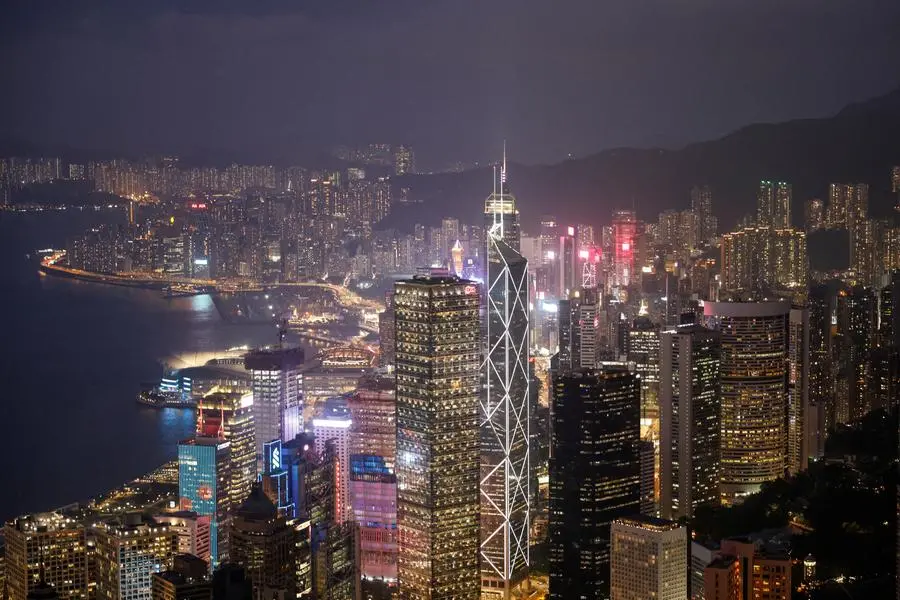
HONG KONG - Hong Kong's economy will remain buoyant this year, growing by 2.5%-3.5%, helping the city return to a budget surplus following several years of deficits, financial secretary Paul Chan said in his annual budget speech on Wednesday.
The government expects a HK$2.9 billion ($370.76 million) surplus, a marked turnaround from the HK$67 billion deficit it originally forecast, and the first surplus recorded by the financial hub since the 2021-22 fiscal year.
The city had grappled with post-COVID pandemic malaise and a falling property market - long a mainstay of public revenues from land sales income.
In the next financial year, another surplus was also forecast, widening to HK$22.1 billion, with Chan emphasizing the government would strive to maintain fiscal balance by "strictly containing" expenditure, including cutting civil service numbers by 2% each year for the next two years.
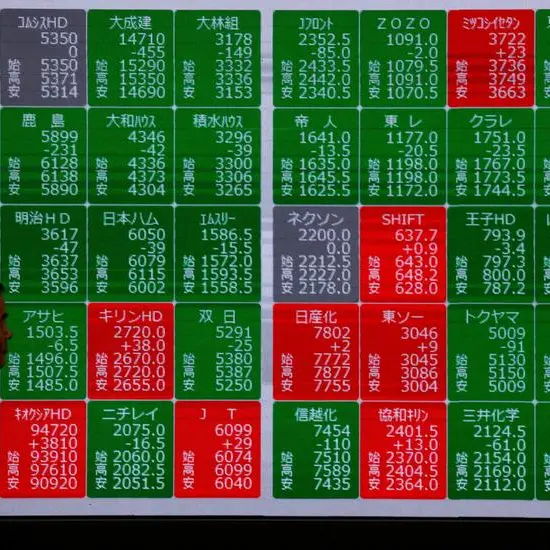
A near 28% rally in the Hang Seng Index, along with a more than 4% rise so far this year, has boosted stamp duty income. A deluge of 119 new IPOs raised HK$285.8 billion in 2025, many from mainland China, and lifted Hong Kong's regional listing hub reputation.
"Nevertheless, the international environment remains complex and intricate. With the major advanced economies still frequently shifting their trade and economic policies, uncertainties will continue to loom over global trade," Chan said.
Fiscal reserves are expected to reach HK$657.2 billion by the end of March this year.
The budget also introduced some modest tax relief measures, including child and dependent parent allowances.
Between 2027 to 2030, the economy was forecast to grow 3% in real terms per year, Chan added, with an underlying inflation rate averaging 2% per year. Frothy asset and stock markets, along with a 12 percent surge in visitors to around 50 million people last year compared to the year before, helped drive economic growth and a mild rebound in the struggling property market.
The government is also redoubling its focus on the technology and AI sector to bolster integration with mainland China's longer term national policy blueprint, or the 15th Five-Year Plan, Chan said, amid challenges including trade tensions and Chinese economic fragility. Hong Kong is a special administrative region of China.
TECHNOLOGY FOCUS
The government has earmarked at least HK$20 billion to invest in two development zones, including the San Tin Technopole and Hetao Hong Kong Park, on the border with China - that will focus on technological industries and research and development to generate new economic drivers.
These are both tied to a broader mega project known as the Northern Metropolis, spanning 30,000 hectares (116 square miles), aiming to bolster Hong Kong's technological collaboration and linkages with mainland China -- as Beijing prepares to announce in March its latest 5-year-plan setting out national policy priorities and targets between 2026-2030.
Chan said a new cross-bureau task force led by the city's chief executive would work to align Hong Kong with the 15th Five-Year Plan and, for the first time, draft a five-year plan for Hong Kong itself.
Hong Kong will seek to capitalise on its financial sector to better serve industries with a competitive edge including information and technology.
"In so doing, we can leverage our strengths to serve the country's (China's) needs," Chan said, noting the city would seek to entice more global talent and firms in sectors such as aerospace and Artificial Intelligence to base here.
But Hong Kong also faces geopolitical and reputational risks as it continues with a years-long crackdown under a China-imposed national security law. Former media mogul and China critic Jimmy Lai was recently sentenced to 20 years in jail for a foreign collusion charge that drew international criticism.
($1 = 7.8220 Hong Kong dollars)
(Reporting by Jessie Pang, Clare Jim, Donny Kwok, James Pomfret and Anne Marie Roantree; Writing by James Pomfret; Editing by Christopher Cushing and Kim Coghill)