PHOTO
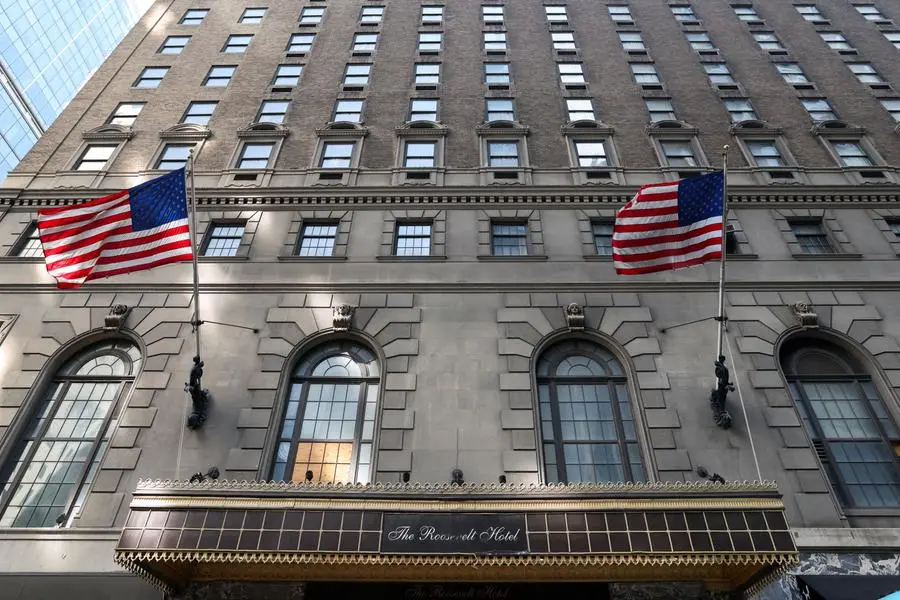
Pakistan has signed a deal with the U.S. government to jointly redevelop New York's Roosevelt Hotel, according to documents seen by Reuters and two sources, allowing Islamabad to unlock the value of one of its most prized overseas investments.
The century-old hotel, owned by Pakistan's national airline, has been closed since 2020 and is central to Islamabad’s IMF-backed asset restructuring, which the government has previously estimated could be worth more than $1 billion.
The two countries signed the memorandum on Thursday after Pakistan's cabinet approved the process, two sources with knowledge of the matter told Reuters. They were not authorised to speak publicly on the matter.
DEEPENING ECONOMIC TIES
Reuters saw a document showing a cabinet summary saying the prime minister cleared the proposal by authorising the Ministry of Defence to sign the non-binding memorandum with the U.S. General Services Administration (GSA), as part of efforts to enhance bilateral and commercial relations.
Pakistan's defense ministry and privatisation ministry did not respond to a request for comment. The White House and U.S. Embassy in Islamabad also did not immediately respond to a request for comment.
The agreement comes as Pakistan deepens economic engagement with Washington, including U.S. financing support for the Reko Diq copper and gold mining project in Pakistan's Balochistan, partly owned by Barrick Resources.
Pakistan's Prime Minister Shehbaz Sharif is currently in Washington to attend the inaugural Board of Peace meeting.
The memorandum, seen by Reuters, says the project "shall be facilitated by the United States General Services Administration and by the Pakistan Ministry of Defence", and will cover the "renovation, operation, maintenance, and redevelopment" of the property near Grand Central Terminal.
It does not specify financial terms.
The U.S. General Services Administration primarily manages federal property and procurement for U.S. government agencies, and its publicly stated mandate does not typically include commercial redevelopment of foreign state-owned assets. It was not immediately clear under what authority the agency would facilitate the project.
(Reporting by Ariba Shahid; Editing by YP Rajesh and David Holmes)