PHOTO
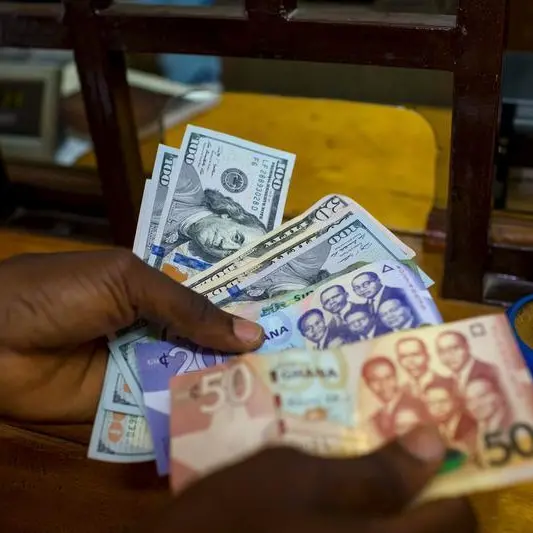
African countries may have to rely more on domestic resources to escape spiralling debt and costly infrastructure rebuilding. At the 48th ordinary session of the African Union (AU) Executive Council in Addis Ababa, Ethiopia, officials acknowledged that access to credit is increasingly out of reach, forcing governments to seek alternatives.
That could mean tapping local capital or better utilising natural resources. United Nations Under-Secretary-General and Executive Secretary of the Economic Commission for Africa (ECA) Claver Gatete said global economic growth – including Africa’s – has slowed amid trade tensions and disrupted supply chains, making capital expensive as aid dries up.“In short, the rules of development are changing. For decades, developing countries relied on an external model: export raw commodities, import manufactured goods and finance development through concessional flows. That model is no longer viable,” Gatete told delegates.
He added that Africa’s development can no longer depend primarily on external conditions.“It must increasingly be organised around our continental economic system. Across Africa, governments are managing tighter fiscal space, higher borrowing costs and limited credit ratings,” he said.
Institutional reformsGeopolitical tensions and market disruptions are not Africa’s only problems. Fragile security and climate change continue to erode resources like water, causing deadly droughts and clashes.
Several AU members, including Sudan, Niger, Burkina Faso and Mali, remain suspended after coups, with their regions now hotspots for terrorism, conflict and instability.
AU Commission Chairperson Mahmoud Ali Youssouf admitted security challenges are undermining progress on trade and integration.“There has been regression and progress is minimal. Mediation efforts and good offices are slow to produce the expected results,” he said.
Though Gabon and Guinea returned to civilian governance last year, Madagascar and Guinea Bissau experienced coups and were suspended.
Youssouf stressed that Africa must harness its own resources.“We must ponder over innovative funding sources, involve the African private sector, civil society and philanthropic foundations. No actor, however marginal, should be overlooked,” he said.
The AU is reforming institutions to reduce reliance on donors, while member states are considering new tax and revenue strategies.
There are good case studies though as many governments are shifting towards domestic revenue mobilisation to finance infrastructure and operations, focusing on tax reforms to seal leakages and boost collections.
A UN report said Africa’s external debt climbed above $60 billion, while debt servicing costs reached nearly $90 billion in 2024, leaving little room for investment in health and education.
More than 40 percent of African countries allocate more funds to debt service than to health, according to the UN’s Office of the Special Adviser on Africa.
The Organisation for Economic Co-operation and Development projects foreign aid to Africa will fall by nine to 17 percent in 2025, continuing the decline seen in 2024.
Countries like Rwanda, Botswana and South Africa are pursuing investor-friendly tax reforms to meet revenue targets without stifling economic activity. The UN says excessive tax burdens could deter investment, but balanced policies can reduce deficits while sustaining growth.
Rwanda’s fiscal policy aims to balance taxation with economic incentives, ensuring mobilisation does not burden families or businesses. The government continuously reviews its tax system to improve efficiency and compliance.
In 2024/2025, Kigali exceeded revenue targets, achieving 101.9 per cent of total collections, a year-on-year growth of 17.4 percent, according to the Rwanda Revenue Authority (RRA).
Initiatives included a Voluntary Disclosure Scheme and a VAT rebate to reward transparent transactions.“Continuous staff capacity development, policy and administrative reforms and refinement of taxpayer segmentation have contributed to a more balanced and risk-based compliance framework,” RRA said.
Rwanda’s tax-to-GDP ratio improved from 14.1 percent in 2023/2024 to 14.3 percent in 2024/2025. Other measures were immediate Credit Reference Bureau (CRB) listing for taxpayers with arrears and limiting access to financial facilities until compliance is achieved. Regular SMS notifications inform affected taxpayers of steps to reduce arrears and secure removal from the CRB list.
Botswana’s modernisationBotswana has committed to maintaining relatively low tax rates while modernising its system to strengthen compliance and broaden the base.
Reforms include VAT billing kits to record sales in real time, preventing under-reporting.
In 2021, the Commissioner General of the Botswana Unified Revenue Service (BURS) exempted individuals earning solely from one employer under PAYE from filing returns. The VAT (Amendment) Act, 2025 introduced VAT on remote services, reflecting efforts to expand the tax base and align with international standards.
South Africa faces tax losses from illicit trade. Finance Minister Enoch Godongwana said up to 70 percent of cigarettes sold are illicit, costing more than $1.69 billion annually.
By September 2025, the South African Revenue Service (SARS) exceeded projections with $58.01 billion in net revenue, including $10.32 billion from Corporate Income Tax and $23.27 billion from PAYE.
The 2026 Budget, due on February 25, aims to narrow the deficit, stabilise debt and boost investor confidence, with a focus on modernising tax administration. Deloitte says effective tax incentives in manufacturing, renewable energy and digital industries are key to growth.
A new customs Voluntary Disclosure Programme will allow importers and exporters to regularise past errors and align with international standards.“Most disputes begin on digital platforms like e-Filing. If an objection is rejected, taxpayers can move to Alternative Dispute Resolution (ADR), a cost-effective mediation that avoids the high stakes of open litigation. There’s also the Office of the Tax Ombud (OTO),” said Business Management expert Martin Mokhesi.
Established in 2013, the OTO acts as an independent watchdog, handling administrative failures and service complaints. Mokhesi said it ensures SARS’s power is checked, preventing “bullying” tactics that spark disobedience.“For complex legal issues, the Tax Board and Tax Court provide a judicial mechanism, ensuring tax law is interpreted by the bench rather than dictated by the treasury,” he added.
He acknowledged that taxes often feel like a penalty rather than a contribution, but dissent in South Africa is “surgical” and not wholesale rejection.“There is tension, but it is localised. South Africans practise public service protests at the municipal level, like the successful refusal to pay e-tolls in Gauteng,” he said.
© Copyright 2026 Nation Media Group. All Rights Reserved. Provided by SyndiGate Media Inc. (Syndigate.info).