PHOTO
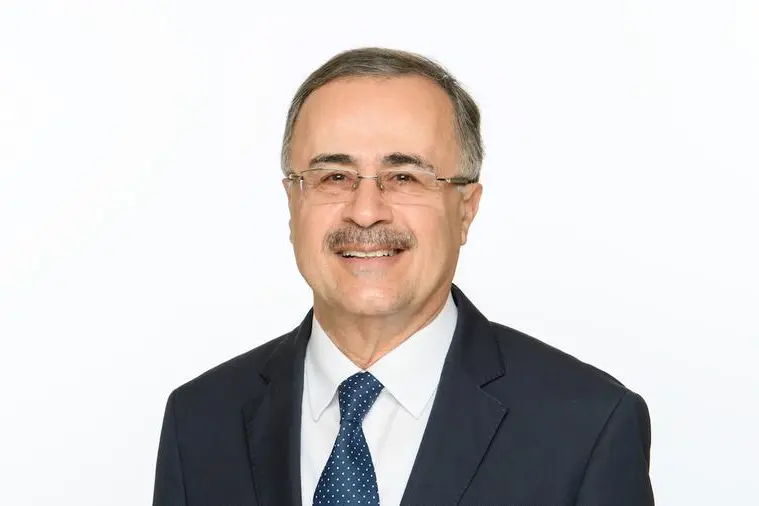
Global primary energy demand has grown by 40 million barrels of oil equivalent of per day over the past decade, with hydrocarbons meeting two-thirds of that increase, Saudi Aramco President and CEO Amin Nasser said at the Energy Intelligence Forum in London on Monday.
Nasser noted that despite more than $11 trillion invested in the global energy transition, the world consumes 340 million barrels of oil equivalent of per day, with hydrocarbons supplying 80 percent of this energy.
“This is not a phase-down of hydrocarbons, let alone a phase-out,” he said, noting that oil, gas, and coal use continue to hit new highs.
The Aramco executive stated that EVs and renewables, though growing, are not even able to cover demand growth leaving hydrocarbons to pick the extra load. In some cases, EVs and electricity-driven technologies are actually adding to emissions.
He pointed out renewables intensify grid instability in the absence of large-scale economic storage, forcing the system to lean more on gas and coal.
He also highlighted rising energy demand from technology sectors.
“By 2030, the entire data centre ecosystem could be consuming up to four times more electricity than the entire global battery EV fleet” he said.
Nasser argued that the transition has been unrealistic in targets, pace and costs.
“…every major forecaster is now revising scenarios with oil and gas locked in for decades..,” he noted.
Focus areas
At Aramco, Nasser said, the company remains focused on strengthening its core oil business and, expanding gas output, while pursuing selective investment in new energies.
“We are determined to remain dominant in oil thanks to a massive resource base, low costs, and one of the lowest upstream carbon intensities across the industry,” he said.
A Reuters report on Monday quoted Nasser as saying at the London event that Aramco can sustain its oil production at its maximum capacity of 12 million barrels per day (bpd) for a year without additional investments.
The company is also accelerating its investment in gas, unconventional gas included.
“Gas will continue to be the critical global shock absorber for unstable grids,” said Nasser. “It ramps up in minutes, helps steady the system, and we expect demand to continue increasing. That’s why we plan to increase our sales gas production capacity by more than 60 percent by 2030 compared to 2021 production levels.”
Aramco's extraction costs stand at $2 per barrel of oil equivalent (boe) for oil and $1 per boe for gas, the Reuters report quoted Nasser as saying.
Despite the current downturn, chemicals remain a key long-term growth area, the Aramco excutive said, emphasising the oil and gas giant's strengths in feedstocks and conversion.
Aramco is deploying artificial intelligence and digital solutions to further reduce upstream carbon and methane intensities, backed by major investments in infrastructure and top talent, and a $7 billion venture capital programme.
“In the last two years alone, we have successfully captured six billion dollars of technology realised value, with another two to four billion expected this year,” Nasser said.
The same approach has informed Aramco's investments in new energy, ready to scale up when commercially competitive.
“This balanced approach prepares us for a realistic energy future while delivering long-term value to our stakeholders and shareholders,” Nasser said.
(Writing by SA Kader; Editing by Anoop Menon)
Subscribe to our Projects' PULSE newsletter that brings you trustworthy news, updates and insights on project activities, developments, and partnerships across sectors in the Middle East and Africa.