PHOTO
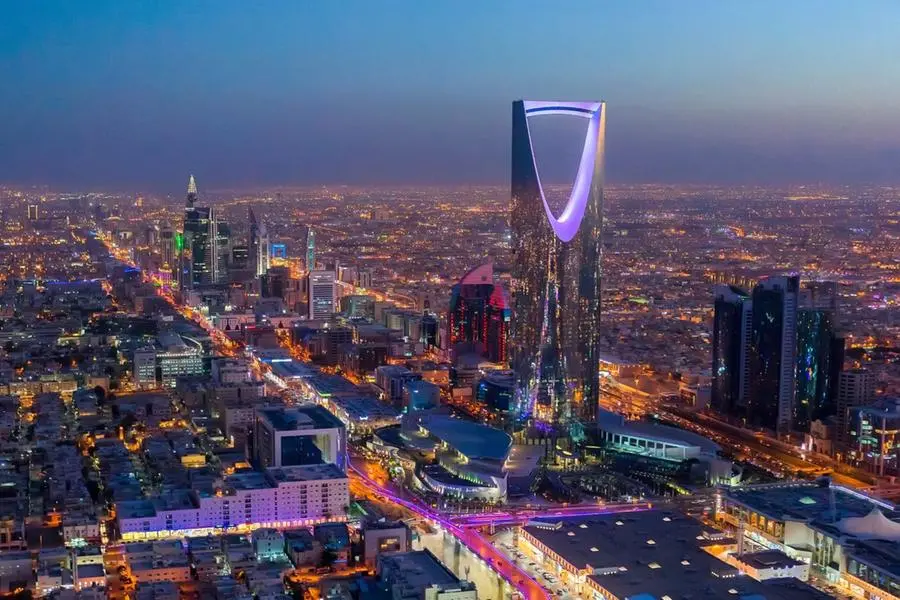
Saudi Arabia has boosted borrowing from the local and foreign markets to fund mega projects and achieve targets in its Vision 2030 economic transformation scheme.
Some analysts believe borrowing is justified for funding projects needed to meet targets in Vision 2030 but others warn that a continuation of this trend could drain domestic liquidity and harm the monetary policy.
During 2020-2024, the OPEC member borrowed nearly SAR 538 billion ($143 billion) and the debt is projected to swell further during 2025-2026, the Riyadh-based Jadwa consultancy firm said last week, citing Saudi government data.
From just about 1.5 percent in 2014, the ratio of the Gulf Kingdom’s public debt to GDP rocketed to nearly 26 percent at the end of 2024 and is forecast to break the 30-percent mark at the end of 2025 for the first time in 10 years.
The debt, 60 percent of which is domestic, stood at roughly SAR1.2 trillion ($320 billion) at the end of 2024 and is projected by Jadwa to exceed SAR1.4 trillion ($373 billon) at the end of this year, based on actual budget deficit calculations.
“In my opinion, the Saudi debt, though relatively high, is still within safe levels and far from the dangers that some depict…one can see that the debt to GDP ratio is very low compared to that in other developing and developed economies,” said Jamal Banoon, a well-known Saudi economist who heads the SMS Consultancy Centre in Riyadh.
“This gives Saudi a strong fiscal flexibility at a time when it is passing through historic economic transformation within Vision 2030…this requires huge investments in infrastructure and non-oil development projects…so issuing bonds is not luxury but a basic financing instrument for these projects which aim to diversify sources of income and lessen reliance on oil…this is what we call an ‘investment debt’ because it funds projects which will pay off in the future’” Banoon told Zawya Projects.
2026 expectations
During 2025 alone, Saudi Arabia is expected to borrow around $55 billion although its crude production is set to rise by nearly 500,000 barrels per day and an equivalent amount through 2026 following OPEC Plus agreements to phase out output cuts.
Jadwa expects borrowing of SAR213 billion ($57 billion) in 2026 as Riyadh has projected budget deficits until 2027 and oil prices could be far below the 2024 level.
The Kingdom, which controls the world’s second largest extractable oil deposits, has forecast a 2025 budget deficit of around $27 billion due to expected lower crude prices.
Riyadh has assumed an average oil price of around $70 during 2025 and analysts believe it needs a breakeven price of around $95 to achieve fiscal balance, far above the current market crude prices of just below $70 a barrel.
“Achieving this balance requires continuously high oil prices or resorting to fiscal discipline and pushing ahead with structural reforms to minimise recurrent budget deficits amidst persistent oil market fluctuations,” said Saeed Al-Shaikh, former chief economist at the Saudi National Bank.
“Given the persistence of the deficit, the debt has increasingly become a basic challenge to Saudi decision makers...while the domestic debt offers the advantage of reducing exchange rate risks, continued reliance on borrowing may put pressure on domestic liquidity and limit flexibility in the kingdom’s monetary policy.”
Al-Shaikh warned that excessive borrowing also increases the burden of debt service and the sensitivity of public finances to changes in interest rates.
“This requires careful alignment between fiscal expansion and long-term sustainability to ensure the preservation of economic stability and investor confidence,” he said.
Speaking to US business leaders in Washington this month, the head of Saudi Arabia’s sovereign wealth fund PIF said it currently has assets of around $930 billion, which will increase to $1.075 trillion at the end of 2025.
PIF’s governor Yasir Al Rumayyan said the Fund is targeting assets under management of $2-3 trillion before 2030 to become the world’s largest SWF.
(Reporting by N Saeed; Editing by Anoop Menon)
Subscribe to our Projects' PULSE newsletter that brings you trustworthy news, updates and insights on project activities, developments, and partnerships across sectors in the Middle East and Africa.