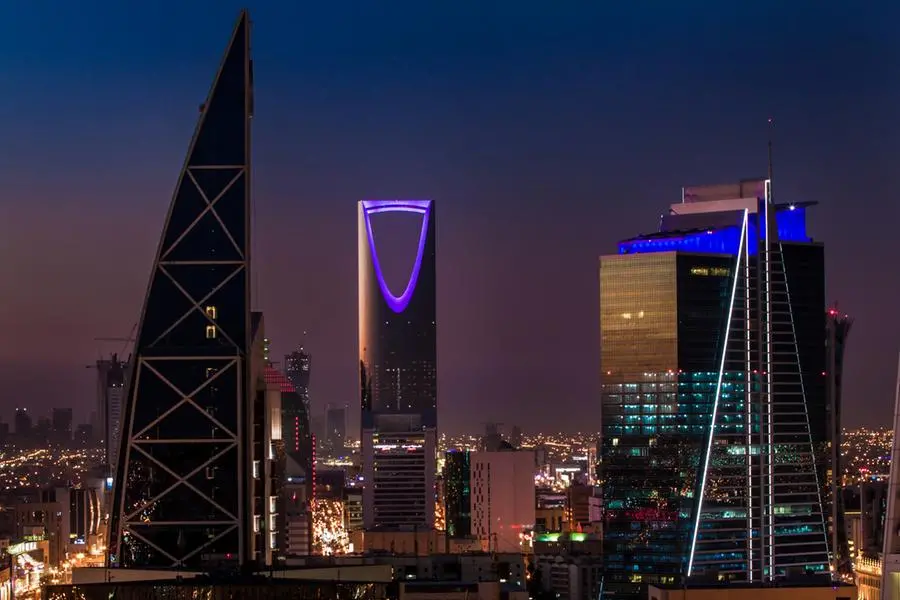
PHOTO
Saudi Arabia’s approval of a new law permitting non-Saudis to own homes and commercial assets from 2026 is set to power the next leg of its real estate boom, marking a watershed in the Kingdom’s push to rival Dubai and Abu Dhabi as global investment hubs.
Issued in July 2025, the Law of Real Estate Ownership by Non-Saudis will, for the first time, allow foreign individuals and companies to purchase residential, commercial, industrial and even agricultural assets in designated zones.
“The new Law of Real Estate Ownership for Non-Saudis is a true landmark development in the Kingdom’s real estate sector that allows, for the first time, non-resident foreign investors to own Saudi real estate,” said Majed Alkuraydis, Partner at White & Case in Riyadh.
The timing comes as Saudi Arabia’s housing market shows resilience despite a cooling in transactional activity. According to Knight Frank, residential prices in Riyadh climbed 10.6 percent year-on-year in the second quarter of 2025, even as total transaction values dipped by 20 percent to 29 billion Saudi riyals ($7.7 billion).
Across the country, nearly 93,700 residential deals worth SAR 77.5 billion ($21 billion) were recorded in the first half of 2025, up 7 percent in volume from 2024.
Faisal Durrani, Partner – Head of Research, MENA at Knight Frank concurred that the new law is one of the most significant legislative developments this year.
He said: “Set to come into effect in January 2026, this new ownership framework, coupled with accelerating residential deliveries and mortgage market reforms, is expected to deepen market liquidity and improve investor sentiment.”
Matthew Green, Head of Research at CBRE MENA, said the new law is expected to transform major cities like Riyadh and Jeddah, and boost investment demand in emerging hubs such as NEOM.
“Over time, we expect the law to help unlock considerable pent-up demand, dramatically increase overall liquidity levels, and to attract significantly elevated volume of sales to foreign investors, thereby accelerating the development cycle and ultimately reshaping the wider urban landscape,” he said.
Global buyers
Luxury and branded residences are expected to be at the forefront of demand.
“We anticipate the strongest demand will be in the luxury and upper mid-market segments. The primary locations for foreign residential investors will be Riyadh and Jeddah. We also expect significant interest in the Kingdom’s flagship projects like Diriyah Gate, Laheq Island, The Line, and The Red Sea,” said Kashif Ansari, Co-Founder and Group CEO of Juwai IQI.
High-net-worth Muslims in particular are eyeing the Holy Cities. Knight Frank estimates global Muslim HNWIs are prepared to spend nearly $2 billion on property in Makkah and Madinah.
Foreign ownership is expected to extend beyond individuals. The law broadens the use of investment structures such as funds and special purpose entities.
“The new law broadens the pathways for foreign investors to own real estate through investment vehicles – including investment funds and special purpose entities (SPEs),” said Alkuraydis of White & Case.
“The Capital Market Authority (CMA) is expected to announce rules that regulate these investment pathways in the near future,” he added.
Earlier this year, the CMA also approved non-resident foreign investors to buy shares in listed Saudi real estate companies — a decision experts say will work hand in hand with the new law.
“The CMA’s approval for non-Saudis to invest in listed Saudi real estate companies should certainly work in tandem with a new property ownership law by boosting capital inflows,” said Ansari of Juwai IQI.
Opportunities — and risks
The promise of early entry into a fresh growth cycle is expected to draw first movers.
“My advice is that Saudi Arabia offers buyers the opportunity to get into a new growth cycle at the start,” said Ansari. “The Saudi projects are setting a new global benchmark for opulence and could offer the potential for strong long-term capital appreciation”.
Still, execution risks loom. “The biggest risks are potential delays in construction and policy implementation. Saudi Arabia must also maintain investor confidence by ensuring consistent rules and steady progress. Global economic volatility is a risk that cannot be controlled,” Ansari added.
Knight Frank’s Durrani cautioned that investor protections and transparency will be key. “Clarity around the law and the presence of a deep legal framework, including factors like international investor protections, data transparency and the availability of local financing options will be key in catalysing international demand once the law goes into effect.”
Regional positioning
While the law draws Saudi Arabia closer to the UAE and Qatar in opening up its market, industry leaders stress the move strengthens the Gulf’s overall investment proposition rather than intensifying competition.
“Saudi Arabia is not really in competition with the Emirates or Qatar. Instead, the markets work together and reinforce the attractiveness of the whole region,” said Ansari of Juwai IQI.
Green of CBRE argued that the reform boosts Saudi competitiveness. “With stronger land and building title, more flexible ownership options and streamlining of investment processes, Saudi Arabia can look to attract a much larger share of regional foreign inbound investment and potentially, in the longer term, to surpass other GCC peers”.
Vision 2030 stakes
The reform aligns with the government’s broader aim of raising homeownership, diversifying the economy and drawing foreign direct investment. Riyadh alone is forecast to require more than 305,000 additional homes by 2034, with residential prices up 82 percent since 2019.
For global investors, the opening of the Saudi market offers both promise and complexity.
Amar Hussain, Associate Partner – Research at Knight Frank said: “Opening designated zones to foreign ownership is expected to drive transaction volumes and increase market liquidity. Prices in targeted areas may see upward pressure, particularly for high-end and investment-grade properties, while rental yields could remain competitive given rising demand from both expatriates and domestic tenants.”
The January 2026 reform has the potential to launch the start of Saudi Arabia’s next growth chapter — one that reshapes not just skylines, but the Kingdom’s role in the global real estate map.
(Reporting by SA Kader; Editing by Anoop Menon)
Subscribe to our Projects' PULSE newsletter that brings you trustworthy news, updates and insights on project activities, developments, and partnerships across sectors in the Middle East and Africa.