PHOTO
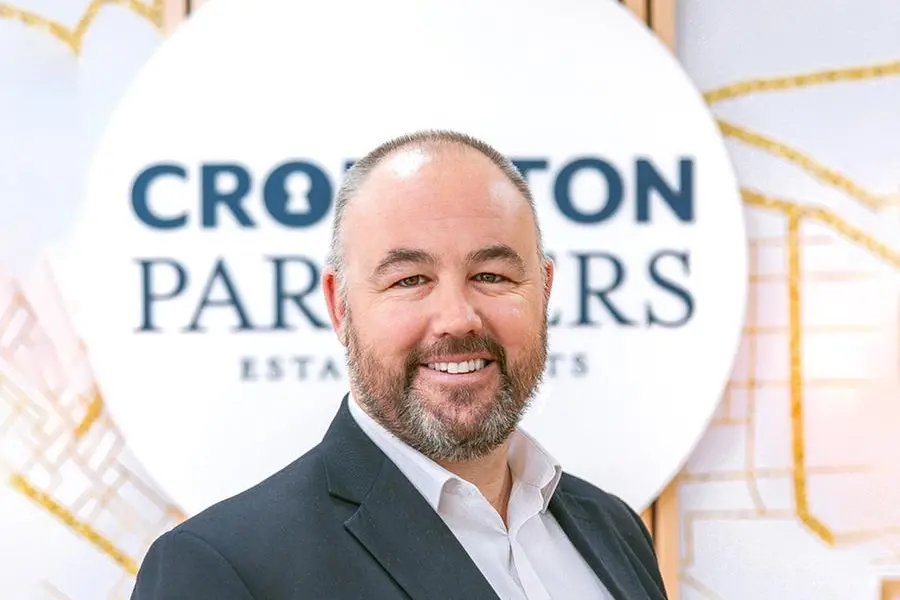
Foreign capital, constrained housing supply and a maturing financing market are expected to remain the key drivers of Abu Dhabi's residential property sector, according to the managing partner of real estate consultancy Crompton Partners Estate Agents.
Commenting on data from the Abu Dhabi Real Estate Centre (ADREC), which showed foreign individual investment from 99 nationalities surged more than 423 percent year-on-year in the first quarter of 2026, Ben Crompton attributed much of the increase to developers' international marketing efforts.
“The vast number of foreign buyers are coming through herculean efforts from, in particular, Aldar. They have invested hugely in their network of foreign brokers who are able to access these high net worth buyers,” Crompton told Zawya Projects.
He said Abu Dhabi's strong residential market performance in 2025, combined with moderating investment returns in Dubai, has further enhanced the capital's appeal to international investors seeking long-term opportunities.
ADREC also reported a 53 percent year-on-year increase in mortgage transactions during the first quarter. While cautioning against drawing conclusions from a single quarter, Crompton said the figures point to a gradual maturation of the market as people grow more comfortable with using mortgage finance.
"The UAE property market has traditionally been dominated by cash purchases, but as the market matures we should see a gradual shift towards financed acquisitions," he said.
Supply constraints to persist
Despite approximately 10,000 residential units expected to be delivered during the remainder of 2026 in the UAE capital, Crompton believes supply will continue to trail demand, noting that the number of handovers forecast this year is broadly consistent with the previous five years.
“Supply is tightly managed by the regulators, but also we don’t have the number and experience of sub-developers in Abu Dhabi to bring stock on in ways that have been seen in Dubai,” explained Crompton. “As a result, we will expect to see supply lag well behind demand until at least 2030.”
He said the gap between Abu Dhabi's projected annual residential supply growth of less than 5 percent through 2028 and estimated annual population growth of around 8 percent reflects several structural factors.
“Firstly, population increase is very difficult to predict and so difficult to plan for. The UAE as a whole has an enormously elastic population which rises and falls to fill the jobs created. Secondly, Abu Dhabi’s sub-developer landscape is very nascent. We don’t have the size and number of developers that Dubai has. Thirdly, the regulators are very careful about the approvals they give and are as wary of over supply as they are of a lack of units.”
Townhouses offer strongest returns
From an investment perspective, Crompton said lower- and mid-market townhouse communities continue to generate the strongest risk-adjusted rental returns.
"Net returns are generally strongest in lower- to mid-market townhouses because service charges are lower than apartments while demand from end-users remains very strong,” he said, citing Al Reef, Hydra Village and Al Ghadeer among the strongest-performing communities.
Within Abu Dhabi's investment zones, foreign ownership restrictions naturally create valuation premiums, according to Crompton. These zones accounted for roughly 84 percent of foreign capital inflows, equivalent to more than AED 36.4 billion in the first quarter.
Crompton pointed out that investment zones attracted all foreign capital inflows into Abu Dhabi's residential market because they are the only areas where expatriates can purchase freehold property.
“We can already see a price difference between similar units in investment zones and local-only areas,” he said. “Any area which becomes popular with overseas capital will start to show a similar price distortion.”
Hudayriyat reshapes luxury market
On the other hand, the luxury residential segment showed Hudayriyat Island overtaking Saadiyat Island and Yas Island by recording nearly AED 12 billion in transactions in the first quarter 2026, according to the ADREC report.
Crompton said the record transaction volumes reflect the continued maturation of Abu Dhabi's off-plan sector rather than a temporary surge or even a structural shift away from established premium destinations like Yas Island.
“Many of these transactions were concluded in 2025 but only registered in the first quarter of 2026,” he said. “That said, however, Hudayriyat Island is making its market in the Abu Dhabi luxury real estate sector. The developer Modon has done an exceptional job on mobilising buyers, in particular from Dubai, to invest in the project.”
He said it remains too early to assess the impact of Hudayriyat’s rise on secondary market activity in the more established Saadiyat Island and Yas Island destinations.
“Hudayriyat is still quite a way from handing over units into the secondary market, so we’re yet to see its effects or how it will compete with the more established areas,” he explained. “But location-wise, it is at least as well situated as Saadiyat in terms of proximity to the city, if not as close to the cultural and entertainment hubs in the northern islands.”
Infrastructure investment supports outlook
Looking ahead, Crompton expects Abu Dhabi's expanding infrastructure and entertainment investment programme – including ADNOC’s AED 200 billion contract pipeline through 2028 and the planned Sphere Yas Island development – to support broad-based housing demand.
“The more investment is made into the economy, the more jobs are created, people come to the Capital to fill those jobs and take up housing,” he said. “The more housing is taken up means more upward pressure on rents and sale prices. I don’t expect these projects to benefit specific housing areas, but they should boost broad-based housing demand.”
The strong market response to Modon's recent Hudayriyat Golf Estates launch suggests investor appetite for larger villas and townhouses is beginning to recover after a period of caution, according to Crompton.
“When there was less certainty in the market, investors were reluctant to commit significant capital, but as the ceasefire has gone on this “new normal” seems to have been accepted by investors,” he said.
Despite the improving outlook for the luxury segment, Crompton expects most upcoming project launches to remain concentrated in mid-market and secondary locations.
“I still expect most of the next launches to be in mid-market or secondary areas and focused on apartments, but the signs are positive for the higher end of the market too,” he said.
Crompton also said investors currently see little distinction between mainland Abu Dhabi assets and properties on Al Reem Island following the expansion of Abu Dhabi Global Market (ADGM) jurisdiction.
“The legal systems, although technically different, are very closely aligned. Currently there isn’t a huge difference between the two, although the current rent freeze does not apply to the ADGM,” he concluded.
(Reporting by Anoop Menon; Editing by SA Kader)
(anoop.menon@lseg.com)
Subscribe to our Projects' PULSE newsletter that brings you trustworthy news, updates and insights on project activities, developments, and partnerships across sectors in the Middle East and Africa.