Dubai, October 15, 2008: The UAE's leadership in developing sustainable buildings was highlighted in yesterday's open session of the ISO General Assembly in Dubai.
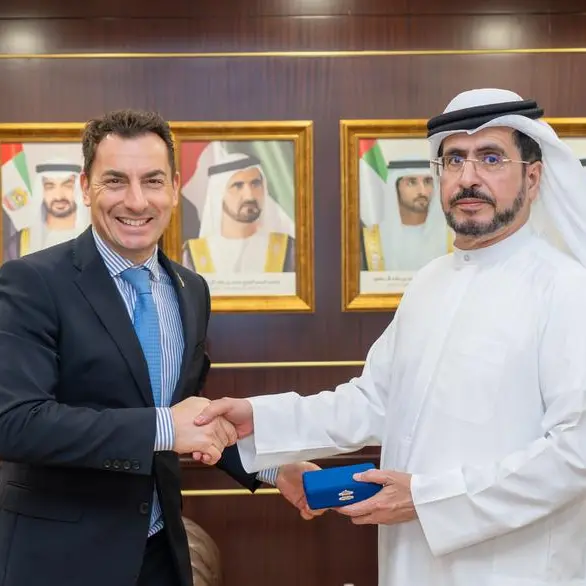
The Open Day themed "Buildings for a sustainable future', was officially opened by HE. Dr. Rashid Ahmad Bin Fahad, Minister of Environment and Water of the United Arab Emirates.
The theme of World Standards Day on Tuesday was "Intelligent and sustainable buildings", and more than 500 attendants from ISO members, property developers, design and construction professionals, and safety and security specialists and officials, heard how UAE projects are spearheading the drive to this objective.
HE Dr. Bin Fahed said the unprecedented construction boom in the UAE and huge investments pumped into the development of the sector, would not have materialised without the use of quality modern technologies.
Bin Fahed lauded the wise green buildings initiative by HH Sheikh Mohammed bin Rashid Al Maktoum, UAE Vice president, Prime Minister and Ruler of Dubai, which has helped develop existing legislation and practices and has opened up doors for the introduction of new laws, standards and guidelines for the design and construction of future sustainable buildings in the UAE.
The UAE, he stressed, was one of the first regional countries to implement global quality standards and has launched many quality and excellence awards and programmes in various sectors.
"The UAE had outlined laws, standards and technical regulations governing the design and construction of sustainable buildings since the beginning of the year. The local construction sector is compelled to follow them," he said.
Khaled Awad, director of the Abu Dhabi Future Energy Company's property development unit, presented a paper on "Green Cities - the Masdar Example", showing how Masdar City offers an excellent opportunity to become part of the world's first carbon-neutral, zero-waste, city in the heart of Abu Dhabi.
A fully integrated green community, Masdar City will be the world's first carbon-neutral, zero waste city entirely powered by renewable energy.
All building designs are based on traditional regional architecture and urban planning, and the city will showcase world leading and innovative building practices as a global model for sustainable living and working.
Up to 1,500 companies are expected to base themselves in the city, which will provide an attractive business environment due to its Free Zone. The City will be car-free supported by a personal rapid transportation network, powered by renewable energy, will whisk residents and visitors quickly and quietly through carefully designed streets and public places.
"Masdar city showcases Abu Dhabi's commitment to the challenges of meeting some of mankind's most pressing issues; energy security, the environment and truly sustainable human development for which standardization and, in particular, International Standards should be available in view of the strategic role they play in addressing these challenges," said Awad.
"Many ISO standards are being used in the Masdar project".
Security in high-rise buildings was highlighted by Greg Sang, Emaar's projects director overseeing all design and construction aspects of Burj Dubai - the world's tallest building.
He told delegates that in the light of the world environment today, the security of buildings - especially super-tall buildings - has taken on even greater significance in safety, and that access and movement are not adversely affected.
He cited the Burj Dubai tower as an example of how these issues are addressed, covering the context and background of the Burj Dubai tower, special security challenges, and the standards used and solutions developed by an international team of design and construction experts to meet those challenges.
The open session keynote address was delivered by Louise Cox, president of the International Union of Architects, who stressed that good design cannot be independent of the environment: it must build on and be responsive to climate.
She told delegates: "Buildings in their settings must shelter, nurture the well-being of their inhabitants, feel comfortable, and inspire and enhance the enjoyment of life, as well as being environmentally sustainable and accessible for all.
"Therefore, the architect's vision of the future needs to include an appreciation of environmental principles, cultural and natural heritage and the use of locally available resources to address local needs and lifestyles.
"We should not be aiming to replicate New York or London throughout the emerging economies of Africa and South America. Over the past 200 years, building design has lost sight of the many sustainability innovations that our forefathers developed to allow communities to grow and thrive in the harshest environments.
"Since the industrial revolution we have moved away from working with the environment to challenging it. We design buildings that fight to survive rather than to compliment their location. This is at the heart of unsustainable design and building."
The ISO open session recognised that with sustainability becoming a global imperative, International Standards must provide the means by which sustainable technologies and best practices can be disseminated and implemented on a global scale.
In supporting energy efficiency, environmental performance, environmental impact of building products or greenhouse gas emission accounting and verification, the ISO provides a firm foundation for designers, architects, engineers, owners, facility managers, and government authorities to develop and operate sustainable buildings.
The five-day ISO Dubai 2008 event is taking place under the auspices of HH General Sheikh Mohammed bin Rashid Al Maktoum, UAE Vice President, Prime Minister and Ruler of Dubai, and ends on October 17.
This is the first time since ISO's inception in 1947 that the organisation's general assembly has been held in the Middle East and Africa region.
Hosted by the Emirates Standardisation and Metrology Authority, the event has attracted delegations from various standardisation organisations worldwide along with government and private invitees.
They include representatives from the International Electrotechnical Commission (IEC), International Telecommunication Union (ITU), the European Authority and Committee of Standards (CEN), the UN's UNIDO, World Trade Organisation (WTO) and the Arab Industrial Development and Mining Organisation (AIDMO).
-Ends-
International Organization for Standardization
The ISO is the world's largest developer and publisher of International Standards. ISO, a non-governmental organization, has a Central Secretariat in Geneva, Switzerland, that coordinates its member countries. Currently, the ISO network is made up of national standards institutes of 157 countries, with one member per country.
Its role is to form a bridge between the public and private sectors, enabling a consensus to be reached on solutions that meet both the requirements of business and the broader needs of society. Its member institutes are from both the government or mandated by the government and the private sector.
The name is derived from the Greek Isis, meaning "equal". This name was chosen to give it a short, all-purpose name because otherwise "International Organization for Standardization" would have different acronyms in different languages ("IOS" in English, "OIN" in French for Organisation internationale de normalisation).
Emirates Authority for Standardization and Metrology
Established in 2001, ESMA's vision is to be the pioneering authority in the fields of Standardization, Conformity, and Metrology at regional and international levels and to establish best quality and excellence as guiding principles that support the national economy.
As a full member of the ISO, ESMA's role is to advise all stakeholders about standards development, as well as to ensure the UAE's standards are in line with scientific developments, including ISO standards.
Consistently taking into consideration the social, economic, health and safety interests of the public, ESMA makes certain that the services and products are of the quality and in
conformity with the approved standards. In addition, ESMA spreads awareness of the different standardization activities through various outlets. ESMA's strategy supports the national economy and welcomes in a new era of excellence and quality within the UAE.
For more information, please contact:
Maysoon Baraky
Milestones Marketing Communications FZ LLC
Tel. .: 04 365 8491
Fax: 04 3678097
Mobile: 050 2561157
Email: maysoon@milestonesmc.com
© Press Release 2008