PHOTO
Dubai – Employee discomfort, ill health and reduced performance can be linked to a poor-quality office environment. Good quality lighting can already help to increase employee productivity up to 23%.[1] Apart from lighting, there are other environmental elements that impact employee health and wellbeing. For example, higher indoor temperatures and relative humidity can correlate with sneezing, skin redness, itchy eyes, headaches and sore eyes. Poor thermal comfort control leads to a 6% drop in staff performance when offices are too hot, and 4% when too cold.[2] In addition, employee performance can decrease by as much as 66% when there is distracting noise[3], and it can take an average of 25 minutes to return to a task after an interruption.[4]
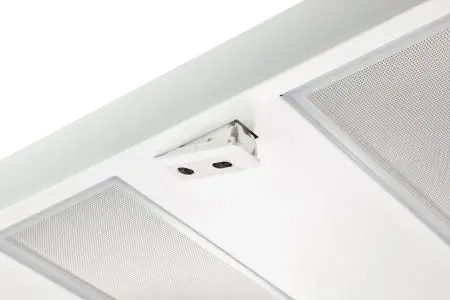
The new sensor bundles can monitor occupancy, the number of people, temperature (at room and at desk level), noise levels, daylight levels, relative humidity and are Bluetooth enabled, to provide indoor positioning and navigation capabilities. Bundling and delivering these sensing capabilities into one unit eliminates the need for multiple sensors and is also much more cost effective for businesses. The ability to differentiate the office working experience can help to create a healthy place to work, and help organizations reduce absenteeism.
These new sensors are smaller than a match box and are easily upgraded on premise with a simple click and swap via an upgradable sensor slot, a unique feature across a range of Philips professional office luminaires. There’s no need to take the luminaires out of the ceiling as the sensors can be fitted from the front of the luminaire. This future-ready solution means that luminaires can now be upgraded with different sensors at any time. This gives organizations the flexibility to benefit from increased functionality coming along in the future or for example, when a new tenant wants increased functionality.
One of Signify’s customers is EDGE, an OVG Real Estate company. EDGE embraces wellbeing, sustainability, design and technology in all the buildings it develops, including their own. “EDGE has worked with Signify from the first disruptive power-over-ethernet LED in The Edge building, towards the latest innovation in Signify light infrastructure implemented in EDGE Olympic Amsterdam. Driving health and productivity of building users through technology,” said Erik Ubels, CTO of EDGE. “The extremely accurate localization and superior people counting capabilities allow us to optimize user experience and facility management in our buildings. The new environmental monitoring capabilities are an additional contribution to our employees’ wellbeing.”
The new Philips sensor bundles for Interact Office will be available by May.
-Ends-
For further information, please contact:
Signify Corporate Communications
Ebru Ertan Bilge
GSM: +90 530 280 63 55
E-mail: ebru.bilge@signify.com
FleishmanHillard
Ronak Thakkar
O: +971-54 586 9828
E-mail: ronak.thakkar@fleishman.com
About Signify
Signify (Euronext: LIGHT) is the world leader in lighting for professionals and consumers and lighting for the Internet of Things. Our Philips products, Interact connected lighting systems and data-enabled services, deliver business value and transform life in homes, buildings and public spaces. With 2019 sales of EUR 6.2 billion, we have approximately 32,000 employees and are present in over 70 countries. We unlock the extraordinary potential of light for brighter lives and a better world. We have been named Industry Leader in the Dow Jones Sustainability Index for three years in a row. News from Signify is located at the Newsroom, Twitter, LinkedIn and Instagram. Information for investors can be found on the Investor Relations page.
[1] Source: Loftness et al 2003
[2] Source: Lan L. Wargocki P. Wyon DP. Lian Z. (2011) Effects of thermal discomfort in an office on perceived air quality, SBS symptoms, physiological responses, and human performance. Indoor Air 21:5, pp 376-90
[3] Source: Lan L. Wargocki P. Wyon DP. Lian Z. (2011) Effects of thermal discomfort in an office on perceived air quality, SBS symptoms, physiological responses, and human performance. Indoor Air 21:5, pp 376-90
[4] Source: 'The Cost of Interrupted Work: More Speed and Stress' by Gloria Mark, Department of Informatics, University of California
© Press Release 2020Disclaimer: The contents of this press release was provided from an external third party provider. This website is not responsible for, and does not control, such external content. This content is provided on an “as is” and “as available” basis and has not been edited in any way. Neither this website nor our affiliates guarantee the accuracy of or endorse the views or opinions expressed in this press release.
The press release is provided for informational purposes only. The content does not provide tax, legal or investment advice or opinion regarding the suitability, value or profitability of any particular security, portfolio or investment strategy. Neither this website nor our affiliates shall be liable for any errors or inaccuracies in the content, or for any actions taken by you in reliance thereon. You expressly agree that your use of the information within this article is at your sole risk.
To the fullest extent permitted by applicable law, this website, its parent company, its subsidiaries, its affiliates and the respective shareholders, directors, officers, employees, agents, advertisers, content providers and licensors will not be liable (jointly or severally) to you for any direct, indirect, consequential, special, incidental, punitive or exemplary damages, including without limitation, lost profits, lost savings and lost revenues, whether in negligence, tort, contract or any other theory of liability, even if the parties have been advised of the possibility or could have foreseen any such damages.