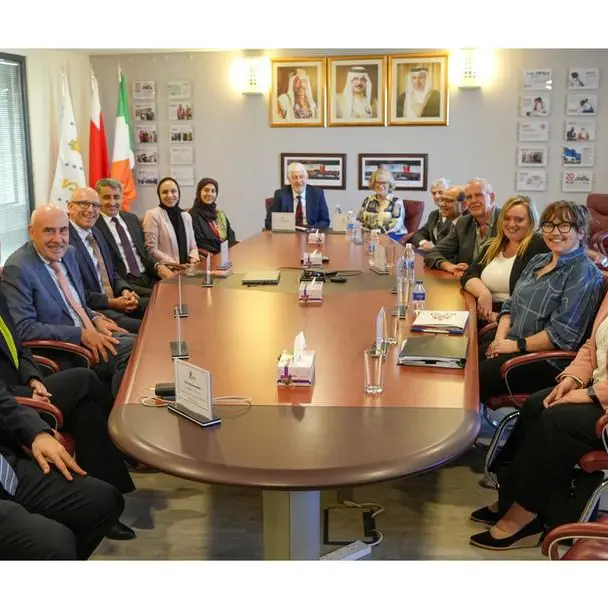
After three days of discussion, the Arabian Oryx workshop which was organized from 20-22 August, 2007 by the Coordinating Committee for Conservation of Arabian Oryx (CCCAO) in cooperation with the Environment Agency - Abu Dhabi (EAD) concluded, today (Wednesday August 22, 2007) in the capital.
T the end of the workshop, a session chaired by H.E. Majid Al Mansouri, EAD's Secretary General, was held to adopt the final draft of the Regional Strategy to Conserve Arabian Oryx.
Mr. Al Mansouri said that this workshop was in-line with the efforts of the CCCAO to conserve and reintroduce the Arabian Oryx into its natural habitats.
He said that after we exchanged and shared experience in captive breeding and re-introducing programmes, as well as about challenges and obstacles in carrying out conservation programmes and the future plans, we came out with a regional strategy that meet each country's needs and at the same time unify our efforts to achieve one goal by adopting one policy and methodology.
Al Mansouri said this strategy aims at facilitating the conservation of the Arabian oryx in the range states with a long term objective to establish a viable population that will roam the Arabian Peninsula.
He noted that among the objectives of this regional strategy is to conserve Arabian Oryx in range states through developing regulations and enhancing law enforcement of wildlife legislations, and increasing wild Oryx populations through reviewing and improving existing conservation programmes and establishing reintroduction programmes in the Oryx's natural habitats and minimize habitat deterioration.
Other objectives includes the establishment of regional species management plan through conducting demographic/genetic assessments and developing guidelines regarding herd management and release protocols.
Secure public support and ensure local community involvement and participation in Arabian Oryx conservation programmes, is yet another objective which will be implemented by establishing awareness and education programmes.
The objects also includes developing and implementing regional capacity building programmes, in addition to ensure coordination between range states by improving regional cooperation through the CCCAO Secretariat and develop effective coordination and information exchange mechanisms among range states.
Among other objectives is to secure sustainability of appropriate financial resources for Arabian oryx captive breeding and reintroduction programmes.
The workshop, which was held at the Inter-Continental Abu Dhabi, was attended by 25 participants from the Committee's member countries that include the United Arab Emirates, Oman, Kingdom of Saudi Arabia, Kingdom of Bahrain, Qatar, Syria, Yemen and Jordon.
The next Committee meeting will be held in Doha, Qatar in April 2008.
More About the Committee
The Committee was set up in 1999 in Abu Dhabi, UAE to facilitate the conservation of the Arabian oryx in the range states with the long term objective to establish a viable population that will roam the Arabian Peninsula.
Committee members meet annually to network, exchange expertise and support each country's conservation efforts. The Committee also aims to promote the implementation of local and international treaties relevant to the Arabian Oryx. In past meetings, the tightening of regulations and better regional cooperation to prevent illegal trans-boundary movement of, and trade in, Arabian oryx has been called for.
In 2002, the UAE was chosen to host the Committee Secretariat as a gesture of appreciation for the pioneering conservation efforts of the late Sheikh Zayed Bin Sultan Al Nahyan. It was thanks to his efforts that today the UAE's captive population of oryx represents a significant proportion of the world's total for the species.
More About the Arabian Oryx
The Arabian Oryx received that late Sheikh Zayed's attention as an endangered species and as part of the Arabian Peninsula's heritage. In the early 1960s, the late Sheikh Zayed, noticing the rapidly diminishing numbers of Arabian Oryx, arranged for the capture of some of the remaining wild animals so that the nucleus of a captive breeding programme could be established. It is worthwhile to note that uncontrolled hunting and capture were the major reasons the oryx originally became extinct in the wild by 1972. The animals were hunted for their horns, hide and meat.
-Ends-
For Further Information, Please Contact:
Environment Agency - Abu Dhabi
Environmental Education and Awareness Division
Laila Y. Al-Hassan or Sobhia El Masri
T: +9712 693-4638/637
F: +9712 681-7359
E: lalhasan@ead.ae or selmasri@ead.ae
www.ead.ae
Press Release 2007