KCIC holds closed session for Kuwait analysts and investors in partnership with NBK
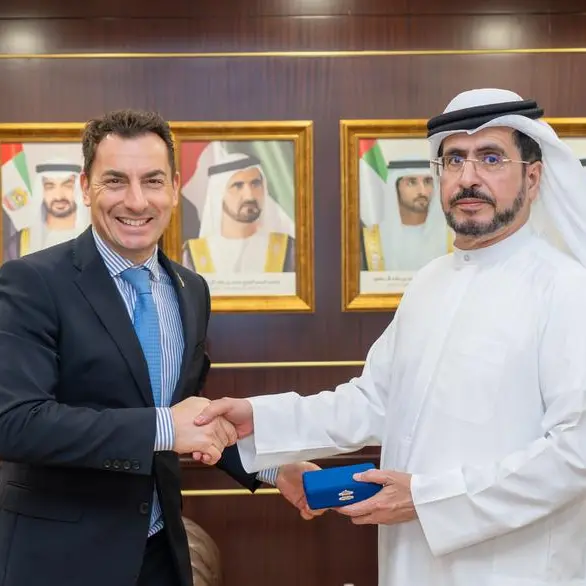
Kuwait, 11 March 2012: KCIC, an investment firm specializing in investments in Asia, recently held a closed session for over 75 investors and analysts in Kuwait in partnership with NBK, giving them an outlook on the 2012 global economy. The session was presented by KCIC Chief Economist, Alessandro Magnoli Bocchi who discussed the global economic outlook in 2012, the risks, and the investment environment, and NBK Head of Economic Research, Elias Bikhazi, who discussed the structural challenges the world is facing and the best ways to solve them.
"The 2012 outlook is fragile, but - in absence of shocks - most economies will muddle through. Global growth will slow to less than 3 percent. In the developed world, structural issues, modest consumption, political impasse, and fiscal restraint will keep growth below potential. Emerging markets will grow above 5 percent, but below-trend. Yet, financial needs are higher than ever: this year, $8 trillion of sovereign and almost $1 trillion of corporate debt come due." Magnoli Bocchi started the discussion.
Magnoli Bocchi's presentation focused on three main points giving investors and analysts a look on what to expect of global economies this year as well as the markets to keep an eye on. Below are the main elements from his discussion:
2012: A fragile outlook on global economy... emerging markets least impacted
Global growth will remain below potential this year as the global crisis continues to unfold, hindered by excessive debt: since 2000, the total world dues have rose by 19%, mostly in developed economies.
In the US, despite fiscal and monetary expansion (deficit at 9%, benchmark interest rate at 0.25%) and a positive business outlook, the economy is unlikely to grow below potential levels at an expected 2.1%. Debt is still very high; government debt has exceeded 80% of GDP last year while households debt, a little lower than its November 2008 high, entails upcoming deleveraging. It faces risks, due to high unemployment, and lower consumption.
The EU will continue to suffer from high debt, austerity, and will undergo a recession. Growth will be below potential, expected to register a negative growth of -0.3%, while inflation will also be below target at an expected 1.9% in comparison to previous year. Challenges remain on the structural level in addition to political holdups. The EU peripheral countries are facing the austerity and likely defaults are expected.
Asia's growth is expected to maintain high single digits rates although slowing because of trade and financial links, effectively outperforming G3 and western economies. China is expected to register an 8.4% GDP growth, India 7%, Indonesia 5.9% and Vietnam 5.8%. China alone has plenty of fiscal space, and consumption is unlikely to drive growth because of less loans and softening sales. Overall, investments are expected to flatten and high liquidity will create volatility and capital flight risk. Inflation will slowdown, and depreciation is a possibility.
Rising systemic risks on a global level, but Emerging Asia can react via government policy
Global downside risks are rising: too many issues remain unresolved, and policy is out of steam. 2012 seems to be a volatile year as the risk scenarios expectations show a 25% bear and only 5% bull. The world will witness economic and financial fragility because of the weak policy tools, and there will be slow rebalancing. Magnoli Bocchi said: "Over the next twelve months, expect unsettling developments. The global crisis is still unfolding, and it could escalate. Weakening growth, rising systemic risks, and contagion-prone markets are likely to enhance economic and financial fragility. We are entering a perilous new phase.". With these issues that are unlikely to be solved in the coming months, we need to watch five macro factors that could drive risk-aversion:
(1) Rising sovereign risks: The Euro-zone will suffer financial instability and banking sector stress. The risks of sovereign default and bank bankruptcy are rising. The US could witness fiscal downgrade. Still, the US will continue to benefit from deep bond markets and credible liquidity conditions.
(2) Jitteriness about the financial sector: Banks in the US, EU, and globally need to recapitalize and regulatory reforms must be implemented to support the financial system if conditions worsen. Banks are likely to maintain high liquidity, tight lending, and suffer a rise in non-performing loans
(3) Higher global geopolitical risks as a base-case scenario. (i.e., MENA instability, Iran nuclear ambitions, China's rising power, Korean peninsula).
(4) In the G3/US: Anemic recovery rather than robust recovery, due to:
1. Policy tools out of steam: reduced fiscal space and the risk of liquidity trap.
2. Deflationary pressures (unused capacity in good and labor market) overweight inflationary ones (rising oil and food prices).
(5) Asia/China: The timing and the size of the monetary policy might:
1. Spur/restrain growth in Asia;
2. commodity-exports; and hence
3. the global economy.
Where to invest?
The priority is to preserve capital and prudently manage risk. Holding cash will not pay off in the medium term, even though it allows taking advantage of low valuations and the highly volatile post-crisis environment, but inflation is going to diminish the purchasing power of liquid cash. Negative real interest rates will generate massive transfers from depositors and lenders to borrowers, but to sustain the equity rally, clear public policies will be needed. In Europe, the ECP should backstop sovereign bonds, and governments provide an unambiguous map towards the introduction of Eurobonds. In the US, the stimulus bill must be approved to uplift growth. In China, fiscal expansion, monetary easing, and currency appreciation would need to tackle current account imbalances.
On his part, Bikhazi discussed the situation in the EM and the EU, and said: "In light of the current issues and the ongoing situation in the global economy, we do expect a soft landing of the Emerging Markets. As for the EU, expectations are for the current recession to mild. In the US, growth might surprisingly beat expectations."
The major challenge according to Bikahzi is funds and leveraging. In the US, expected growth levels do not leave a margin for error, and Europe is limited in growth because of fiscal limits and monetary policies that limit possibility for action. Even though there are positive trends in Germany and the US, they are not enough to drive up markets.
Bikhazi's main discussions points were:
Risk factors of 2012 - We are living in interesting times because of the risks that we are looking into, whether political or natural. Investors with money have difficulties finding the opportunity to invest their money in.
Future events that might affect markets - Markets will be affected by the Greece plan decision, as well as the new US congress that will be voted in 2013.
Structural problems require structural solutions - Structural problems persist and solutions must be implemented. Solutions must be structural. Austerity is presently pushed by unemployment rates and monetary policies. The problem is directly related to debts, however economies are not as competitive as they used to be and continues to borrow money they do not have; and debts cannot be erased. For the moment, how will Greece go, we're not sure, and if it defaults, would it stay in the EU? Citibank announced recently that Greece would have a 50% chance of leaving the EU.
Bikhazi concluded: "Can we say that it is all negative, no. But the situation is leaning more to the negative side, with a few potentials showing up."
Magnoli Bocchi also serves on the Management Team and the Investment Committee at KCIC. Prior to joining KCIC, Magnoli Bocchi was a Senior Economist at the World Bank. He also was a Research Associate with Harvard University and an economist with the Inter-American Development Bank.
Prior to joining NBK in 2008, Bikhazi spent over twenty years as a bank and Wall Street economist (Bank of America, Deutsche bank). He also has a background in trading and in academia; he taught economics and statistics for several years at Bentley University, Massachusetts. Mr. Bikhazi holds a Ph.D. degree in economics from the University of Southern California in Los Angeles.
About KCIC Research:
KCIC Research covers short-term and medium-term macroeconomic outlooks, economic analysis on all Asian, GCC countries and key industrialized economies, as well as trading developments on all major asset classes (Equities, Fixed Income, Currencies, and Commodities). KCIC's research team, the largest Asia-focused research team in the Middle East, comprises expert international analysts with previous experience at global institutions such as the World Bank and Harvard University.
KCIC Research aims at equipping investors with cutting edge intelligence on Asia, home to some of the world's fastest growing economies. KCIC is one of the 67 institutions surveyed by EMED for forecasts for the US economy, one of 44 global institutions surveyed by EMED for forecasts for the Chinese economy, and one of 50 institutions surveyed by EMED for forecasts for the European economy. KCIC was the only institution from the Middle East referenced by EMED in their August forecast survey. Other institutions include UBS, Credit Suisse, Allianz, BofA Meryll Lynch, Natixis, Royal Bank of Scotland, and other leading global institutions.
About NBK Research:
The research department at NBK provides a wide range of reports on Kuwait, the GCC and the MENA region as well as analysis of recent developments in the global economy and markets, and analysis of various indicators of Kuwait's macro economy.
NBK research serves investors in Kuwait with NBK's publication 'Doing Business in Kuwait' that summarizes the main issues a business needs to know to conduct business in Kuwait.
About KCIC
Based in Kuwait, KCIC was founded in 2005 with a capital of KD 80 million by an Emiree Decree with a mandate to develop investment opportunities in Asia towards building an Asia focused asset management company. The public company invests in domestic demand driven sectors in Asia, namely energy, real estate, healthcare, infrastructure, and financial services, and employs a team of specialists in markets in Asia and currently manages assets in excess of USD 600 million. Key shareholders include the Kuwait Investment Authority, the Sovereign Wealth Fund of Kuwait, National Investment Company, one of the leading investment banks in the Middle East, and Al Ghanim Industries, one of the largest conglomerates in the Middle East.
For more information, please contact:
Reem AlGshat | Bensirri PR | +965 97279377 | reem@bensirri.com
© Press Release 2012