According to the IMF's Outlook, growth in the MENAP region is expected to decline to 2.25 percent by the end of the year, a 0.75 percentage point below its May 2013 projections. However, growth is likely to pick up in 2014 as global conditions improve and oil production recovers. Once again, the report has been released at a time when difficult political transitions and increased regional uncertainties arising from the complex civil war in Syria and the ongoing developments in Egypt weigh on confidence in the oil-importing countries. In this setting, the region risks being trapped in a vicious cycle of economic stagnation and persistent sociopolitical strife, underlining the urgent need for policy action that will enhance confidence, growth, and jobs.
The Report cites that most oil-exporting countries in the region continue to enjoy steady growth in the non-oil sector, supported in part by high levels of public spending. Although headline growth has declined because of domestic oil supply disruptions and lower global demand, a recovery in oil production and a further strengthening of the non-oil economy will likely lift economic growth in 2014.
"However, there are challenges on the horizon. While these countries are running an aggregate fiscal surplus, already half of them, mostly outside of the GCC, cannot balance their budgets and have limited buffers against shocks. Policies should therefore focus on strengthening budgets while minimizing the impact on growth and enhancing equity. High on the agenda is also to continue to pursue structural reforms to bolster private-sector growth, economic diversification, and job creation for nationals," commented Masood Ahmed, Director of the IMF's Middle East and Central Asia Department, said at the launch conference of the report in Dubai.
In the oil-importing countries, domestic and regional factors are the main sources of downside risks as many of them are Arab countries in transition, regional conflict, heightened political tensions, with delays in reforms continuing to weigh on growth. The immediate policy priority is to restore confidence and create jobs to help sustain the socio-political transitions.
"Most countries also need to start putting their fiscal house in order and embark, without delay, on a bold reform agenda that will improve the business climate and enhance equity, to create higher levels of sustainable growth and job creation over the medium term. It is important that reform be paced and sequenced in a way that maintains social cohesion while preserving macroeconomic stability and promoting growth. In this context, higher levels of financial support from the international community, provided as part of a credible fiscal framework and tangible reform agenda, are crucial," said Mr. Ahmed.
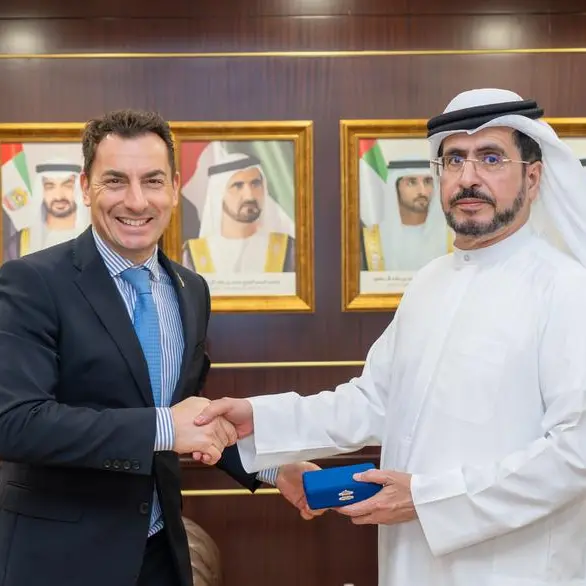
Jeff Singer, CEO of DIFC Authority said: "The report recognizes that the need for improving economic conditions and living standards in the region. Support from the international community through scale-up financing, enhanced trade access, and technical assistance is essential to begin achieving the much awaited dividends from the recent economic and political transitions. We are once again delighted to host Mr. Masood and the IMF in DIFC, which we believe plays a crucial role in the economic development of the GCC."
-Ends-
About DIFC
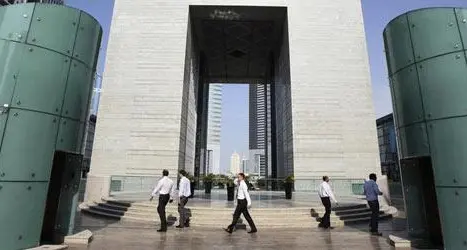
The Dubai International Financial Centre (DIFC) is the financial and business hub connecting the region's emerging markets with the developed markets of Europe, Asia and the Americas.
Since its launch in 2004, DIFC, a purposely built financial free zone, has been committed to encouraging economic growth and development in the region through its strong financial and business infrastructure. Currently, DIFC's client base comprises over 1,000 active registered firms, including 21 of the world's top 25 banks, 11 of the top 20 money managers, 6 of the world's 10 largest insurers, and 6 out of 10 top law firms in the world. Around 15,000 employees operate in an open environment complemented by international legal and regulatory standards.
DIFC offers its member companies benefits such as 100 per cent foreign ownership, zero per cent tax rate, with no restriction on capital convertibility or profit repatriation. DIFC has its own independent financial and ancillary services regulatory body, the Dubai Financial Services Authority (DFSA).
It also has the DIFC Courts, which is an independent common law judiciary based in DIFC with jurisdiction over civil and commercial disputes in or relating to the Centre.
DIFC is built upon a modern legal, regulatory and physical infrastructure, which makes it the destination of choice for Financial Services firms establishing a presence in the region.
For further information, please visit our website: www.difc.ae, or follow us on Twitter @DIFC.
For further inquiries on DIFC, please contact:
Dubai International Financial Centre
Shaima Al Zarouni
PR Manager
Email: shaima.alzarouni@difc.ae
Tel: +971 4 362 2432
Capital MSL (Dubai)
Manal Shaikh
Senior Consultant
Email: manal.shaikh@capitalmsl.com
Tel: +971 55 109 2542
© Press Release 2013