PHOTO
- Global safety science firm tackles fundamental issues surrounding compliance, pretesting and certification to ensure safer products enter the MENA market
Dubai: A global safety science company has revealed the factors that need to be tackled by global manufacturers to gain market access to any country in the MENA region.
The constant advancement of technology is fueling a staggering rise in tech startups throughout the world and increasing the number of funding options. The constant need for new products and services in the region has led to an increase in the number and variety of firms looking to enter the MENA market in recent years.
Navigating complicated safety regulations, being able to monitor and adapt to the evolving needs of a new market, managing suppliers and ensuring products have the appropriate documentation to be allowed access are some of the many obstacles faced by companies planning to enter MENA for the first time.
UL, a global leader in helping firms enter international markets, believes that market access remains one of the most significant challenges for businesses across all industries. The firm has been operating in the region for a decade from its offices in Dubai and a state-of-the-art electrical testing laboratory in Abu Dhabi.
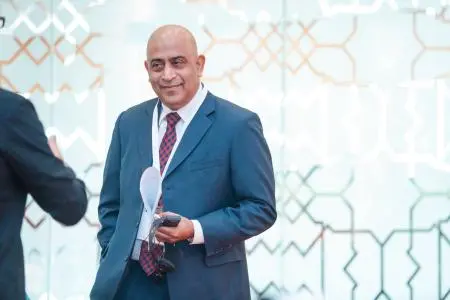
Hamid Syed, UL Vice President & GM for UL Middle East, said: “Effectively accessing global markets can reduce costs, improve market success and contribute to overall compliance and product quality.”
The key to bringing products to markets in the different countries of the MENA region lies in ensuring that all the quality and safety standards are met. While the markets here hold excellent opportunities, each country has its own rules and regulations that dictate not only what requirements apply to products but how product compliance must be demonstrated.
“Issues facing companies include ensuring full compliance with product safety and pretesting rules, providing proof of that compliance, verifying the quality of goods received from suppliers and meeting requirements for installation and disposal of products,” Syed said.
“It can be a complicated process, which should not be underestimated, and firms need to go in with their eyes open, be aware of the various requirements and source with the right local partners to guide them through it.”
The Gulf region has become an increasingly attractive market due to its continued growth driven by rising public sector spending, especially on physical and social infrastructure, as well as the buoyant private sector activity.
The UAE has become a hot-bed for MENA market access due to its strategic geographical location. Its large expatriate population, liberal trade regime and numerous free zones add to the attraction. Additionally, the importance of component selection makes the locally manufactured products of international standards.
Another compelling reason is the number of global scale events held in the region. The award of EXPO 2020 to Dubai is forecast to boost the UAE’s economy by USD 23 billion resulting in an estimated USD 8 billion worth of opportunities across many sectors particularly in hospitality and construction*.
In addition, the Saudi Vision 2030 plan reinforces economic and investment activities by increasing trade with the Kingdom of Saudi Arabia through goods and consumer products.
Syed believes that firms seeking access to new markets can create their strategies to help achieve and maintain product compliance by answering the following eight questions:
- What requirements does my product need to meet?
- What pretesting can I do to help achieve compliance with multiple markets?
- How do I verify the quality of goods from my suppliers?
- What requirements should I know about to help with component sourcing?
- How can I achieve continual compliance of my product?
- What proof of compliance do I need to show with my product?
- What product installation requirements exist for my product?
- What are the requirements for the recycling or disposal of materials?
UL has its own accredited laboratories and offices throughout North America, Latin America, Europe and Asia and firms can work with UL experts locally in MENA to obtain the required certifications and approvals needed to sell products in the target markets. Together with the UL experts located in MENA market, the UL team provides seamless support across time zones.
-Ends-
About UL
UL fosters safe living and working conditions for people everywhere through the application of science to solve safety, security and sustainability challenges. The UL Mark engenders trust enabling the safe adoption of innovative new products and technologies. Everyone at UL shares a passion to make the world a safer place. We test, inspect, audit, certify, validate, verify, advise and train and we support these efforts with software solutions for safety and sustainability. To learn more about us, visit UL.com.
Press Contact:
Elma Bartholomew
Seven Media
00971 (0)55 2585 612
© Press Release 2018Disclaimer: The contents of this press release was provided from an external third party provider. This website is not responsible for, and does not control, such external content. This content is provided on an “as is” and “as available” basis and has not been edited in any way. Neither this website nor our affiliates guarantee the accuracy of or endorse the views or opinions expressed in this press release.
The press release is provided for informational purposes only. The content does not provide tax, legal or investment advice or opinion regarding the suitability, value or profitability of any particular security, portfolio or investment strategy. Neither this website nor our affiliates shall be liable for any errors or inaccuracies in the content, or for any actions taken by you in reliance thereon. You expressly agree that your use of the information within this article is at your sole risk.
To the fullest extent permitted by applicable law, this website, its parent company, its subsidiaries, its affiliates and the respective shareholders, directors, officers, employees, agents, advertisers, content providers and licensors will not be liable (jointly or severally) to you for any direct, indirect, consequential, special, incidental, punitive or exemplary damages, including without limitation, lost profits, lost savings and lost revenues, whether in negligence, tort, contract or any other theory of liability, even if the parties have been advised of the possibility or could have foreseen any such damages.