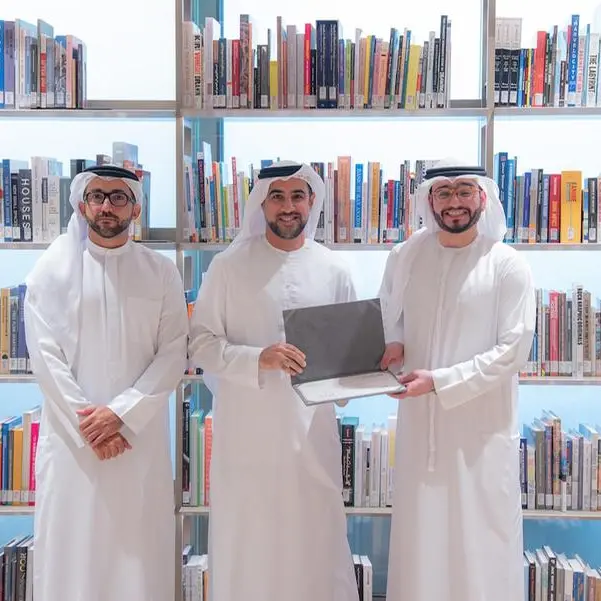
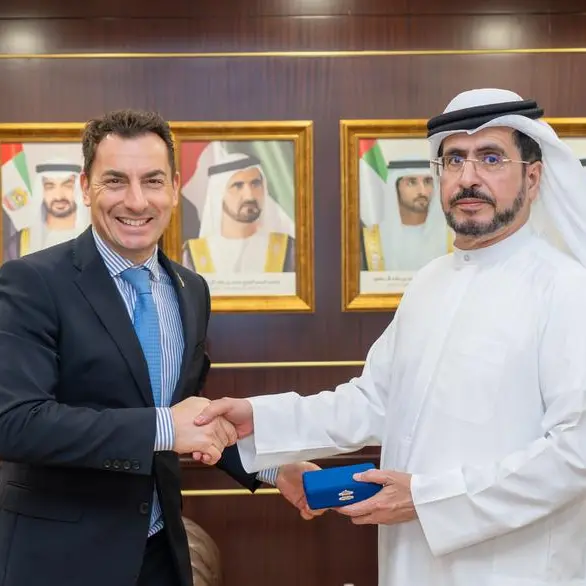
Experts and e-government leaders participating at the "GCC e-Governance and e-Participation Forum" continued yesterday (Tuesday, 11th September) to discuss the major challenges that face governments in implementing effective strategies that enable them to provide e-services to the public and engage them in decision making processes. During its second day, the forum addressed the most prominent initiatives that have contributed to the boom of e-government services in the UAE and the GCC region, and the impact of current and future developments in information technology on e-service delivery to the public.
Addressing the forum, Jesus Casado High Public Adviser for Strategic Plan at the General Directorate for Administrative Modernization, Procedures and Promotion of Electronic Government in Spain highlighted the e-Government Strategy of Spain and the methods it has applied to develop an open data strategy. He explained that more than 3000 public electronic services are available to the public, with 90% of them provided by central government and 78% by regional governments. According to the European Commission, Spain is above the European average in e-Government with 95% of full online available public services, and their online sophistication reaches 98% in the European context.
"Spain has won the 2nd place in the United Nations Public Service Award Awards for 2012, in the category of "Improving the Delivery of Public Services" for the initiative "Total Citizen Access to Public Services". Part of this success stems from the fact that the country has aligned its strategic plans with EU policies and has established a strong and comprehensive legal framework for e-Government, oriented to implement the legal safeguards that exist in the real world to the virtual world. Spain is in the 8th position of full online public services availability ranking, out of 32 European countries", added Casado.
On his part, Ibrahim El Badawi Strategy Planning Specialist at Emirates e-Government reviewed the state of open government data initiatives in the GCC region, asserting that among the six GCC countries: Bahrain, Saudi Arabia and UAE have launched official Open Government Data (OGD) initiatives which are managed by the e-government programs in each country. "These initiatives were highlighted the United Nations e-Government 2012 survey landed the UAE ranking 28th, Bahrain in the 36th and Saudi Arabia in 41st" , explained El Badawi.
He pointed out that to analyze these initiatives we have to first understand the concept of open government data, and according to the European Commission: OGD is all the information that public bodies in the European Union produce, collect or pay for. This could include geographical data, statistics, meteorological data, data from publicly funded research projects, and digitized books from libraries Public data is considered open only when it can be readily and easily consulted and re-used by anyone with access to a computer. "When we review the participation and collaboration mechanisms on the e-government portals in each of the three countries, we find that Bahrain's portal is the only one with a channel dedicated for submitting ideas by the public, and amongst the three portals, UAE's portal is the richest in terms of public participation and government response. In general, the basic features and components of open data portals are there but there is also a noticeable gap between OGD goals and the quantity and quality of the data published on OGD portals", said El Badawi.
Urging Bahrain, Saudi Arabia and UAE to further implement open government data initiatives, El Badawi deduced that it was time to take the practice to the next level of maturity, through developing an OGD strategy and framework, identifying and filling up the legislation gap, building and sponsoring an open data community, and adopting and adapting to international practices.
Expert advice on e-government initiatives, next generation cyber attacks and examining e-governance and information security from an international perspective was also presented by Ali Saleh Al-Soma Director General of the Saudi e-Government Program (Yesser), Alex Lanstein Senior Systems Engineer in FireEye and Dr. Angelika Plate Director of Strategic Security Consulting, helpAG.
The GCC e- Participation and e-Governance Forum is hosted by Aim Events, the conference and events division of ADUKG, and sponsored by FireEye, PWC, EMC2 , Booz, Allen and Hamilton, Trend Micro and helpAG, and supported by its strategic partners Emirates e-Government, Abu Dhabi Systems & Information Centre, Dubai e-Government, the Information & Technology Authority in Oman, Bahrain e-Government and the Saudi e-Government Program.
-Ends-
© Press Release 2012