PHOTO
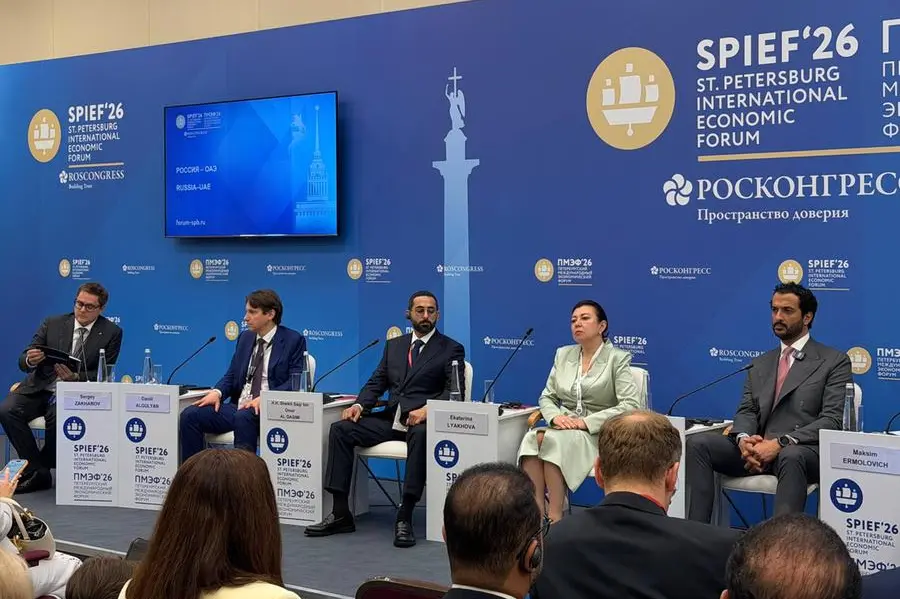
St. Petersburg – The Russia-UAE Business Council (RUBC), together with the Embassy of the United Arab Emirates in Russia, hosted a session entitled “The New Economics of Resilience: Polycentricity and Connectivity for Equitable Development” at the 29th St. Petersburg International Economic Forum (SPIEF).
The discussion was moderated by Sergey Zakharov, Co-Founder and Partner of Marathon Investment Group. He framed the conversation around three key questions: where and why the current global economic architecture is structurally failing, what an alternative model could look like, and what Russia and the UAE can build together – not only for bilateral cooperation, but also as a platform for a broader group of countries.
Zakharov noted that, by operating simultaneously across dozens of regulatory regimes worldwide, the UAE possesses unique practical experience in international markets and is particularly well positioned to assess where market access remains genuinely open and competitive, and where openness exists largely at the declaratory level.
The session brought together H.E. Abdulla bin Touq Al Marri, UAE Minister of Economy and Tourism; H.H. Sheikh Saqr bin Omar Al Qasimi, CEO of Marjan Development; Abdullah Al Hameli, CEO of AD Ports Group; Maksim Ermolovich, Member of the Board (Minister) for Competition and Antimonopoly Regulation of Eurasian Economic Commission; senior executives from Rosatom, VEB.RF, the Center for Macroeconomic Analysis and Short-Term Forecasting (CMASF), and the Russian Direct Investment Fund (RDIF).
Abdulla bin Touq Al Marri emphasized that, amid the growing fragmentation of the global economy, trade, investment and multilateral cooperation are becoming increasingly important in strengthening connectivity between nations and creating new opportunities for development. He also highlighted the role of industrial cooperation and new forms of public-private partnerships in forming the foundation of emerging “clubs” of countries focused on shared growth and development.
Maksim Ermolovich noted that the global trading system is undergoing a gradual transformation in response to the crises of recent years, creating demand for a new framework of economic interaction. Such a framework, he argued, should be supported by modern instruments, including e-commerce, digital services, and advanced payment infrastructure.
Dmitry Belousov, Head of Macroeconomic Analysis and Forecasting at CMASF, suggested that the future architecture could evolve as a system of “trust-based clubs” built around multilateral settlement and clearing mechanisms, complemented by common investment rules, shared risk assessment frameworks, and deeper cooperation in industry, technology, and infrastructure.
Participants also discussed the development of independent logistics infrastructure, including the potential of the Northern Sea Route and international transport corridors, mechanisms for joint investment and project financing, and the creation of industrial and technological partnerships aimed at serving third-country markets.
The Russia-UAE Business Council (RUBC) promotes international trade, supports Russian businesses in accessing global markets, facilitates bilateral cooperation, and actively works to attract UAE investment into Russia. The Council's membership spans leading companies across oil and gas, energy, transport and telecommunications, tourism, aerospace, financial services, retail, and technology. Members benefit from a broad set of tools for structuring and developing joint ventures and mobilising capital.
In June 2025, Alexander Vinokurov, President of Marathon Investment Group, was elected Chairman of the Council.