PHOTO
UAE: The Mohammed bin Rashid School of Government (MBRSG), through its research Centre for the Future of Government, announced the launch of a global, open executive programme in Arabic titled “Artificial Intelligence and Digital Transformation in Government”.
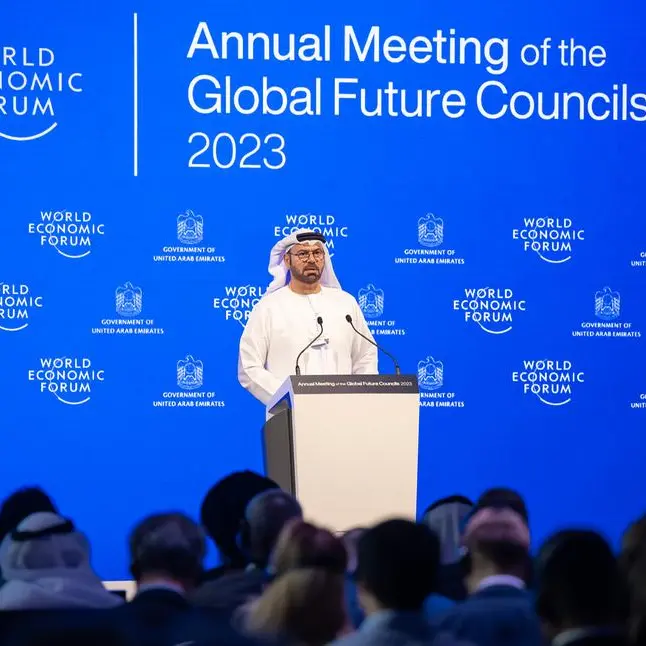
The announcement was made during the Arab Public Administration Forum, held as part of the World Governments Summit 2026.
The initiative reflects MBRSG’s commitment to empowering government leaders and employees across the region, while enhancing their capabilities in digital governance and preparing them for the future of government work.
The programme, delivered online through video sessions, was developed in partnership between the University of Oxford’s Saïd Business School, the United Nations Educational, Scientific and Cultural Organization (UNESCO), and MBRSG.
It aims to equip government employees and Arab government sector leaders with practical skills, strategic tools and ethical frameworks that enable them to lead and manage digital transformation effectively and responsibly. This is in line with MBRSG’s strategic vision to advance government innovation.
The programme provides decision-makers, public sector leaders, and government service employees with an in-depth understanding of the ethical and operational risks associated with the use of modern technologies, as well as the mechanisms for addressing them. It strengthens their awareness of how to employ AI responsibly, thereby supporting the development of trustworthy, inclusive and transparent digital government services.
His Excellency Dr. Ali bin Sebaa Al Marri, Executive President of the Mohammed Bin Rashid School of Government (MBRSG), said: “Organising the Executive Programme reflects MBRSG’s commitment to supporting governments, particularly across the Arab region, in building leadership capabilities that can utilise AI and digital transformation efficiently and responsibly. The success of digital transformation is not limited to the adoption of technologies; it requires clear governance frameworks, ongoing investment in human capital, and the promotion of transparency, inclusion, and trust in government.”
His Excellency added that MBRSG’s partnership, through the Centre for the Future of Government, with the University of Oxford and UNESCO reflects MBRSG’s strategic goal of connecting global knowledge with regional contexts. It also demonstrates MBRSG’s commitment to turning research and capacity-building into practical tools that support public policy development and enhance the quality of government services, while strengthening the UAE’s position as a global hub for advanced knowledge in governance and future-focused practice.
Dr. Tawfik Jelassi, Assistant Director-General for Communication and Information, UNESCO, stated: "The future of digital governance depends on people. This programme is a strategic step to equip government employees with the competencies needed to govern AI responsibly and inclusively. By investing in people, we build trust in government AI systems and ensure that technology serves humanity—not the other way around."
The programme covers digital transformation and AI, data governance, legal and regulatory frameworks, cybersecurity, and ethical and human considerations. It addresses the design of customer-centric government services and the leadership of institutional transformation initiatives with a clear vision and active stakeholder engagement.
The course is delivered by a group of international experts from Saïd Business School, University of Oxford, in collaboration with UNESCO and its SPARK-AI Alliance, currently led by MBRSG’s Centre for the Future of Government. It is based on the UNESCO Framework for AI Competencies and Digital Transformation in Government Administration and incorporates both global and regional case studies. The course is offered entirely in Arabic, with case studies specifically tailored to Arab public sector employees, enhancing its relevance and value for participants from Arab nations.