PHOTO
Abu Dhabi: Held under the patronage of His Highness Sheikh Hamdan bin Mohamed bin Zayed Al Nahyan, Deputy Chairman of the Presidential Court for Special Affairs and Chairman of the Smart and Autonomous Systems Council, the International Defence Conference (IDC) 2026, held at the ADNEC Centre Abu Dhabi, has concluded with resounding success.
Organised by ADNEC Group in association with the Ministry of Defence and the Tawazun Council for Defence Enablement, the conference was held under the theme “Smart Horizons: Redefining Defence Through Intelligent Autonomy.”
The event attracted over 750 attendees from around the globe, with three expert-led panels exploring the opportunities and challenges that intelligent autonomous systems bring to modern battlefields.
These sessions delved into the transformative potential of these technologies while addressing the complex issues they introduce.
Participants engaged in forward-thinking discussions focused on building resilient defence ecosystems and advancing international cooperation.
Command Networks of the Future – The New Nervous System of Defence
The opening panel featured a distinguished line-up of speakers, including His Excellency Dr. Mohamed Al Kuwaiti, Head of Cyber Security, UAE; Brig. Gen. Khamis Alkaabi, Capability Development Director, UAE Ministry of Defence; Dr. Najwa Aaraj, CEO, Technology Innovation Institute (TII); Gen. John Nicholson (Ret.), Chief Executive, Lockheed Martin Middle East, and was moderated by Hala Majeed, Director, Lockheed Martin Centre for Innovation and Security Solutions.
The session highlighted the shift in military command and control, as AI, data-driven systems and secure networks continue to redefine how decisions are made, shared and trusted, while keeping human judgment at the core.
His Excellency Dr. Al Kuwaiti set the stage by highlighting the centrality of data and the need for hybrid, interconnected platforms.
His Excellency stressed that “Data is now the main driving force behind decision-making,” outlining the UAE’s approach, which balances sovereign control with the necessity of partnership.
His Excellency also emphasised that innovation, clear governance and capacity building are essential, noting, “Partnerships are essential. We cannot build our main defence or a common operational picture without it.”
Brig. Gen. Alkaabi echoed Dr. Al Kuwaiti’s sentiment, highlighting the exponential growth in the number of connected devices and the resulting information surge.
He noted that defence forces must adapt to digest and act on vast streams of data, moving beyond simply creating a common operational picture to enabling collaborative, real-time decision-making.
The panel agreed that the “brain of operations” will no longer reside solely at headquarters; instead, intelligence and decision authority will be distributed across the network, with both humans and machines contributing to the process.
The discussion highlighted how AI is revolutionising the speed and nature of decision-making in military operations, stressing the importance of maintaining human oversight. “Speed is critical; decisions will be made in seconds, not hours or minutes. Humans will remain at the centre, but information will be processed and presented to help decision-making,” explained Brig. Gen. Alkaabi, adding that “whoever wins the speed race will have the advantage.”
Dr. Aaraj emphasised the supportive role of AI, stating, “AI will not replace the commander; the commander remains in charge of decisions and risk. AI assists with data fusion, real-time decision-making, planning, and course of action, but must be aligned with a mission.”
Gen. Nicholson (Ret.) provided a strategic perspective, emphasising the role of human judgment. “AI promises to reduce uncertainty and enable better decisions, potentially reducing the risk of war,” he said, adding that while AI can accelerate decision-making, trust in information and systems is paramount, and continuous training is essential to avoid the illusion of certainty.
Collectively, the panellists envisioned a future where industry, military and policymakers collaborate to build command networks that are not only technologically advanced but also grounded in trust, resilience and human expertise. They agreed that the future of command networks will be defined by intelligent, secure and resilient systems, where technology augments, but never replaces, the human element.
The Autonomous Force – Integrating AI into Joint and Tactical Operations
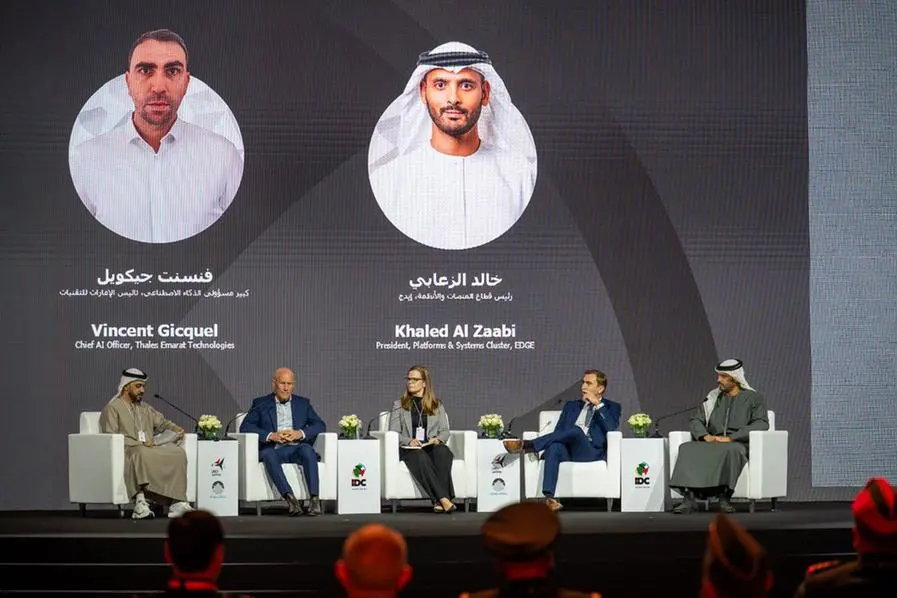
The second panel discussion, titled “The Autonomous Force – Integrating AI into Joint and Tactical Operations,” brought together industry leaders and experts from the defence, aerospace and advanced technology sectors to explore how AI-powered autonomous systems are transforming the landscape of modern military operations.
Moderated by Hasan Al Hosani, CEO – Smart Solutions at Space42, the session featured VADM USN (Ret.) Bob Harward, Executive Vice President at Shield AI; Dr Anastacia MacAllister, Technical Director for Autonomy and AI at General Atomics Aeronautical Systems; Vincent Gicquel, Chief AI Officer at Thales Emarat Technologies; and Khaled Al Zaabi, President – Platforms and Systems Cluster at EDGE.
The discussion focused on how AI-driven autonomy is rapidly transforming mission execution, collaboration and operational efficiency, emphasising its role as a force multiplier in joint tactical operations across the land, air and maritime domains.
VADM USN (Ret.) Harward reflected on the real-world impact of AI and autonomous technologies in defence, stating: “AI capabilities have already turned the tables. AI applications, not only in imagery but also within the decision cycle, have enabled us to counter jamming…We’re now seeing the kill chain become almost real-time. These are just two examples of how AI has drastically changed the dynamics, and that is just the tip of the spear.”
Harward also observed that the rapid evolution of AI is fundamentally altering how military platforms are conceived, built and utilised. “Technology is driving what platforms can do, and we will need to develop platforms that match these capabilities.”
Al Zaabi reiterated Harward’s sentiment, highlighting the transformative potential of AI as a force multiplier, enabling a small team to control large fleets of diverse platforms across multiple domains.
“The ultimate goal is force multiplication. By effectively utilising multiple platforms simultaneously, using AI, you can achieve a much stronger force impact,” he said, highlighting the need to design platforms that can adapt to the rapid advances in AI technologies. “AI applications are becoming increasingly complex. Platforms that fail to adapt to this evolution will become obsolete. [We need to take] a parallel path to ensure that the AI-enabled platforms and human [operators] are evolving at the same pace, rather than independently.”
Dr. MacAllister highlighted the unprecedented speed of decision-making and data insights that AI brings to the battlespace, explaining: “AI is an enabling technology, and changes are happening at software speed. We can now process inordinate amounts of data and use them to draw insights and make decisions accordingly.”
Gicquel stressed that autonomy must always support, rather than supplant, human command, especially as operations become more complex and data-driven, stating: “Autonomy must allow the operator to manage the complexity and pace of the [mission], while maintaining human authority and responsibility.”
He explained that these technologies play a central role in supporting mission planning and decision-making. “Joint and tactical operations are fast evolving. They generate [significant amounts] of data... AI turns this data into useful [inputs] to support planning priorities and synchronisation across different domains, such as land, air and cyber,” he said, noting that integrating them into command and control systems can significantly accelerate decision-making by providing commanders with actionable insights and recommendations.
The conversation also delved into the complexities of maintaining accountability, the importance of human oversight and the need for robust training to ensure the successful integration of AI into defence operations.
Harward remarked: “Accountability will be [embedded]… not just in execution, but also in how we design AI and set the rules by which AI will be deployed.”
Dr. MacAllister added: “Humans will not simply press the ‘I believe’ button unless they have trained as they fight… Integrating this technology into our training processes helps build trust and shared mental models.”
In closing, the panellists agreed that the future of autonomous operations will depend not only on technological breakthroughs but also on building trust and fostering collaboration across the defence ecosystem to ensure effectiveness and accountability in an era of AI-enabled defence operations.
Global Autonomy Standards – Building Trust, Safety and Readiness
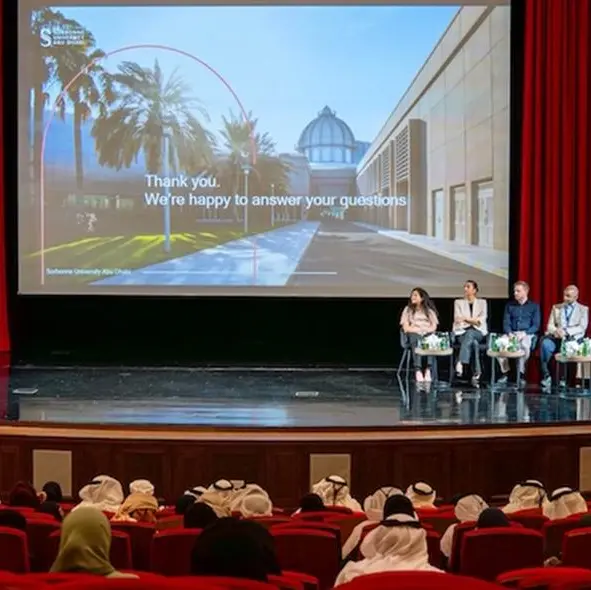
The final panel brought together senior representatives from regulatory authorities, transport agencies and industry, including Engineer Aqeel Ahmed Al Zarouni, Assistant Director General for Aviation Safety Affairs at the General Civil Aviation Authority (GCAA); Dr. Abdulla Alghfeli, Acting Director General of the Integrated Transport Centre; His Excellency Ahmad Ali Belqaizi, Executive Director of the Aviation Safety and Environment Sector at the Dubai Civil Aviation Authority; and Angel Martin, Systems Engineering Division Manager at ISDEFE. The session was moderated by Suha Al Dabbagh, Content Manager at ADNEC Group.
Discussions focused on the challenge of deploying autonomous technologies at a pace that often exceeds the development of regulatory and technical standards. Panellists emphasised that safety, interoperability and collaboration among partners must remain central to any framework governing autonomy. The session underscored the role of decision-makers in building trust through transparency, shared standards and international cooperation.
Al Zarouni highlighted the critical role of transparency and certification in building trust in autonomous systems, noting that trust is not a technological feature, but a product of clear system design, operational transparency and recognised certification processes.
He referenced the role of international organisations such as the International Civil Aviation Organisation (ICAO) in establishing standards that are globally accepted.
Dr. Alghfeli emphasised that trust must be built on two core pillars: ethics and certification, stressing the importance of adaptive legal frameworks that can keep pace with rapidly evolving technologies, ensuring that the operation and commercialisation of autonomous systems remain safe and well-governed.
His Excellency Belqaizi highlighted the importance of engaging operators as partners in regulatory processes, pointing out that building effective mechanisms requires reducing resistance to new technologies through collaboration, clear demand frameworks and regulatory engagement with suppliers to ensure compliance and safety.
On his part, Martin stressed the need to align regulatory requirements with procurement and deployment needs.
He outlined three critical considerations: ensuring system safety across the full lifecycle, enabling interoperability among systems and strengthening trust between countries through mutual recognition and certification.
He added that political alignment is essential to overcoming regulatory and technical challenges associated with autonomous systems.
Closing remarks
In his closing remarks, His Excellency Dr. Nasser Al Nuaimi, Secretary General of Tawazun Council for Defence Enablement, extended gratitude to His Highness Sheikh Hamdan bin Mohamed bin Zayed Al Nahyan for the gracious patronage.
“AI and autonomous systems are no longer emerging technologies. They are operational realities reshaping every domain of defence. From autonomous unmanned systems operating in contested environments to AI-enabled decision support systems processing vast intelligence datasets in real-time and predictive maintenance algorithms,” Dr. Al Nuaimi said, calling on governments, industry and research institutions to deepen partnerships, accelerate innovation and maintain their commitment to the responsible development of these critical technologies.
Taking place a day before UMEX and SimTEX 2026, IDC brought together experts to chart the path toward a safer, more secure future.
To register for UMEX and SimTEX 2026, visit the UMEX website and discover the latest trends and topics shaping the future of autonomous systems.
About Modon:
Modon is an international holding company, headquartered in Abu Dhabi, United Arab Emirates, and listed on the Abu Dhabi Securities Exchange (ADX). We are at the forefront of urban innovation, creating iconic designs and experiences that continually surpass expectations. Our primary business sectors include real estate, hospitality, asset management, investments, events, and tourism. Our goal is to deliver long-term, sustainable value, laying the foundations for intelligent, connected living.
About ADNEC Group:
ADNEC Group, part of Modon Holding, is renowned for its rich legacy and diverse business operations and stands as a formidable force in global business and leisure tourism. The Group is a leader in managing and developing international strategic assets and contributes to the sustainable growth of Abu Dhabi’s economy.
ADNEC Group’s diverse business clusters span Venues, Events, F&B, Services, Tourism and Media.
The Group operates the ADNEC Centre Abu Dhabi, the largest event venue in the MENA region and ADNEC Centre Al Ain, as well as the Business Design Centre and ExCeL London in the United Kingdom.
Capital Events, the events management arm of ADNEC Group, is the leading organiser of some of the world’s most iconic events across strategic industry sectors, including Defence and Security, Maritime Lifestyle, Media, Food & Beverage and Technology. Through its growing portfolio, Capital Events plays a crucial role in supporting Abu Dhabi to achieve its growth objectives as a global hub for business and leisure tourism.
ADNEC Group’s Services cluster includes its subsidiary Capital 360 Event Experiences that provides distinguished event experiences to its clients and stakeholders. The Group also launched Capital Protocol in 2023, which provides a specialised VIP protocol service which is operated by its Service cluster.
ADNEC Group F&B cluster consists of Capital Catering and Royal Catering Services, which caters to numerous sectors including aviation, healthcare, defence, energy, business and industry, and event venues.
Tourism 365, the Group’s tourism arm, delivers tailored tourism services and operates Capital Holidays, a fast-growing tour operator with a global footprint across the UAE, Saudi Arabia, the UK and Germany.
Additionally, twofour54, a key player in Abu Dhabi’s sustainable media and film industry, is part of ADNEC Group’s diversified portfolio, further reinforcing its role in advancing the emirate’s creative economy.
Recognised internationally for its commitment to excellence, innovation, and sustainability, ADNEC Group has garnered numerous awards, solidifying its status as a leader in the industry.
For media enquiries, please contact: ADNEC@Apcoworldwide.com