PHOTO
Dubai, United Arab Emirates: Artificial intelligence has moved beyond experimentation to become a strategic operating layer for modern enterprises, but with that shift comes a new set of governance, cybersecurity and business risks. This was the central theme at TechPulse MEA 2026, hosted by the Indian Business & Professional Council (IBPC Dubai).
The exclusive Technology, Digital & Innovation (TDI) Focus Group initiative brought together senior technology leaders, C-suite executives, AI specialists and digital transformation experts to assess the AI, technology and business trends expected to reshape organisations across the Middle East over the next 15 months, with a strong focus on balancing innovation with risk management.
Opening the event, Karthik Raman, Convenor of the TDI Focus Group, IBPC Dubai and Chief Revenue Officer at RevDau, traced the evolution of technology from the internet and cloud computing to automation and artificial intelligence.
"Technology has always made humans faster and stronger, but this AI era is different. Machines replaced muscle, software augmented judgement, but AI is now changing how decisions are made. The question every organisation must answer is which part of your business learns next," he said.
Raman noted that TechPulse MEA was designed to help business leaders understand where technology investment is flowing, identify the risks organisations must prepare for, and make the strategic decisions that will determine long-term competitiveness.
Delivering the keynote address, Aditi Nitin, Senior Partner, Data & AI at Deloitte Middle East, highlighted the UAE's emergence as one of the world's fastest adopters of enterprise AI. Citing research showing that 70 percent of professionals in the UAE use AI daily compared with a global average of 18 percent, she said organisations are moving rapidly from pilot projects to enterprise-scale deployment. However, she stressed that sustainable adoption depends on robust governance, trusted data, workforce reskilling and responsible AI frameworks.
Nitin also outlined practical adoption models, including prompt engineering, AI-native workflows, enterprise AI copilots and a structured 90-day implementation roadmap. She emphasised that organisations must proactively address challenges such as data privacy, AI hallucinations, algorithmic bias and cybersecurity to unlock enterprise value while maintaining trust.
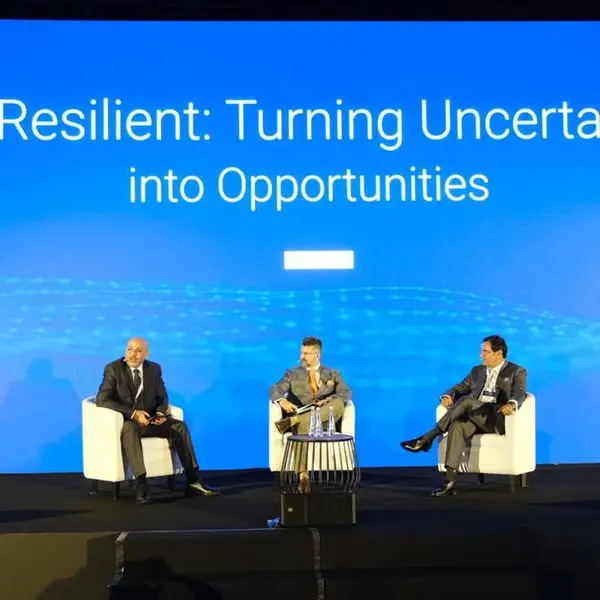
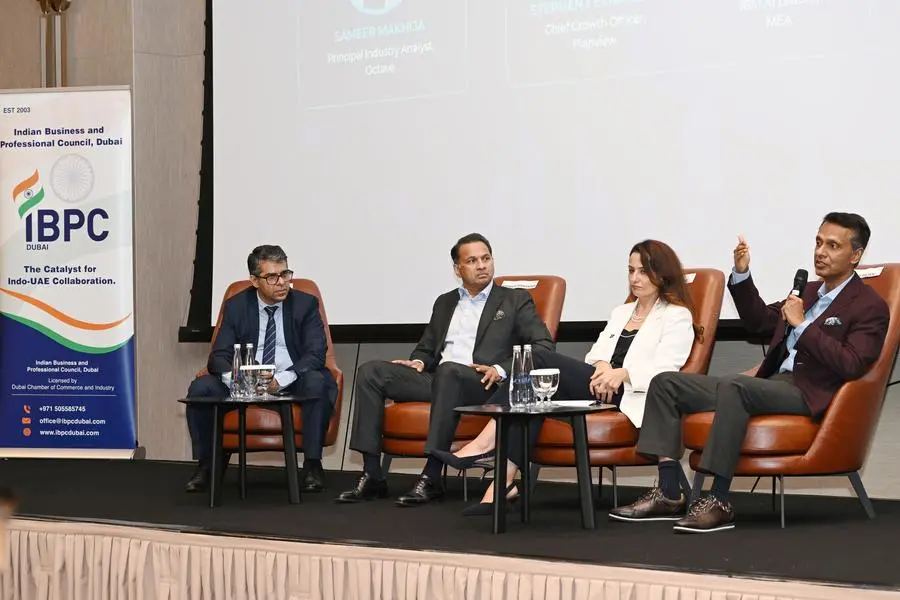
The keynote was followed by a panel discussion titled The AI Reshaping: From Ambition to Architecture, moderated by Sameer Makhija, Principal Industry Analyst at Octave. Panellists included Asli Erbas, IBM AI Leader for MEA; Stephen Fernandes, Chief Growth Officer at Planview; and Ranjit Rajan, C-Suite & Board Digital Advisor and author, who discussed how organisations can translate AI ambition into measurable business outcomes.
The panel examined the transition from digital transformation to enterprise-wide AI transformation, where AI is increasingly becoming a core business capability rather than a standalone technology. As organisations begin managing hybrid workforces of employees and AI agents, panellists agreed that strong governance, executive accountability and human oversight will be essential to mitigating operational, regulatory and reputational risks while building trust.
They also identified resilient digital infrastructure, cybersecurity and supply chain resilience as critical priorities amid an increasingly complex global environment. While AI has the potential to significantly improve productivity and decision-making, they cautioned that sustainable returns will depend on trusted data, clearly defined business objectives and disciplined governance rather than technology adoption alone. Boards and executive leadership, they said, will play a decisive role in ensuring AI systems remain transparent, auditable and accountable.
The interactive audience discussion further explored AI regulation, data governance, cybersecurity, SME readiness, workforce transformation and the commercial value of enterprise data, highlighting both the opportunities and implementation challenges facing businesses across the region.
Having previously introduced the keynote speaker and panellists, Santosh Varghese, Co-Convenor of the TDI Focus Group, closed the event by highlighting the scale of the regional opportunity, noting projections that artificial intelligence could contribute between US$96 billion and US$100 billion to the UAE economy by 2030, reinforcing why AI has become a boardroom priority across industries.
Commenting on the event, Karthik Raman said, "TechPulse MEA 2026 reflects IBPC Dubai's commitment to bringing together business leaders, innovators and technology experts to explore the trends shaping the future of enterprise. The conversations demonstrated that competitive advantage will increasingly belong to organisations that combine AI, data, governance and human leadership to create measurable business value."
The inaugural event was attended by IBPC Dubai Chairman Emeritus Suresh Kumar, Vice Chairman Sunil Sinha, Secretary General Dr. Sahitya Chaturvedi and governing board member Skandan 'Ramesh' Mahalingam, underscoring the Chamber's commitment to advancing technology-led business dialogue and industry collaboration. The audience reflected a diverse cross-section of the business community, bringing together young startup founders, senior consultants, industry stalwarts and women entrepreneurs from across sectors.