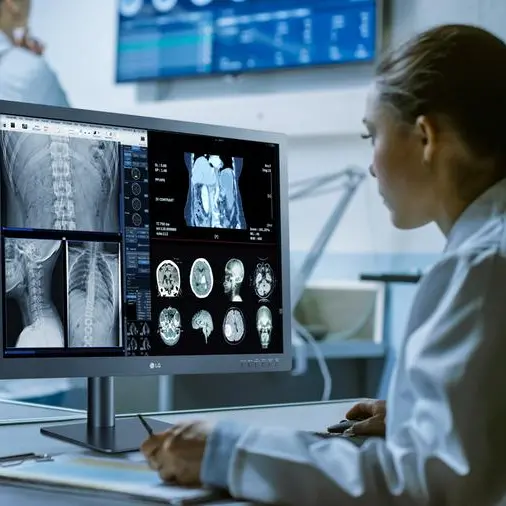
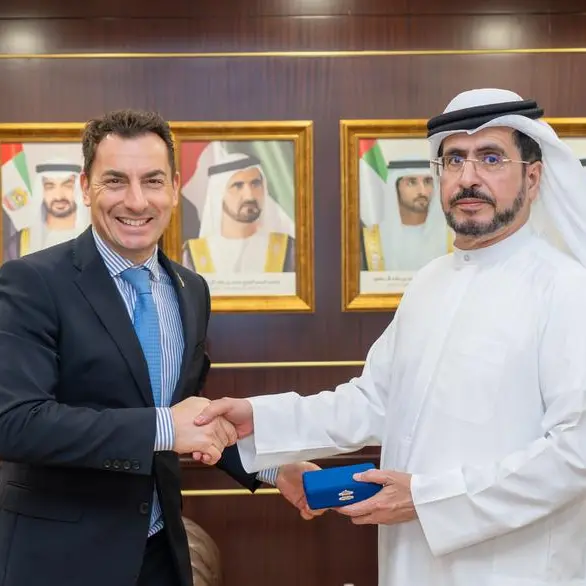
United Arab Emirates, Dubai, December 19, 2013: Healthcare professionals from Dubai Health Authority's Information Technology and e-Health team, took part in a workshop organized by the Dubai Health Authority and Microsoft on how to develop business intelligence scenarios using the latest electronic programmes for medical research and/or generating healthcare reports.
The data generated using these systems is accurate and can be used by hospitals for quick and effective decision-making or for research; both of which are important tools to enhance the quality of care provided and are importance factors that help in the overall development of the health sector.
The workshop is in line with the DHA's long-term vision to implement the Dubai Smart Healthcare Model that was launched by Sheikh Mohammed bin Rashid Al Maktoum, UAE Vice President, Prime Minister and Ruler of Dubai, at Gitex 2013.
The model includes three components: smart operations, smart applications and smart hospitals.
Dr Mohammed Al Redha, director of health data and information analysis department, health policy and strategy sector at the DHA, said : " This workshop was held to encourage hospitals to use electronic programs to tabulate their data- which can be used for research or decision-making, our aim is to encourage both private and government hospitals in Dubai to move away from the manual system of data collection and analysis to an effective paperless system. Such forums and workshops help hospitals move in the direction of electronic integration."
Dr Samir Said, Regional Director for Health, Middle-East and Africa for Microsoft said: "Healthcare professionals need information to take decisions on how to best provide health care services. Medical information and data available presently is very large, therefore there is a need to utilize IT tools which help analyze vast data to measure outcomes. These measurable outcomes help caregivers provide better care to their patients and for healthcare management professionals that analyzed data is a tool to optimize their investment and provide need-based services.
"Such analytical tools help healthcare providers understand services which are over or under-utilized and they can take corrective steps which will enhance overall efficiencies in the healthcare setting."
He said that although these electronic tools have a capacity to analyze large amounts of data, they are easy to use and are basically designed to be self-service business intelligence models.
Taking about the overall e-health program for the Dubai's health sector, Al Redha said: " In line with the vision of our leaders, the DHA is moving towards implementing total IT solutions that will enhance the manner in which healthcare is delivered and managed.
"Our eventual aim is to have electronic connectivity for all hospitals in Dubai- public and private as well as a single electronic file per patient. This will not only ensure better healthcare delivery but also provide better data which leads to better decision-making."
He said electronic integration will also benefit patients because their file will not only be available to doctors in the emirate but can also be made available to doctors abroad through a secured password and username.
Moreover, smart hospitals provide patients with access to health information through their smartphones and enhances patient experience from the time he or she enters the hospital until they are discharged: this includes the whole process, that is: e-registration to e-dirham, that is, from registration to payment.
Two weeks ago, the department also organized a CIO forum to discuss smart health initiatives adopted the world over and the benefits to move towards a smart hospital model.
Al Redha also highlighted that the DHA will announce the results of the EMRAM (Electronic Medical Record Adoption Model) survey in February 2014.
It is an eight-step process to analyze an organization's level of EMR adoption as well as track their progress against other healthcare organizations across the country.
The DHA and HiMSS Analytics are currently tabulating the results to determine the level of electronic medical record model adopted by hospitals in Dubai.
The results will help ascertain the hospital with the highest and lowest integration level in Dubai
-Ends-
About the Dubai Health Authority:
The Dubai Health Authority (DHA) was created, in June 2007, by Law 13 issued by His Highness Sheikh Mohammed bin Rashid Al Maktoum, Vice President and Prime Minister of the UAE, Ruler of Dubai, with an expanded vision to include strategic oversight for the complete health sector in Dubai and enhance private sector engagement. His Highness Sheikh Hamdan Bin Rashid Al Maktoum, Deputy Ruler of Dubai and UAE Minister of Finance is the President of the Dubai Health Authority and His Excellency Engineer Essa Al Maidoor is the Director-General of the DHA.
The DHA's aim in Dubai is to provide an accessible, effective and integrated healthcare system, protect public health and improve the quality of life within the Emirate. This is a direct translation of the objectives of the Dubai Strategic Plan 2015 launched by His Highness Sheikh Mohammed bin Rashid Al Maktoum. Keeping the strategic plan in mind, the DHA's mission is to ensure access to health services, maintain and improve the quality of these services, improve the health status of nationals, residents and visitors and oversee a dynamic, efficient and innovative health sector.
In addition to overseeing the health sector for the Emirate of Dubai, the DHA also focuses on providing services through DHA healthcare facilities including hospitals (Latifa, Dubai, Rashid and Hatta), specialty centres (e.g. the Dubai Diabetes Center) and DHA primary health centres spread throughout the Emirate of Dubai.
The main pillars of service delivery at DHA health facilities are quality, efficiency, patients and staff. It is our aim to maintain and improve the quality and efficiency of DHA health services. An important aspect of the service delivery strategy is to focus on patients, their needs and satisfaction as well as attract, retain, nurture and support outstanding staff.
Prior to the establishment of the DHA, the Department of Health and Medical Services (DOHMS), which was established in 1973, was the functioning authority that almost exclusively focused on health service delivery.
-Ends-
© Press Release 2013