PHOTO
Abu Dhabi, UAE: Researchers at NYU Abu Dhabi (NYUAD) have developed an ingestible device that could use light to activate neurons in the gut, providing a new non-invasive way to study and potentially treat digestive and metabolic disorders.
The technology, called ICOPS (Ingestible Controlled Optogenetic Stimulation), was created by Khalil Ramadi, Assistant Professor of Bioengineering at NYU Abu Dhabi and NYU Tandon, and his team. ICOPS delivers targeted light inside the gut to stimulate nerve cells. This method is based on optogenetics, a technique that makes specific neurons sensitive to light so they can be precisely controlled.
Published in Advanced Materials Technologies, the research demonstrates how ICOPS could be used to map and control the intestinal nervous system without surgery. “If you look at how we do any study trying to map neural function in the gut, it is all extremely crude,” said Ramadi. “We just do not have good tools for it.”
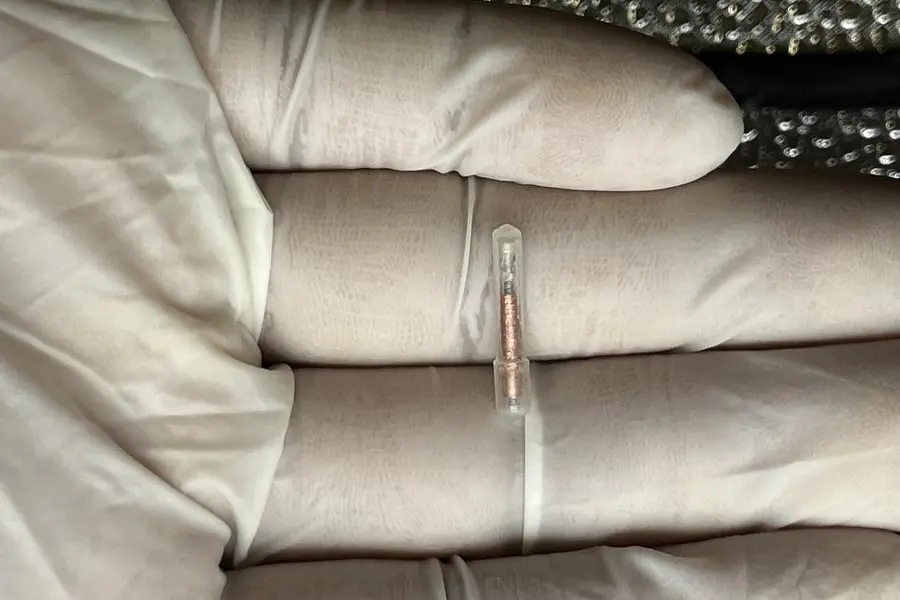
Current approaches often require invasive surgery to implant optical fibers. ICOPS avoids this by using an LED-equipped capsule that patients swallow after scientists modify certain gut neurons to respond to light. “You can go in, transfect a certain subset of cells to be light sensitive, and then swallow this light pill whenever you want to activate those cells,” Ramadi explained.
The capsule works without a battery, receiving power wirelessly through magnetic induction from an external transmitter. “What makes this capsule unique is that it was entirely fabricated in-house using 3D printing, without the need for cleanroom facilities,” said Postdoctoral Associate at NYUAD and lead author Mohamed Elsherif. “It can operate wirelessly in freely moving animals, enabling studies that were not possible with traditional tethered or invasive approaches.”
Beyond research, ICOPS could enable new treatments for gut motility disorders, metabolic diseases, and eating disorders by controlling neural activity in specific regions of the gut. Future versions could also provide electrical stimulation and targeted drug delivery.
In addition to Ramadi and Elsherif, co-authors include Rawan Badr El-Din, Zhansaya Makhambetova, Heba Naser, Rahul Singh, Keonghwan Oh, Revathi Sukesan, and Maylis Boitet (NYUAD), and Sohmyung Ha (NYUAD and NYU Tandon). The work was supported by the NYUAD Research Institute Award to the Research Center for Translational Medical Devices (CENTMED).
NYU Abu Dhabi has established more than 90 faculty labs and projects, producing over 9,200 internationally recognized research publications. Times Higher Education ranks NYU among the world’s top 35 universities, making NYUAD the highest globally ranked university in the UAE.
About NYU Abu Dhabi
www.nyuad.nyu.edu
NYU Abu Dhabi is the first comprehensive liberal arts and research campus in the Middle East to be operated abroad by a major American research university. Times Higher Education ranks NYU among the top 35 universities in the world, making NYU Abu Dhabi the highest globally ranked university in the UAE. NYU Abu Dhabi has integrated a highly selective undergraduate curriculum across the disciplines with a world center for advanced research and scholarship. The university enables its students in the sciences, engineering, social sciences, humanities, and arts to succeed in an increasingly interdependent world and advance cooperation and progress on humanity’s shared challenges. NYU Abu Dhabi’s high-achieving students have come from over 120 countries and speak over 100 languages. Together, NYU's campuses in New York, Abu Dhabi, and Shanghai form the backbone of a unique global university, giving faculty and students opportunities to experience varied learning environments and immersion in other cultures at one or more of the numerous study-abroad sites NYU maintains on six continents.