PHOTO
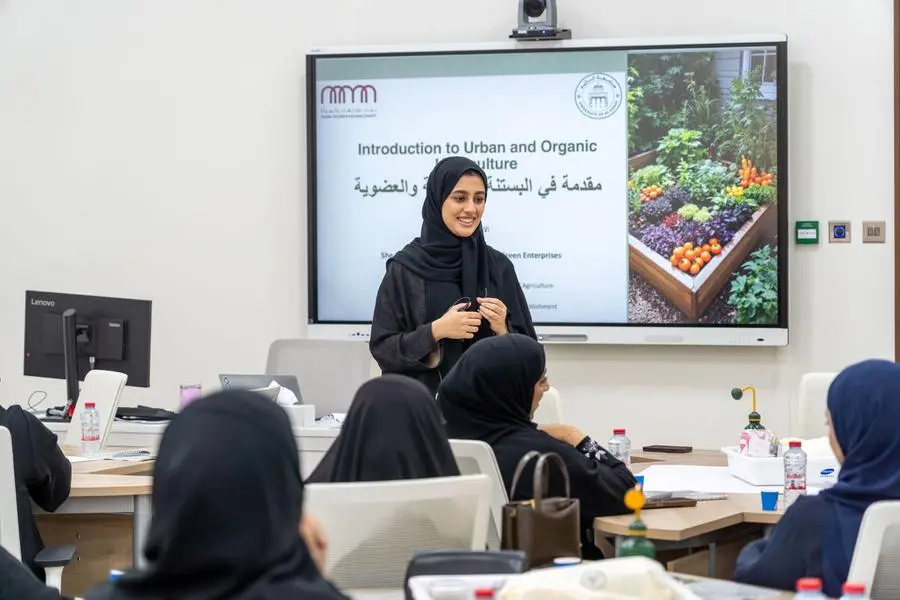
Sharjah: Nama Women Advancement (NAMA), in partnership with Al Dhaid University, is cultivating the next generation of women-led agribusinesses with the launch of its Agri-business Programme. The six-week initiative, hosted in Al Dhaid and Khorfakkan, is designed to enable women to leverage their homes and gardens as springboards for sustainable enterprises, simultaneously fostering economic participation and contributing to national food security.
Running from October 14 to November 25, the programme offers a practical and sustainable pathway for generating income, enhancing financial independence, and strengthening participants’ confidence, agency, and leadership within their communities.
Promising opportunities in agricultural entrepreneurship
Commenting on the initiative, H.E. Mariam Al Hammadi, Director General of NAMA, said: “At NAMA, we see agriculture as a tangible and empowering pathway for women. It allows them to take ownership of the production process, transforming their harvests into value-added products that bolster financial independence and community standing. What sets this programme apart is its integration of our Emirati heritage with modern entrepreneurial tools, opening entirely new horizons for women to innovate and lead.”
She added: "We anticipate this initiative will serve as a blueprint for future programmes that strengthen food security while highlighting women’s essential role in crafting practical solutions for a sustainable future."
H.E. Al Hammadi also emphasised the strategic partnership with Al Dhaid University, which contributed to the curriculum and will deliver the programme’s educational and hands-on components through field experts.
A practical learning journey from garden to market
The programme combines interactive workshops, group discussions, and local case studies with hands-on practice, culminating in a capstone project where participants develop a viable agri-business concept.
Participants will gain in-depth knowledge of sustainable agriculture fundamentals, including modern hydroponic techniques, and learn to implement stringent hygiene and safety standards for market-ready products. The programme also equips them with core entrepreneurial competencies, from business planning and pricing to brand storytelling and marketing, alongside essential guidance on home-based food production regulations, licensing, and access to local markets and cooperatives.
Nine interconnected learning modules
The curriculum is structured across nine interconnected modules, divided between agricultural practices and agribusiness development.
The agricultural specialisation begins with Fundamentals of Organic and Modern Gardening and Garden Planning, followed by Home Gardening: Seedling, Mulching, and Fertilisation, and Seedling Care, Irrigation, and Pest Management. It then advances to Crop Preservation and Ensuring Product Safety and Quality, culminating in Value-Added Agricultural Products.
The agribusiness component focuses on the commercial journey, starting with Fundamentals of Agripreneurship and Planning, progressing to Market Requirements and Legal Requirements, and then Building a Brand and Project Storytelling.
By the end of the programme, participants will be equipped not only with the technical skills to produce and preserve high-quality agricultural products but also with the business acumen to launch and scale their home-based agribusinesses; contributing to a more resilient, inclusive, and sustainable future.