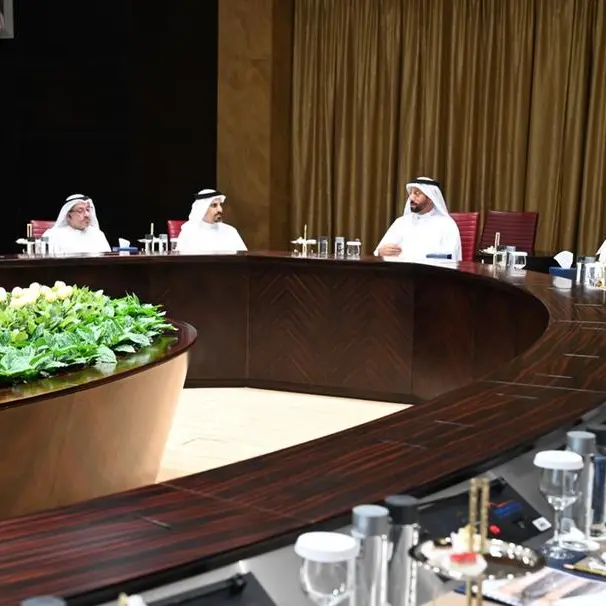
Doha, Qatar, 22 January 2014: The Center for Islamic Economics and Finance (CIEF), a research center at Qatar Faculty of Islamic Studies (QFIS) organised a public lecture on 'Knowledge, Economy, and Islamic Finance: A New Institutional Economics Perspective'. The lecture was held at Hamad bin Khalifa University.
The speaker was Dr Habib Ahmed, Professor of Islamic Law and Finance at Durham University and Visiting Professor at QFIS. He spoke about the role of knowledge in the economy, the status of knowledge in the Muslim world, the implications of this for Islamic finance, and a way forward.
For his talk, Dr Habib adopted a New Institutional Economics (NIE) framework. NIE takes a multi-disciplinary approach to explain how economic structures evolve and change over time. Economic structure is studied at four levels: culture, institutions, organisations and transactions. While culture embodies the body of knowledge of different societies, the nature and growth of knowledge determine the type and evolution of institutions, organisations and transactions in an economy.
Given this New Institutional Economics framework, Dr Habib stated that the failure of Islamisation of economies can be explained by the lack of Islamic knowledge needed to produce the appropriate institutions and organisations in an economy.
After examining the status of knowledge in the Muslim world using data from UNESCO and other sources, the example of the status of Islamic finance was presented to illustrate how dormant Islamic scholarship led to problems of implementing financial structures entailing Islamic ethos. Dr Habib presented data from the academic literature to show that attitudes of Muslims towards Islamic banking are still uncertain. For example, many Muslims are still unsure how Islamic banking differs from conventional banking.
Dr Habib argued that the push for Islamising economies without the necessary knowledge base and appropriate economic structure led to adopting a "marginal adaptation approach". He claimed that establishing an Islamic economic structure in general, and a genuine Islamic financial system would require reorientation of culture towards creation of new Islamic knowledge that can build appropriate institutions, organisations and transactions.
The example of Malaysia was cited as a model for development policy. The Vision 2020 of Malaysia recognises the challenge of establishing a scientific and innovative society as a key task. The Financial Sector Development plan is clear about promoting Malaysia's thought leadership in Islamic finance. Consequently, 50 course providers and 18 universities exist in Malaysia that teach Islamic finance. Their contribution to creating Islamic knowledge is evident by their research activities in the Islamic economics discipline. Furthermore, the institutional environment and regulatory framework for Islamic finance in Malaysia is also well-established.
The lecture was based on a research paper written by Dr Habib titled 'The Islamization of Economies and Knowledge: A New Institutional Economics Perspective' published in the American Journal of Islamic Social Sciences. The event was streamed online and viewers from Indonesia and Saudi Arabia participated in the discussion by posing questions to the speaker.
The lecture was organised by CIEF as part of the organisation's mission to undertake, encourage and facilitate policy relevant research and promote dialogue in the areas of Islamic economics and finance.
For more information, please e-mail cief@qfis.edu.qa
The Qatar Faculty of Islamic Studies was established to achieve intellectual plurality that emphasises the richness and diversity of the Islamic heritage under the umbrella of Hamad Bin Khalifa University. The vision at QFIS is to become a platform of thought and dialogue that leads research and debate in all that relates to Islam and Muslims, be that contemporary concerns or issues of heritage; and that produces scholars who are strongly-grounded in Islamic faith, practice, and civilisation, and who are open for engaging with all that their civilisation produced, and with the wisdom and thought of other civilisations.
The mission of the Center for Islamic Economics and Finance (CIEF) at QFIS is to produce policy relevant basic and applied academic research in Islamic economics, banking and finance that can expand the body of knowledge about genuine financial products and inclusive economic development, thereby providing contextual maps for ethically grounded economies. CIEF was the key organiser of 8th International Conference on Islamic Economics and Finance in Doha during December 2011, and the 9th International Conference in Istanbul in 2013. It is expected to host the 10th International Conference on Islamic Economics and Finance in Doha during December 2014.
© Press Release 2014