Five ways global leaders can learn from Arab leadership styles, according to LBS expert
Dubai, UAE – In the Middle East, it’s important to invest time in building business relationships. This is according to Randall S Peterson, Professor of Organisational Behaviour and Academic Director of the Leadership Institute at London Business School. Although business customs can vary slightly from country to country in the region, leaders are expected to be and tend to be accessible, with a widely-adopted open-door approach in the Arab business world, Professor Peterson’s research has found.
For example, in the UAE, 80% of the population are expatriates with large groups of Europeans, Asian Muslims, as well as people from around the Arab region. “The nature of the diverse and multicultural society means that many international business leaders can run their organisations without fully understanding local customs and values, but it doesn’t mean they shouldn’t try.
“Arab Middle Eastern culture is rooted in trust. People are generally guided by tenets of the Quran: they respect their culture, uphold their traditions and value relationships.”
Based on his on-going research and in-depth interviews with business leaders in the Middle East, Professor Peterson identifies five key ways that business leaders across the globe can learn from Arab leadership styles:
1. Leaders shaped by culture
Research shows that the Middle East is high in “power distance”, where power between leaders and their team members is often distributed unequally, meaning once a leader has taken a decision the members are expected to implement faithfully.
Leaders in high-power distance cultures have more power than their low-power distance counterparts, where team members expect to help set the agenda and have direct influence on the final decision – which can make it difficult for leaders to co-ordinate views.
2. Build trust on a foundation of excellence
Trust is a universal imperative for good working relationships no matter where you work, and not unique to teams in the Middle East. However, honour is also important. One business leader interviewed as part of Professor Peterson’s research said that Islam promoted “sincerity and excellence”, which encouraged his team to produce high-quality work.
3. Everyone has a purpose and a role
Another interviewee likened a team to a body. “If one part aches because of an ailment, the rest of the body feels the pain. If it weakens from one side, it is strengthened by the other.” This metaphor rings true throughout team dynamics in the Middle East. Trust and clear goals encourage team members to challenge and advise their superiors at appropriate times. One common misunderstanding about the region is that workers must “blindly” follow leaders. By tradition, followers are expected to comply with leader decisions, but leaders are expected to genuinely consult with their teams before decisions are taken.
4. Open-door culture
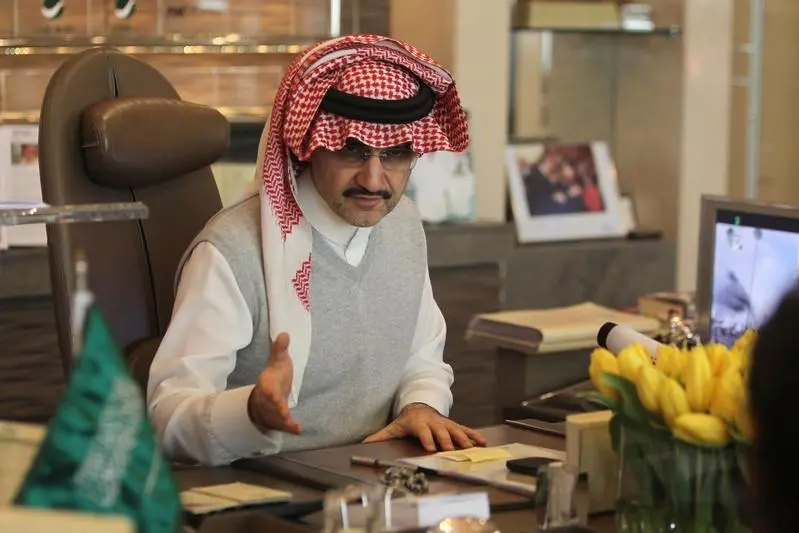
Arab leaders can generally be called on at any time and they often establish open and personal relationships with employees by introducing open-door policies. But that doesn’t mean holding a team up to the light and expecting to see straight through them: conflict is inevitable. It’s human nature to disagree. If employees suppress their true opinions it “kills the work” declared one leader.
5. Balance consulting with decision-making
It’s a religious and moral obligation for leaders in the Middle East to consult their people before exercising power. Choices are made irrespective of personal opinions; they are made for the good of the organisation. It seems managers in the Middle East make choices based on excellence and common good, so after taking on subordinates’ perspectives, their decision stands.
“But of course, when you throw different cultures into the mix, the advice for leaders and their teams is different again,” says Professor Peterson. “That’s the cultural diversity challenge.”
-Ends-
About London Business School
London Business School's vision is to have a profound impact on the way the world does business. The School is consistently ranked in the global top 10 for its programmes and is widely acknowledged as a centre for outstanding research.
As well as its top-ranked full-time MBA*, the School offers degree and award winning executive education programmes** to executives from around the world.
With a presence in four international cities – London, New York, Hong Kong and Dubai – the School is well positioned to equip students from more than 130 countries with the tools needed to operate in today’s business environment. The School has more than 39,000 alumni, from over 150 countries, which provide a wealth of knowledge, business experience and worldwide networking opportunities.
London Business School is celebrating its 10th anniversary in the Middle East in 2017. The School has been developing the region’s business leaders for the last decade, with its base at the heart of Dubai’s business and financial sector, the Dubai International Financial Centre (DIFC).
London Business School’s 157 academics come from more than 30 countries and cover seven subject areas: accounting; economics; finance; management science and operations; marketing; organisational behaviour; and strategy and entrepreneurship.
© Press Release 2017