Legislators are furious that the refurbishment of X-ray rooms in 20 hospitals is has stalled because of non-compliance to procurement guidelines by the health ministry.
The revelation came to light in a report from the Auditor General showing that the non-compliance with Section 60(6) of the Public Procurement and Disposal of Public Assets (PPDA) Act, had affected several procurements.
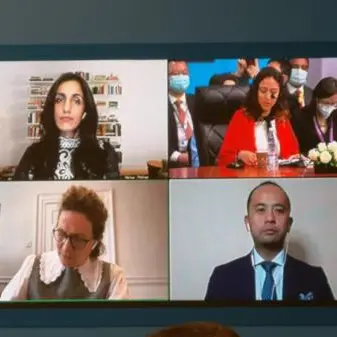
The report for the financial year ending December 2025 was deliberated upon during a meeting between the Committee on Public Accounts (Central Government) and Ministry of Health officials led by the Permanent Secretary, Dr Diana Atwine, on Thursday, 02 April 2026 at Parliament.
Findings of the report further faulted the ministry for failure to prepare a multi-year procurement plan for projects worth Shs 3.43 billion.
Despite the ministry utilising 99.9percent of its Shs 228.8 billion budget, MPs also raised concerns over persistent out-of-pocket payments and underfunded immunisation programmes.
The Kassanda County North MP, Hon. Patrick Nsamba (NUP), challenged the continued reliance on Non-Tax Revenue (NTR) collected from patients seeking specialised services such as X-ray and scans at regional referral hospitals.
“These are services our people cannot easily access elsewhere. If we already know how much is collected annually, why can’t government budget for them so that patients receive them free of charge?” Hon. Nsamba asked.
He argued that incorporating such costs into the national budget would ease the burden on citizens and improve equitable access to healthcare, an objective aligned with Uganda’s commitment to Universal Health Coverage.
However, Atwine indicated that NTR projections are centrally controlled, limiting health facilities’ ability to plan independently. Citing dialysis treatment at Kiruddu National Referral Hospital in Kampala District, she acknowledged the funding gaps, revealing that government allocations often fall below the actual cost of delivering services.
“A single dialysis session costs about Shs 400,000. Government contributes Shs 215,000, leaving the patient to pay about Shs 150,000. Yet a patient needs at least three sessions per week,” she explained.
This translates to roughly Shs 1.2 million per week per patient, underscoring the heavy financial burden on individuals with chronic conditions.
Atwine admitted that ideally, such services should be fully subsidised, but noted: “There is no country that can fully fund all healthcare needs without a strong pooled financing mechanism like a National Health Insurance or heritage fund.”
The Mawogola County South representative, Hon. Gorreth Namugga, also the committee deputy chairperson, raised alarm over “delays and shortfalls in funding for immunisation programmes,” especially as Uganda now vaccinates against at least 14 diseases under its Expanded Programme on Immunisation.
Atwine said that some vaccines are not fully funded, forcing the ministry to seek supplementary budgets: “We have quantified the gaps and engaged the Ministry of Finance, but often the funding comes late, affecting implementation,” she said.
Kalungu West County MP, Hon. Joseph Ssewungu (NUP), questioned the ministry’s reliance on external donors, noting declining contributions in recent years: “For the last five years, donor support has been inconsistent. What measures have you taken to address this gap?” he asked.
While the ministry demonstrated strong budget absorption, the Auditor General’s report reveals that only 36 out of 51 planned outputs were fully implemented, representing Shs 148.3 billion in expenditure. The remaining 15 outputs worth Shs 80.2 billion were only partially implemented, with some activities either incomplete or not executed at all.
The omission, auditors warned, creates uncertainty in funding and risks delays or cancellation of projects.
In defence, the permanent secretary attributed some gaps to system limitations, including earlier constraints in the Electronic Government Procurement (e-GP) system, and pledged improvements in planning and monitoring.
She said they would strengthen work-plan tracking and develop corrective action plans for partially implemented projects in the 2026/27 financial year.
Distributed by APO Group on behalf of Parliament of the Republic of Uganda.