PHOTO
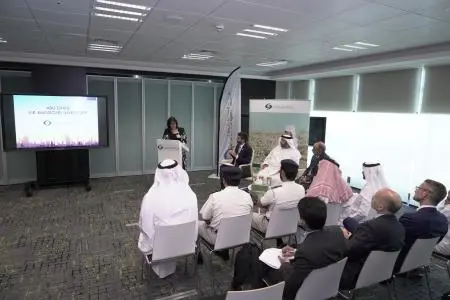
Abu Dhabi, UAE - The Environment Agency - Abu Dhabi (EAD), the largest environmental regulator in the Middle East, today released the results of the Abu Dhabi Air Emissions Inventory. The findings have produced over 50 high-definition sector- and pollutant- specific Air Emission Maps that identify the location and intensity of each man-made emission source in Abu Dhabi for the very first time. This information is key to quantifying the exposure of residents and natural ecosystems to air pollution in the Emirate in order to mitigate and manage harmful emissions effectively.
The Abu Dhabi Air Emissions Inventory was produced by EAD in close collaboration with over 90 local industrial entities and government bodies, including the Ministry of Climate Change and Environment, Statistics Centre − Abu Dhabi, Department of Transport, Department of Economic Development, Department of Urban Planning and Municipalities, Department of Energy, ADNOC and Abu Dhabi Ports. Contributions and sector-specific industry insights from these public and private stakeholders form the basis of this report, while also encouraging future updates to the Inventory.
The report is the first comprehensive air emissions geodatabase for Abu Dhabi that will also set the foundation for air quality modelling, establish a baseline for future planning and help set reduction targets. It covers all the major sources of man-made emissions, including electricity generation, water desalination, oil and gas, road transport, industry, shipping, aviation, agriculture, livestock and emissions found at petrol stations. The study has analysed the levels and sources of sulphur dioxide (SO2), nitrogen oxide (NOX), carbon monoxide (CO), particulate matter (PM10 and PM2.5) and non-methane volatile organic compounds (NMVOCs) emitted in the Emirate.
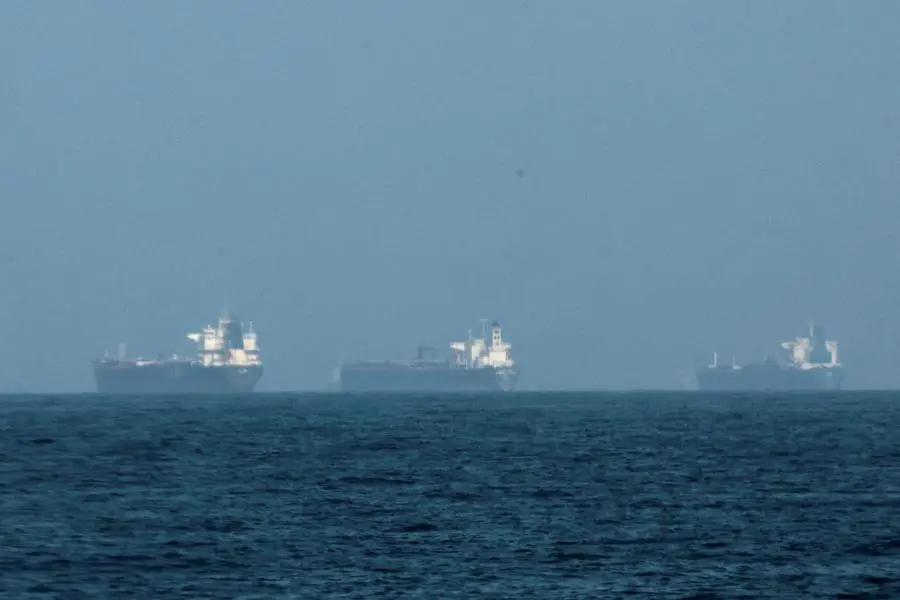
Results show that the oil and gas, road transport and industrial sectors are the biggest contributors to air emissions in Abu Dhabi, but with varying intensities across the Emirate – this demonstrates the complexity of air emissions and the need for a cross-sectoral management approach. Emissions of NOX, CO, PM10 and PM2.5 were highest at areas with heavy road traffic and at industrial sites such as Musaffah Industrial Area and the Khalifa Industrial Zone (KIZAD). The largest amount of SO2 and NMVOC emissions are located in areas of offshore and onshore oil and gas activity, including Al Dhafra, and near the ports.
“Air pollution is one of the main threats to public health, and as such requires coordinated cross-sector collaboration in order to mitigate the impacts of man-made emissions that impact air quality in Abu Dhabi, as well as to achieve the air quality national target - 90 per cent - by 2021,” said Engr. Shaikha Al Hosani, Executive Director of the Environmental Quality Sector at EAD. “The results of this Air Emissions Inventory have laid solid groundwork for us to pursue targeted mitigation measures in cooperation with our public and private sector partners, which in turn will improve the environment and the lives of people living in Abu Dhabi’s rural and urban areas.”
The results of the Abu Dhabi Air Emissions Inventory will support evidence-based policy and decision-making at both local and federal government levels, in order to facilitate cross-sector air quality management in Abu Dhabi - in line with UAE Vision 2021 and the Abu Dhabi Plan. It will help evaluate and assess strategies currently in place to curb man-made air emissions and help municipalities in zoning and urban planning. It will also promote cost-effective initiatives to improve efficiencies and reduce emissions by updating the environmental database for industrial emissions. The Inventory will provide facilities with both information and skills to develop their own specific emissions databases and better track their processes and emission reductions. The report will also serve as a reference tool that will enable critical knowledge exchange with local and international experts.
The Abu Dhabi Air Emissions Inventory represents a major effort in EAD’s comprehensive programme for air quality management. The Agency also operates an extensive air quality monitoring network in Abu Dhabi, which consists of 20 fixed and 2 mobile stations that feed information to the central system minute-by-minute.
-Ends-
About Environment Agency – Abu Dhabi (EAD)
Established in 1996, the Environment Agency – Abu Dhabi (EAD) is committed to protecting and enhancing air quality, groundwater as well as the biodiversity of our desert and marine ecosystem. By partnering with other government entities, the private sector, NGOs and global environmental agencies, we embrace international best practice, innovation and hard work to institute effective policy measures. We seek to raise environmental awareness, facilitate sustainable development and ensure environmental issues remain one of the top priorities of our national agenda.
For more information, please visit www.ead.ae
@EADTweets
Environment Agency
- Abu Dhabi
Environment Agency
- Abu Dhabi
EnvironmentAbuDhabi
Disclaimer: The contents of this press release was provided from an external third party provider. This website is not responsible for, and does not control, such external content. This content is provided on an “as is” and “as available” basis and has not been edited in any way. Neither this website nor our affiliates guarantee the accuracy of or endorse the views or opinions expressed in this press release.
The press release is provided for informational purposes only. The content does not provide tax, legal or investment advice or opinion regarding the suitability, value or profitability of any particular security, portfolio or investment strategy. Neither this website nor our affiliates shall be liable for any errors or inaccuracies in the content, or for any actions taken by you in reliance thereon. You expressly agree that your use of the information within this article is at your sole risk.
To the fullest extent permitted by applicable law, this website, its parent company, its subsidiaries, its affiliates and the respective shareholders, directors, officers, employees, agents, advertisers, content providers and licensors will not be liable (jointly or severally) to you for any direct, indirect, consequential, special, incidental, punitive or exemplary damages, including without limitation, lost profits, lost savings and lost revenues, whether in negligence, tort, contract or any other theory of liability, even if the parties have been advised of the possibility or could have foreseen any such damages.