PHOTO
ABU DHABI, UAE – Entities in the UAE should work together and share knowledge openly to advance the creation of the Internet of Things (IoT) framework that will power the digital transformation of Abu Dhabi, said experts at “The Role of IoT in Smart Cities,” as part of the Smart Cities Tamakkan BrainTrust held by the Abu Dhabi City Municipality.
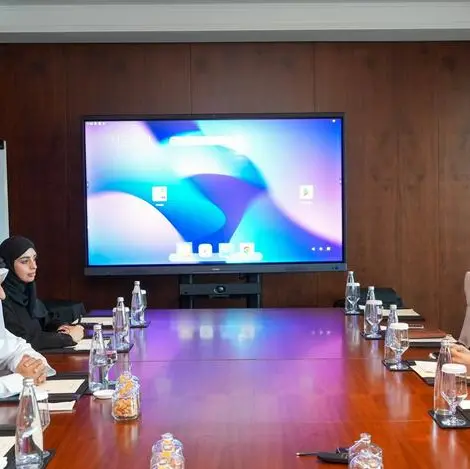
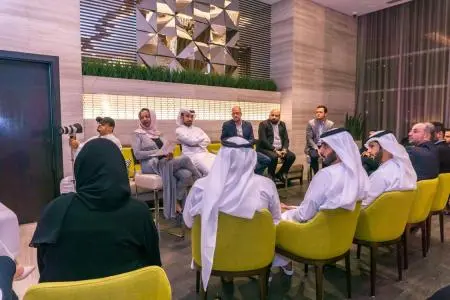
The event, which was hosted by the Beach Rotana Residences, brought together government and private institutions as well as academics who discussed new trends, challenges and insights on the role of IoT in building the shaping Smart Cities and Abu Dhabi’s nextgen vision.
The ‘braintrust’ is a gathering of highly informed individuals from diverse backgrounds who engage in open conversation and the sharing of thoughts, fears, opinions and plans on how to solve real world problems together. The purpose of holding it, as articulated by Omar al Hashmi, Director at the Abu Dhabi Municipality’s Knowledge Management and Innovation Department, is: “to create a platform for real and substantive dialogue, and involve all the players at both government and private sector level to be part of the conversation.”
Sami Al Hashimi, Head of Smart Cities and Infrastructure at the Abu Dhabi Municipality discussed some of the new technologies that are being launched across the city of Abu Dhabi, and that are envisioned for the future. The panelists of the event also included Fadi Shanaah, Regional Director, Smart Cities & Healthcare of Orange Business Services; Anthony Sayers, IoT Centre of Expertise Strategic Partnership Lead EMEA of Software AG, and Nicolas Andrieu, Vice President MEA of Sigfox FZE, and the session was moderated by Sana Bagersh, the Founder of Tamakkan.
Shanaah of Orange Business Services classified the UAE as “the most innovative country in the Middle East and a testbed for smart cities.” This sparked questions from community advocates about the implications of ‘smart city’, and the ‘inverse’ paradigm being whether seamlessly served technologies are making citizens more dependent and ‘less smart.’
In response, Shanaah cited education, at societal and business level, as the main driver of change to facilitate adoption and universal acceptance. “Just introducing technology does not make a city smart. Countries have to adapt strategies and technology should touch education, healthcare and lives.”
Nicolas Andrieu VP of MEA Sigfox explained that “Harnessing the power of IoT, public and private organizations can deliver a smarter, more efficient service that moves from being reactive to predictive, improving the quality of service for citizens and lessening the environmental impact.”
Sami Al Hashimi, gave the simple example of the Municipality adding sensors to the running track on the Corniche to count a runner or walker’s steps using IoT technology. This generated a vibrant discussion on technology’s possibilities, with a member of the Abu Dhabi Police commenting that these steps of kinetic energy could potentially be converted into electricity that could be stored or donated.
One of the audience members, Hoda al Khzaimi, a Research Assistant Professor, Engineering and Director of the Center of Cyber Security at NYU stressed the need for “crowdsourcing innovation” for IoT solutions by creating collaborative hubs that can be a catalyst for youth innovation. “Any governmental entity that is about to implement smart cities solutions has to have a reliable test bed, and work with R&D teams to evaluate projects before deployment rather having third party vendors govern their own security.”
Sayers of Software AG stressed the need for government and the private sector to work closely to address security and mitigate breaches: “Citizens care about security. This is where partnerships come into the picture. As partners, we understand the value of that infrastructure.”
“Innovation hubs could be led or sponsored by high authority officials to announce special challenges across different industries and missions and set the strategic framework required to help focus on solving real problems and to streamline fragmented efforts,” said Taghrid Alsaeed, who works in government and the private sector. “It might help to develop a membership programme and an online community platform to exchange knowledge and give members of these hubs access to connect to one another and access to news, research material, workshop calendars, specific challenges, sponsorships, VCs and funding institutes.”
Sana Bagersh, CEO of BrandMoxie and founder of Tamakkan introduced the concept of ‘braintrust’ as a way to break the mold in public discourse, by bringing focused stakeholders from diverse backgrounds to engage a meaningful dialogue and build valuable impact focused collaborations. “We want to focus on real dialogue, not one-sided conversation, especially in these rapidly disrupted times. We aim to bring together all stakeholders including government, policy makers, research centers, financial institutions, universities and industry leaders, the media, incubators and accelerators, telecoms and technology leaders, public organizations and the private sector.”
-Ends-
BACKGROUNDER
Tamakkan is a knowledge-sharing initiative that was established in June 2009 by BrandMoxie, to nurtures entrepreneurship, leadership and innovation. Tamakkan promotes innovation, best practices and corporate social responsibility to corporations and institutions, and has grown into a powerful knowledge sharing platform that plays a vital role in nation-building.
Disclaimer: The contents of this press release was provided from an external third party provider. This website is not responsible for, and does not control, such external content. This content is provided on an “as is” and “as available” basis and has not been edited in any way. Neither this website nor our affiliates guarantee the accuracy of or endorse the views or opinions expressed in this press release.
The press release is provided for informational purposes only. The content does not provide tax, legal or investment advice or opinion regarding the suitability, value or profitability of any particular security, portfolio or investment strategy. Neither this website nor our affiliates shall be liable for any errors or inaccuracies in the content, or for any actions taken by you in reliance thereon. You expressly agree that your use of the information within this article is at your sole risk.
To the fullest extent permitted by applicable law, this website, its parent company, its subsidiaries, its affiliates and the respective shareholders, directors, officers, employees, agents, advertisers, content providers and licensors will not be liable (jointly or severally) to you for any direct, indirect, consequential, special, incidental, punitive or exemplary damages, including without limitation, lost profits, lost savings and lost revenues, whether in negligence, tort, contract or any other theory of liability, even if the parties have been advised of the possibility or could have foreseen any such damages.