PHOTO
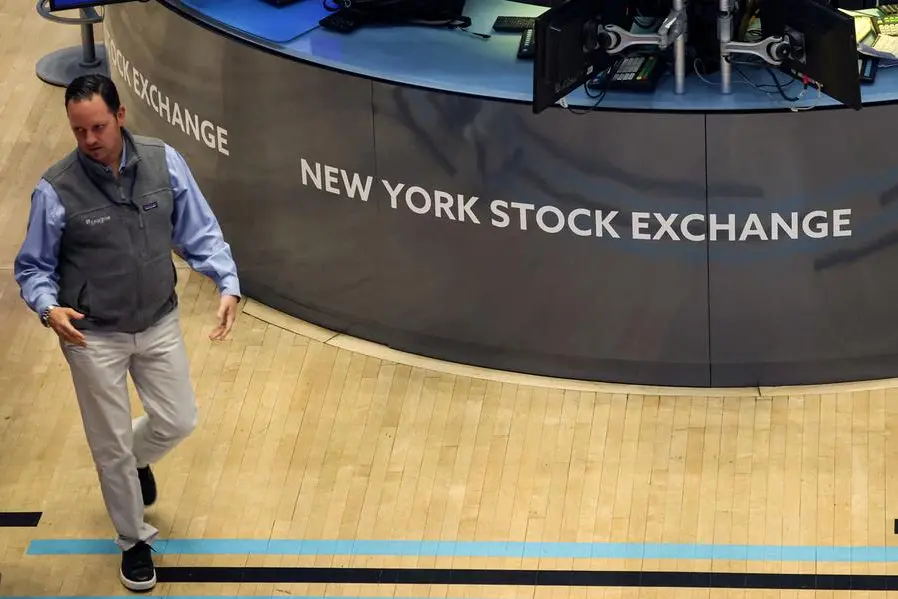
ORLANDO, Florida - With Wall Street scaling fresh peaks and five of the "Magnificent Seven" U.S. tech giants reporting earnings this week, investors' focus is once again zeroing in on record-high stock market concentration and the risks associated with it. But this concern may be overblown.
This is not a new debate, but it has raged in the last two years, particularly with the explosion in Nvidia's share price. The chipmaker's market cap has quadrupled since 2023 to $4.5 trillion, lifting the Mag 7's share of the S&P 500 above the 30% mark.
However, surprising as it may be to many market-watchers, concentration on Wall Street is not that extreme by global standards. In fact, the U.S. lags well behind many developed economies when it comes to equity market concentration, and even further behind some key emerging economies.
AMERICAN UNEXCEPTIONALISM
When looking at a dozen of the world's largest stock markets, the U.S. is actually the fifth-least concentrated, according to Michael J. Mauboussin and Dan Callahan at Morgan Stanley.
The top 10 U.S. stocks accounted for 33.8% of total market cap at the end of September this year. Only India, Japan, China and Canada were less concentrated, while concentration was most extreme in France, Taiwan and Switzerland.
It should be noted, however, that Taiwan is an outlier, heavily skewed by Taiwan Semiconductor Manufacturing Co, the world's biggest producer of advanced chips. On its own, TSMC accounts for over 40% of the country's entire stock market cap.
Meanwhile, equity market concentration appears to be intensifying in key emerging economies, primarily driven by tech. That was the conclusion of research published this year by Morningstar's Lena Tsymbaluk and Michael Born.
They analyzed China, Brazil, South Korea, Taiwan and India, five countries that account for 80% of the Morningstar Emerging Markets Target Market Exposure Index. Morningstar's Target Market Exposure indices include a country's or region's 75% most liquid stocks in terms of trading volume and turnover.
Based on this criteria, the top five stocks at the end of last year represented 27% of India's market compared with 35% in China, 46% in South Korea, 47% in Brazil, and 72% in Taiwan. For comparison, the equivalent shares in Morningstar's U.S., UK and global TME indexes were 26%, 17.5%, and 33%, respectively.
For all the fretting that Wall Street's eggs are all in the one Big Tech basket, concentration risk is more extreme in other countries - something that U.S.-based investors seeking to diversify their portfolios by going into overseas markets should perhaps bear in mind.
DOES IT MATTER?
This all raises the inevitable question of whether market concentration really matters.
To be sure, it is hard to "beat the market" when mega-cap stocks make outsize gains. That is often the case during periods of high concentration, as returns tend to be driven by the handful of stocks at the top rather than all the individual names underneath.
Look no further than the U.S. for evidence of this. Only 8% of surviving active funds in the U.S. large-cap blend category beat the passive alternative over the decade ending June 2024, according to Morningstar. The Mag 7's footprint in U.S. earnings and performance is simply too large.
There are also concerns that high concentration increases risk, given that one is essentially betting on the performance of a handful of companies.
In the U.S., many worry that the tech bubble – or, more specifically, the artificial intelligence bubble – will burst. With valuations so high, Cassandras fear that this top-heavy market will simply keel over. But obviously none of those outcomes has come to pass.
Of course, there may be a day of reckoning, but it may not be for some time. And it is certainly not inevitable, given the strength of these tech giants' earnings and how entrenched investors' "buy the dip" mentality has become.
It is ultimately a classic risk-reward dilemma. If you want a more balanced portfolio, diversify more because a sharp reversal in tech could trigger an outsized downturn. If you want to keep enjoying the returns generated by the biggest names, there is no need to rock the boat.
Currently, the bigger risk may be betting on a reversal too soon. As the market maxim goes, being too early is the same as being wrong.
(The opinions expressed here are those of the author, a columnist for Reuters)
Enjoying this column? Check out Reuters Open Interest (ROI), your essential source for global financial commentary. ROI delivers thought-provoking, data-driven analysis of everything from swap rates to soybeans. Markets are moving faster than ever. ROI can help you keep up. Follow ROI on LinkedIn and X.
(By Jamie McGeever; Editing by Alison Williams)