PHOTO
(The views expressed here are those of the author, a columnist for Reuters.)
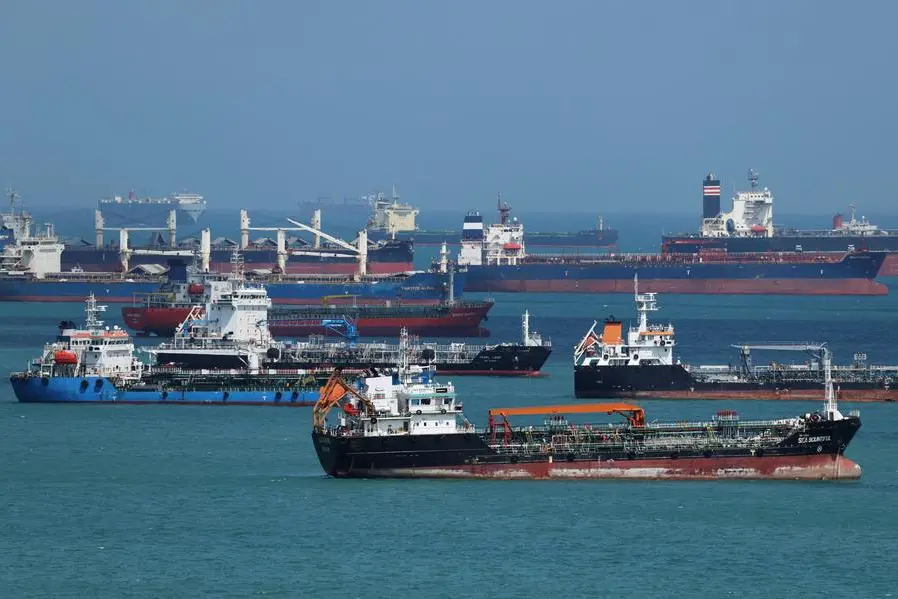
LAUNCESTON, Australia - An armada of crude oil and refined products tankers is heading to Asia from the United States, but even record-high exports from the world's top producer cannot come close to making up the losses from the war against Iran.
U.S. crude exports are on track for their two strongest months ever in April and May, with shipments of 5.44 million barrels per day and 5.48 million bpd, respectively, according to data compiled by commodity analysts Kpler.
This is up strongly from the 3.94 million bpd in January and 3.86 million bpd in February, the two months prior to the U.S. and Israeli attacks on Iran, which started on February 28.
Much of the extra crude is heading to Asia, the region most affected by the effective closure of the Strait of Hormuz, the narrow waterway through which about 20% of the world's supply of crude and refined fuels passed prior to the start of the conflict.
U.S. crude exports to Asia are forecast at 3.29 million bpd in May and 2.27 million bpd in April, according to Kpler.
May's figure is about three times the pre-war levels of 1.11 million bpd in January and 1.21 million bpd in February.
The surge in U.S. crude exports comes as Asian refiners scour the world for cargoes after the war curtailed Middle East supply because of the Hormuz closure.
While U.S. exports to Asia in May are likely to be about 2.18 million bpd more than what they were in January, this is nowhere near enough to offset the loss of the Middle East cargoes.
Total seaborne exports to Asia are estimated by Kpler at 14.8 million bpd in April, down from 18.63 million bpd in March, 24.87 million bpd in February and 24.24 million bpd in January.
This means the loss of about 10 million bpd in exports to Asia this month from pre-war levels, a drop that cannot be offset for long by using up inventories.
It's also not the case that the United States can meaningfully ease refined product shortages in Asia, even though, similar to crude, its exports are hitting record highs.
FUEL SHIPMENTS
U.S. refined product exports are expected to rise to 3.59 million bpd in April, with 386,000 bpd heading to Asia.
This is up from total product exports of 2.83 million bpd in January, of which a tiny 132,000 bpd went to Asia.
This means that an additional 254,000 bpd of refined products from the United States are heading to Asia in April compared with what was shipped in January.
While this is welcome to fuel-starved importers in the region, it can hardly offset the loss of more than 1.5 million bpd of product exports through the Strait of Hormuz.
In January, refined fuel exports via the strait to Asia were 1.58 million bpd, but this is forecast to plummet to just 11,000 bpd in April, according to Kpler.
The sharp rise in U.S. crude and product exports will obviously be beneficial to U.S. energy producers, but probably not so much for U.S. energy consumers, as domestic consumers effectively have to compete with overseas buyers for U.S. supplies.
It also raises the question as to how long can the United States sustain exports at the levels being seen in April and May.
It's likely that some of the crude being exported is available because of the release of strategic reserves.
The United States announced that it would make 172 million barrels of crude available from its reserves on a loan basis from March to July, with companies that take the oil required to return the volumes along with extra barrels as interest at a later date.
This raises the possibility that U.S. exports of crude and products may ease by July, which would likely place further stress on Asia, especially if the Strait of Hormuz remains closed to most vessels.
The surge in U.S. crude and product exports, while welcome, highlights just how challenging it is for the world to adjust to the loss of Middle Eastern barrels.
U.S. President Donald Trump said in early April that crude importers should "buy oil from the United States of America. We have plenty."
But plenty is not enough, especially for Asia.
Enjoying this column? Check out Reuters Open Interest (ROI), your essential new source for global financial commentary. ROI delivers thought-provoking, data-driven analysis of everything from swap rates to soybeans. Markets are moving faster than ever. ROI can help you keep up. Follow ROI on LinkedIn and X.
The views expressed here are those of the author, a columnist for Reuters.
(Editing by Christian Schmollinger)