PHOTO
(The views expressed here are those of the author, a columnist for Reuters.)
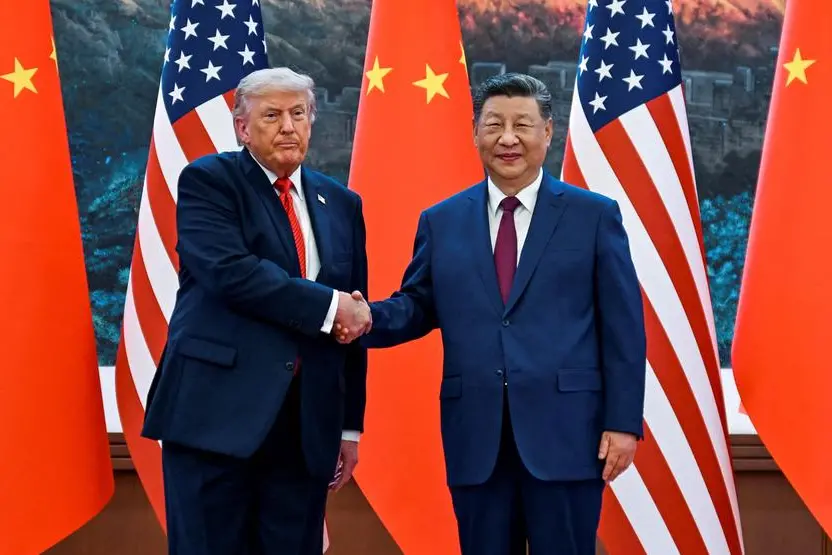
LAUNCESTON, Australia - What would be the optimal outcome from the meeting between U.S. President Donald Trump and his Chinese counterpart Xi Jinping from the perspective of the increasingly stressed crude oil market?
Ideally, Xi somehow convinces Trump that the United States has won its war against Iran and the best way to cement that victory is to walk away from the conflict in the Middle East.
At the same time Xi could use his leverage over Iran to encourage the Islamic Republic to give Trump some token of victory, such as a commitment to submit its nuclear programme once again to international inspections.
The question is whether Xi is prepared to use China's leverage over both the United States and Iran to encourage a solution to the effective closure of the Strait of Hormuz.
About 20% of global crude oil and refined products, as well as one-fifth of liquefied natural gas, went through the narrow waterway prior to the U.S. and Israeli attack on Iran on February 28.
About 1 billion barrels of crude will have been lost to global supply by the end of May, and the rapid depletion of inventories means that unless the Strait of Hormuz is fully re-opened within the coming weeks, the only option left to deal with the loss of supply will be far higher crude prices to cut demand.
China doesn't engage in diplomacy in public, preferring to work behind the scenes to achieve its desired outcomes.
This means that Thursday's meeting between the two leaders is likely to follow a script that will allow both leaders to be seen to be achieving positive results.
For Trump, this means success of the trade relationship between the world's two largest economies, which he will define largely by how much China commits to buy things like U.S. energy exports and commercial aircraft.
For Xi, success in public will be a cooling of the trade tensions and recognition that China remains a vital source of critical metals.
CHINA WILL HURT TOO
The more vital discussions will be those that don't get aired in public, with the war against Iran likely to get top billing.
China's position is likely shifting on the conflict.
In its early stages Beijing probably relished the miscalculations made by Trump and Israel, which have eroded the world's view of both U.S. military power and also political influence, as well as angering Washington's traditional Western allies, which are suffering the economic fallout caused by spiking energy prices.
But the longer the conflict drags on and the longer the Strait of Hormuz remains largely closed, the more the Chinese economy starts to feel the pain.
It's not just the more than 50% rise in crude oil prices. The closure of the strait is starting to hit supply chains of materials vital to China's key new energy industries of electric vehicles and battery storage systems.
The loss of 50% of global seaborne sulphur is boosting the cost and reducing availability of sulphuric acid, a key material used to extract energy transition metals such as nickel, copper and lithium.
It's also likely that Beijing is becoming more concerned that rising global inflation and energy shortages in Asian neighbours will cut economic growth, thereby hurting China's export-orientated manufacturing industries.
The question is whether the coming economic pain that Beijing may be starting to anticipate is enough for Xi to attempt to exercise the influence that he can bring to bear on both Trump and Iran.
And the follow-up question to that is even if Xi does try to force a settlement that reopens the Strait of Hormuz, will Trump and Iran listen and act?
History shows that wars are unlikely to end if both belligerents believe they are winning and have time on their side.
Trump appears to believe his blockade of Iran's ports will force Tehran to bend to his will at the negotiating table, while Iran seems confident that its hold over the Strait of Hormuz will eventually cause so much global economic pain that Trump will have to give in to its demands.
Both sides are therefore at risk of overplaying their hands.
The greatest contribution Xi could make is to try and inject a sense of reality into both Trump and Iran, and help chart a path that allows both to claim victory, even if such a claim is believed by nobody outside of each side's core supporters.
Enjoying this column? Check out Reuters Open Interest (ROI), your essential new source for global financial commentary. ROI delivers thought-provoking, data-driven analysis of everything from swap rates to soybeans. Markets are moving faster than ever. ROI can help you keep up. Follow ROI on LinkedIn and X.
The views expressed here are those of the author, a columnist for Reuters.
(Editing by Sonali Paul)