PHOTO
LONDON - Global shares rose on Tuesday and the dollar recovered some lost ground ahead of U.S. inflation data and major bank earnings, while oil prices gained as unrest in Iran fanned fears for supplies.
U.S. President Donald Trump's pledge on Monday to
slap
a 25% tariff rate on any country that does business with Iran, along with his attacks on
Federal Reserve
independence, added to market uncertainty, keeping investors cautious.
Europe's STOXX 600 was up just 0.1%, while U.S. stock index futures were mostly flat.
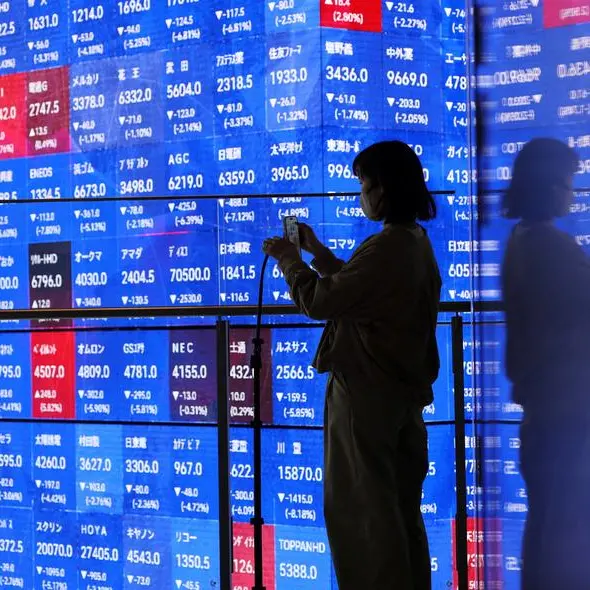
In Asia, Japan's Nikkei returned from holiday with a jump of 3.3% to record highs, aided by a slide in the yen to historic lows and much talk of fiscal stimulus.
Prime Minister Sanae Takaichi plans to dissolve parliament to call an early election, Kyodo news agency reported, as she hopes to bolster her coalition's parliamentary majority, which would provide scope for more aggressive policies.
WALL OF WORRY
Even with multiple geopolitical flashpoints, such as Iran, Greenland and Venezuela, and concern about lofty valuations as equity benchmarks from London to Tokyo and Frankfurt hit record highs, investors appear content to push markets higher for now, a dynamic strategists call "climbing the wall of worry".
"The wall of worry has been built anew over the last week in so many different ways. And yet, (the market) is just climbing and climbing," IG chief market strategist Chris Beauchamp said.
"If people came into 2026 the same way they finished 2025, mainly they're looking for the pullback, they're looking for a reason for the market to correct. At the moment, it feels like they're just running the old hits of tariffs and interventions," he said.
A cornerstone of some of the current confidence is anticipated earnings growth of 8.3% in the fourth quarter, which would mark the 10th straight quarter of expansion, Beauchamp added.
"That's your fuel in the engine," he said.
Traders and investors are waiting for a report on U.S. consumer price inflation for December. Forecasts are for annual core inflation to nudge up to 2.7%.
Earnings season kicks off this week with results from the major banks including JPMorgan Chase, Bank of New York Mellon, Citigroup and Bank of America.
Earnings calls will no doubt include questions about banks' response to Trump's call for a one-year cap on credit card interest rates at 10% starting on January 20.
The banks have already warned such a step could result in millions of American households and small businesses losing access to credit, essentially a tightening in monetary policy.
GOLD SHINES THROUGH UNCERTAINTY
Three former Fed Chairs, Janet Yellen, Ben Bernanke and Alan Greenspan, signed a statement on Monday decrying the assault on the central bank's independence by the Trump administration. They warned that this is more typical in "emerging economies with weak institutions" and can have highly negative consequences for inflation.
Global central bank officials issued a coordinated statement of support for Fed Chair Jerome Powell on Tuesday after the Trump administration threatened him with a criminal indictment.
The dollar held relatively firm against a basket of currencies, having lost 0.25% overnight. The euro was flat at $1.1665, while the pound rose 0.1% to $1.3477.
The yen came under heavy fire, falling to an all-time low against the euro and Swiss franc, which in turn helped boost the dollar by 0.5% on the day to 158.89, sparking another round of verbal warnings from Japanese officials that can often precede intervention.
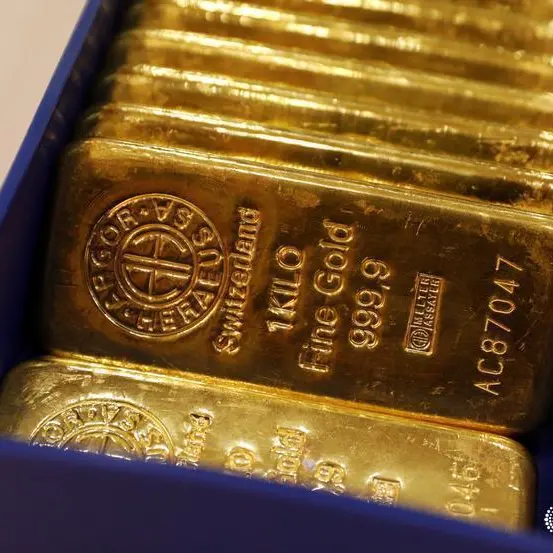
Gold, meanwhile, topped $4,600 an ounce, having hit a record high of $4,629.94 on Monday.
"Gold serves as a catch-all, and a default hedge of last resort for fear and uncertainty given its reputation as a safe haven and store of value, the fact that it is non-debasable, and is no one else's liability," said Christopher Louney, a gold strategist at RBC Capital Markets.
Oil prices reached seven-week highs on worries that Iran's exports could decline as the sanctioned OPEC member cracks down on anti-government demonstrations.
Brent gained 1.1% to trade at $64.63 a barrel, while U.S. crude rose 1.2% to $60.22.