PHOTO
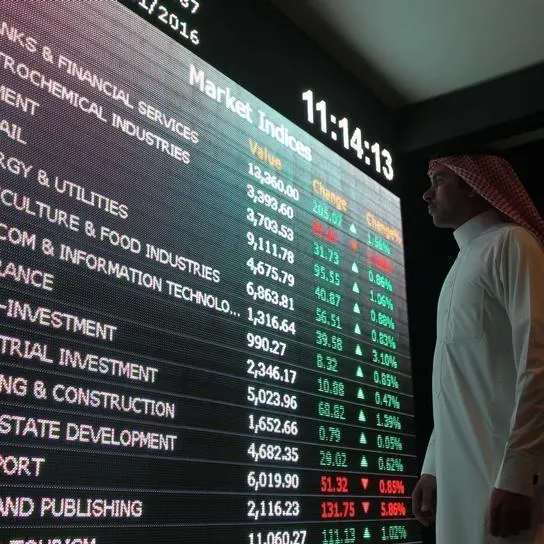
Saudi Arabia's petrochemical stocks, including sector giant SABIC, are likely to see severe earnings pressure in Q2 2023 due to weak global demand and lower product prices, although lower feedstock prices could support some margin expansion and moderate the declines.
Meanwhile, new additions to China's refining capacity, which is expected create surpluses in the local markets, will also put a squeeze on Saudi petrochemical exports to China.
Petrochemical product prices have been under pressure.
According to Riyad Capital, in Q2 Naphtha declined by 11% quarter-on-quarter (QoQ) whereas Propane and Butane slumped 24% QoQ and 26% QoQ, respectively.
Polypropylene and Polyethylene prices declined by 6% QoQ and 3% QoQ respectively. Urea and Methanol prices also saw significant price drops: Urea averaged at $307/per ton in the quarter, down 18% QoQ while Methanol averaged $270/per ton, down 15% QoQ.
Al Rajhi Capital said in a recent note: "We expect margin pressure to sustain due to lower product prices amid weak demand. Consequently, the aggregate earnings of all petchem companies under our coverage are expected to decline on a year-on-year (YoY) basis."
Meanwhile, Citi Research in its Q2 2023 preview of the Saudi petrochemicals sector, said earnings expansion is returning to the sector, albeit from a low base as lower feedstock prices and an end to turnaround activity should generally be favourable for earnings.
"Whilst Q2 doesn’t paint a picture of stronger demand, it does re-affirm our view that margins have bottomed out. Support from lower feedstock prices should allow for some margin expansion, albeit still below historical averages. We believe a recovery is now likely towards year end (vs our previous assumption of Q3) as peaking rates offer a pathway to higher economic – and industrial - activity," it said.
Sector leader and petrochemicals giant SABIC is set to see an 88% net profit drop to 953 million riyals ($254 million) compared with SAR 7.93 billion in the year-ago period, according to analysts' mean estimate compiled by Refinitiv.
Yansab, majority owned by SABIC, is also set to see a net profit drop of 70% YoY to SAR 86.9 million, according to Refinitiv's mean estimates.
(Reporting by Brinda Darasha; editing by Seban Scaria)